
Global skywatchers prepare for total solar eclipse on August 12
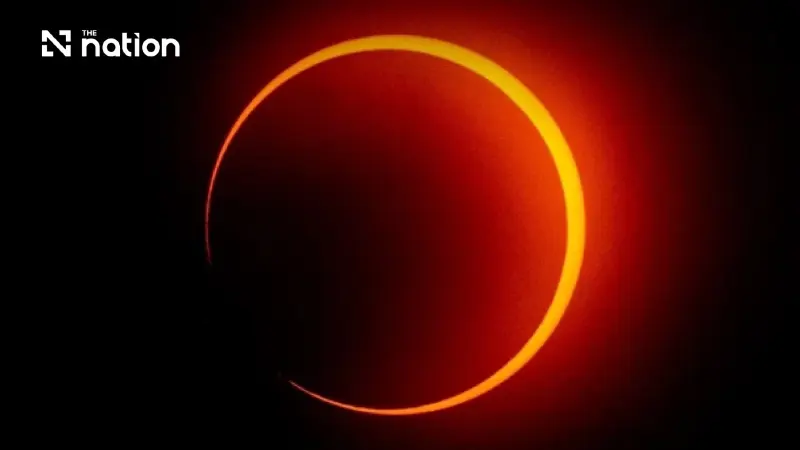


On August 12, a total solar eclipse will sweep across Greenland, Iceland, northern Russia, Spain, and part of Portugal, while Thailand watches online.
- A total solar eclipse is scheduled to occur on August 12, 2026.
- The path of totality, where the Sun is completely obscured, will cross Greenland, Iceland, Spain, Russia, and parts of Portugal.
- During the peak of the event, lasting up to 2 minutes and 18 seconds, the Sun's outer atmosphere (the corona) will become visible.
- A partial eclipse will be visible across a wider area, including much of Europe, North America, and northwest Africa.
Skywatchers around the world are preparing for one of the major astronomical events of 2026, with a total solar eclipse set to take place on Wednesday (August 12).
A total solar eclipse occurs when the Moon passes between the Earth and the Sun, completely covering the solar disc for observers within the Moon’s darkest shadow, or umbra. The event is expected to provide one of the year’s most striking celestial spectacles.
According to data from the National Aeronautics and Space Administration (NASA), the path of totality will pass across Greenland, Iceland, northern Russia, the Atlantic Ocean, Spain, and a small area in northern Portugal. A partial solar eclipse will also be visible across wider areas of the Northern Hemisphere, including parts of Europe, North America, and north-west Africa.
Observers in or near the path of totality will see the Sun completely obscured by the Moon, causing the sky to darken temporarily. During totality, the solar corona — the Sun’s outer atmosphere, normally overwhelmed by the brightness of its surface — will become visible.
The longest period of totality anywhere on Earth during the eclipse is expected to last around two minutes and 18 seconds.

Iceland and Spain are among the key locations for viewing the event, with several cities lying within the path of totality. NASA information indicates that Reykjavik will experience totality during the evening, while parts of Spain will see the eclipse close to sunset, offering the possibility of observing a total solar eclipse low on the horizon.
The eclipse will also provide scientists with an important opportunity to study the Sun. When the Moon completely blocks the bright solar surface, researchers can examine the corona in greater detail and investigate how changes in sunlight affect the Earth’s atmosphere during the event.
Those in areas where a partial eclipse is visible are advised never to look directly at the Sun without proper protection. Certified solar-viewing filters must be used, as ordinary sunglasses do not provide adequate eye protection.

For Thailand, however, the eclipse will not be visible. Neither Bangkok nor other parts of the country will be within the eclipse’s visible area on August 12, so people in Thailand will be unable to observe either the total or partial phases directly.
Thai skywatchers can instead follow photographs, live reports, and online broadcasts from astronomy organisations and science media around the world, including NASA, offering an alternative way to experience one of 2026’s most notable astronomical events.
