
Thailand speeds flood drainage ahead of October 5–7 rain
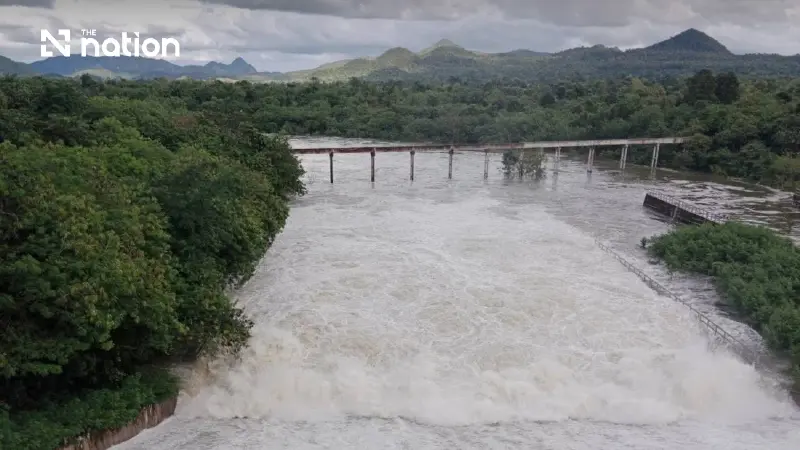


Thailand holds back upstream flows and speeds Gulf drainage before rain forecast for October 5–7, while high tides could hamper the effort.
- Thai authorities are accelerating the drainage of floodwater into the Gulf of Thailand during a temporary break in rainfall.
- This proactive measure is to prepare for a new period of heavy rain forecast across the country from October 5–7.
- Key actions include increasing water discharge from the Chao Phraya Dam, diverting water into irrigation systems and low-lying fields, and mobilizing more pumping machinery.
- The effort is complicated by several reservoirs, like the Pa Sak Jolasid Dam, already being over 100% capacity, forcing them to increase releases.
Thailand’s Office of the National Water Resources (ONWR) is accelerating drainage into the Gulf of Thailand during a lull in rainfall, ahead of another wet spell forecast for October 5–7, 2026. Chao Phraya Dam is preparing to raise its discharge to 2,400 cubic metres per second on October 1.
Chayant Muangsong, ONWR secretary-general, said agencies were coordinating water management across connected river basins, using upstream dams to hold back water while diverting flows into irrigation networks and low-lying retention fields in the Central region.
ONWR is also mobilising more machinery and equipment to move floodwater towards the Gulf through all available channels, aiming to ease flooding downstream before rainfall increases again.
Bhumibol Dam temporarily suspended releases for September 30–October 1, while Sirikit Dam reduced discharge to 7 million cubic metres per day, Chayant said. The measures are intended to prevent additional upstream water from joining flood flows farther downstream.
Chao Phraya Dam prepares for higher releases
Chao Phraya Dam was discharging water at 2,300 cubic metres per second, with a gradual increase to 2,400 cubic metres per second planned for the afternoon of October 1, Chayant said. Further adjustments would depend on conditions.
Flows through the C.2 monitoring station in Mueang Nakhon Sawan district, Nakhon Sawan province, are forecast to peak at no more than 2,700 cubic metres per second. Chayant said an additional 500–600 cubic metres per second from the Sakae Krang River would contribute to rising water levels above Chao Phraya Dam.
The Royal Irrigation Department is diverting water into irrigation systems on the eastern and western sides of the Chao Phraya basin at full capacity. Chayant said the increased diversions were expected to cause the Tha Chin River to overflow its banks at some locations.
Water is also being diverted into low-lying retention fields in the Central region where harvesting has been completed, according to ONWR. The diversions are intended to hold back part of the flow while agencies accelerate drainage from areas below Chao Phraya Dam.

Chayant has instructed the Royal Irrigation Department to prepare contingency plans for any further increase in Chao Phraya Dam releases, with measures to minimise the impact on residents.
Pa Sak Jolasid and Prasae reservoirs exceed capacity
Pa Sak Jolasid Dam in the Pa Sak basin is holding water equivalent to 109% of its storage capacity, while Prasae Dam in the eastern coastal basin is at 105%, according to Chayant. Heavy rainfall has generated substantial inflows into reservoirs across several basins.
Pa Sak Jolasid Dam needs to increase releases into the Pa Sak River in stages, reaching 30 million cubic metres per day, Chayant said. Rama VI Dam must consequently prepare for a corresponding increase in discharge.
Vajiralongkorn Dam in the Mae Klong basin is at 99% of storage capacity, leaving room for about 123 million cubic metres of additional water. Chayant said the Electricity Generating Authority of Thailand (EGAT) had revised the dam’s discharge plan to 42 million cubic metres per day.
The revised Vajiralongkorn Dam release plan is not expected to raise water levels downstream, Chayant said. Discharge below Mae Klong Dam is expected to remain controllable at about 2,200 cubic metres per second.
Khlong Si Yat Dam and Khun Dan Prakan Chon Dam in the Bang Pakong basin are at 94% and 97% of storage capacity respectively, according to ONWR. Discharge plans for these reservoirs and Prasae Dam must balance dam safety with efforts to minimise downstream impacts.
More rain forecast for October 5–7
ONWR expects a high-pressure system, or cool air mass, from China to extend over the North and upper Northeast during October 5–7, bringing another increase in rainfall.
Rain is forecast to increase first in the Northeast before spreading westwards, with the North, Central region, East and South also affected, according to Chayant. Heavy rain is possible in some areas.
ONWR’s weather monitoring with the Thai Meteorological Department and the Hydro-Informatics Institute, a public organisation, indicates that rainfall is easing during the current period, although some areas will continue to receive rain. The South is expected to see more widespread rainfall than other regions.
“I have stressed to the Royal Irrigation Department and relevant agencies that they must urgently increase pumping and drainage capacity in all flood-affected areas so that conditions can improve as quickly as possible,” Chayant said.
Chayant also warned that high tides in early October could obstruct efforts to drain floodwater into the Gulf.
