
ONWR warns Ayutthaya rivers may rise 10cm on October 4



Thailand’s Chao Phraya Dam maintains releases at 2,500 cubic metres per second while low-lying communities outside flood barriers remain at risk.
- The Office of the National Water Resources (ONWR) warned that water levels in the Chao Phraya and Noi rivers in Ayutthaya could rise by approximately 10cm on October 4.
- The rise is attributed to water releases from the Chao Phraya Dam, which is maintaining a discharge of 2,500 cubic meters per second.
- The increased water flow is expected to subsequently move downstream towards Pathum Thani, Nonthaburi, Bangkok, and Samut Prakan.
- Low-lying communities located outside of flood barriers along the rivers are at risk, even as upstream flows begin to ease.
Low-lying communities outside flood barriers along Thailand’s Chao Phraya River remain at risk despite easing upstream flows, the Office of the National Water Resources (ONWR) said on Sunday, October 4, 2026. Water levels along the Chao Phraya and Noi rivers in Ayutthaya could rise by about 10cm as releases from the Chao Phraya Dam reach the province.
ONWR deputy secretary-general Paitoon Kengkarnchang said the water would subsequently move towards Pathum Thani, Nonthaburi, Bangkok and Samut Prakan. Flood barriers in Pathum Thani, Nonthaburi and Bangkok remained higher than the expected river levels, although low-lying areas outside the barriers could still be affected.
Deputy government spokesperson Lalida Periswiwatana told the daily briefing by the Joint Flood Situation Information Centre and ONWR that water levels were beginning to ease in the Chao Phraya and Mae Klong basins. Lalida urged riverside communities to follow official announcements, particularly in already flooded areas of Uthai Thani, Chai Nat, Sing Buri, Ang Thong, Ayutthaya, Pathum Thani, Bangkok, Samut Prakan and Nonthaburi.
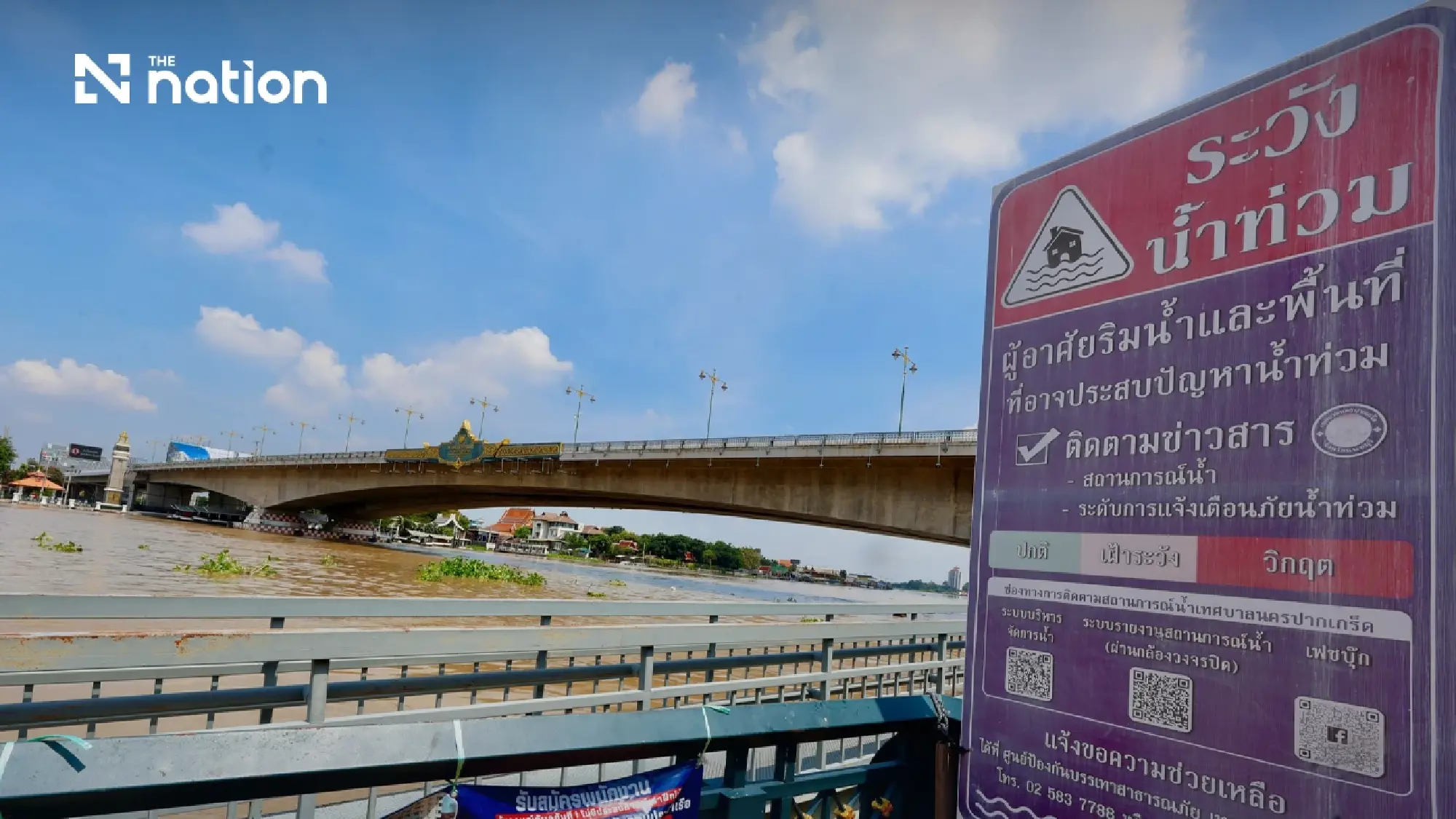

Chao Phraya Dam maintains releases despite easing inflows
The Chao Phraya Dam was maintaining releases of 2,500 cubic metres per second because flows from the Sakae Krang River remained elevated, Paitoon said. Water arriving through the Ping and Nan rivers was declining, and Sakae Krang flows were expected to begin falling within two to three days, allowing discharge levels to stabilise.
Paitoon reported a flow of 2,119 cubic metres per second at Nakhon Sawan at 9am on October 4. Lalida cited a figure of about 2,200 cubic metres per second in her overview of the situation.
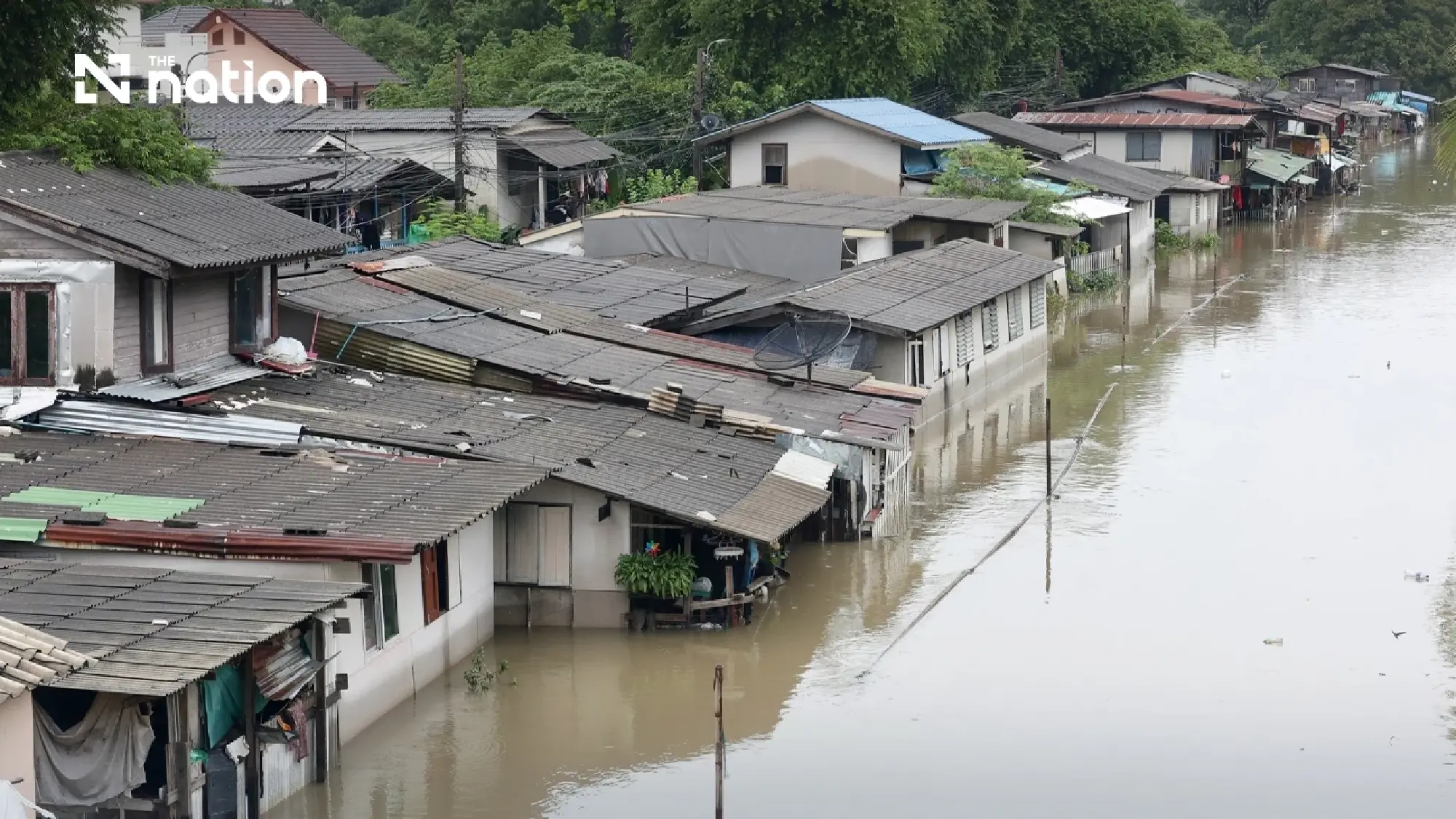

Phetchaburi and Mae Klong communities remain under watch
Heavy rain forecast for Kaeng Krachan district could require increased releases from Kaeng Krachan Dam, Paitoon said. The Phetchaburi governor and Royal Irrigation Department had established a coordination centre to keep residents informed. Lalida identified the dam and rainfall expected around October 10 as particular concerns for the province.
In the Mae Klong basin, Bang Khonthi and Amphawa districts in Samut Songkhram remained under close watch because standing floodwater was waiting to drain into the river, Lalida said.
Paitoon said releases from Mae Klong Dam had brought the river close to its banks at almost every point, contributing to standing water in Ratchaburi and particularly in the two Samut Songkhram districts. Tidal conditions meant drainage back into the Mae Klong River would take time.
At Vajiralongkorn Dam, inflows and outflows had reached the same level, while Srinagarind Dam stood at 95.55% of capacity and could still receive additional water, Paitoon said.
Water levels were rising in Chachoengsao, where several areas remained flooded. Lalida advised motorists to take extra care and check routes with the Department of Highways. Irrigation authorities and Bangkok were also helping to drain water from Ongkharak district in Nakhon Nayok, although Paitoon said the operation would take time.


Rain expected to shift beyond the Northeast
Rainfall was expected to spread from the Northeast to other regions during the coming days, according to forecasts presented at the briefing. Lalida cited the Thai Meteorological Department’s forecast of rain in the Northeast on Sunday, followed by the lower Central region, Bangkok and the South on Monday, while northeastern rainfall eased.
Fatah Masthawee, a forecasting systems specialist at the Thai Meteorological Department (TMD), also highlighted the upper North and eastern parts of the North in Sunday’s forecast. Fatah attributed the rain to a low-pressure system and said a cool air mass would move westwards, with the North, Central region, Bangkok, East and upper South affected on October 5–6 as rain decreased in the Northeast.
Lalida said heavier rain was expected in the South, West and East on October 6, warning southern communities of flash floods and forest runoff. Rain was also forecast for the lower Central region on October 10–11, particularly Bangkok's Bang Khun Thian district, Phetchaburi and Prachuap Khiri Khan.
Fatah said high pressure would begin extending over Thailand on October 8–9, followed by seasonal winds bringing rain to the Central region, Bangkok and surrounding provinces, the East and the South on October 10–11. Conditions in the Central region were expected to improve during October 12–14, with rainfall shifting towards the South.
Paitoon said the increased rainfall forecast for October 5–8 was not expected to substantially increase water volumes at the Chao Phraya Dam or dams in the Mae Klong basin.
Rom Klao drainage improves while Bangkok roads remain flooded
Drainage operations had lowered floodwater at Rom Klao Housing Estate by 30–60cm, although roads remained under 20–30cm of water, said Wisanu Charoen, head of drainage-system engineering at Bangkok’s Department of Drainage and Sewerage. The Bangkok Metropolitan Administration (BMA) was prioritising the estate’s recovery while accelerating drainage in Min Buri, Nong Chok, Prawet, Saphan Sung, Sai Mai and Lat Krabang.
Wisanu said reinforced flood barriers and additional pumps installed on October 3 should allow water levels at Rom Klao to fall by about 25cm a day. Authorities expected to need another two days to improve conditions in the community.
Pumps and water-propulsion boats were being used in Min Buri, Nong Chok, Prawet and Saphan Sung to move more water into Khlong Saen Saep and onwards to the Chao Phraya River, Wisanu said. The opening of the Khlong Saen Saep sluice gate had also been increased by a further 50cm compared with the previous day.
Communities in Sai Mai district’s O Ngoen subdistrict remained flooded, Wisanu said. Bangkok was also accepting water from Pathum Thani, increasing drainage requirements, although inner areas remained protected. Additional pumps and water-propulsion boats were expected to improve conditions in Sai Mai and O Ngoen within two days.
Lalida advised motorists to avoid four flooded Bangkok routes:
- Chao Khun Thahan Road;
- Chalong Krung Road;
- Luang Phaeng Road in front of Lotus’s in Lat Krabang; and
- the entire length of Lat Krabang Road.
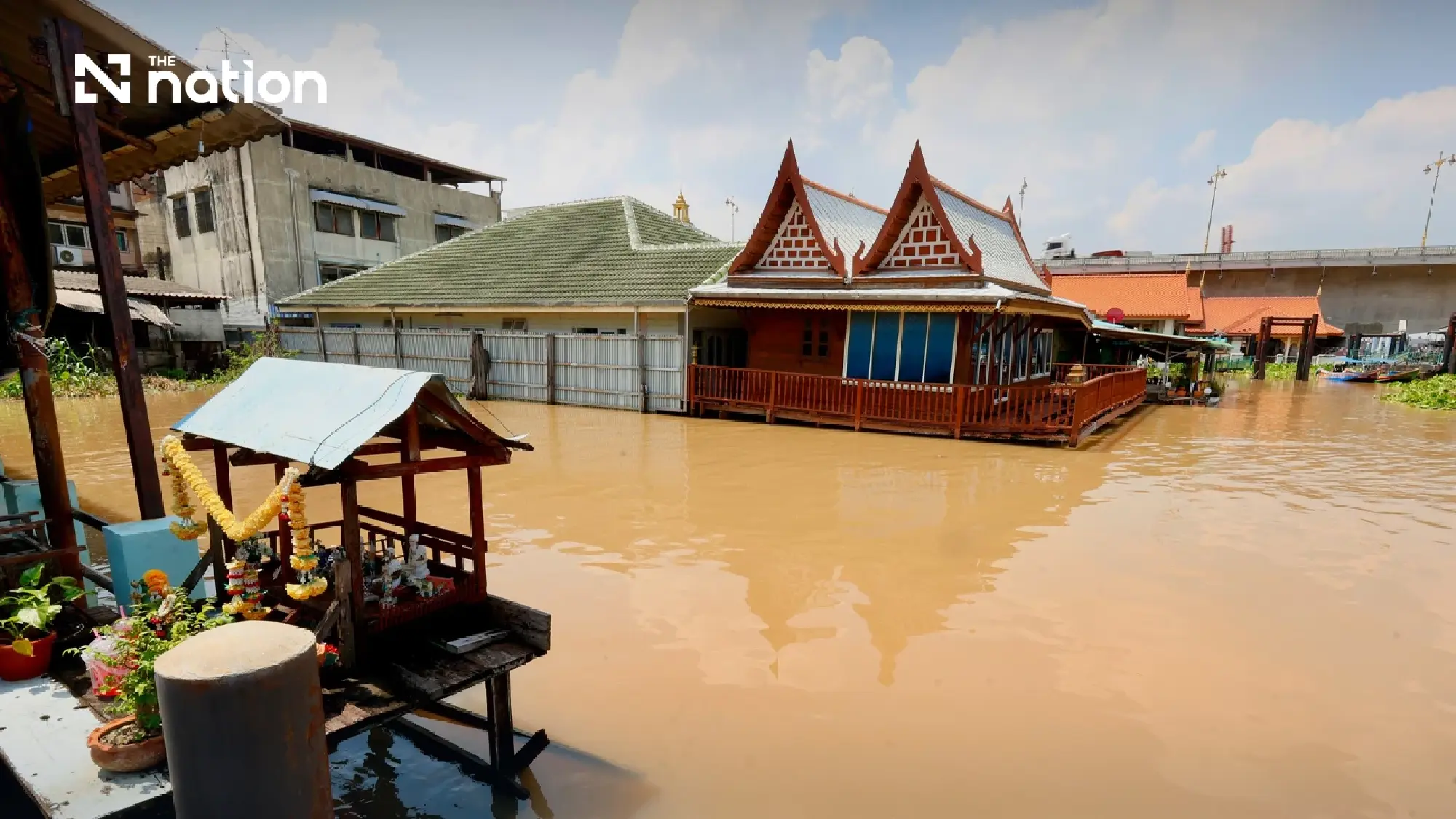

Thang Rath flood-aid registrations reach 851,547
Flood-aid registrations through the Thang Rath app reached 851,547 on October 4, said Sirithorn Somsuwan, director of the Public Information and Public Relations Division at the Department of Disaster Prevention and Mitigation (DDPM). Registration was available in all 65 eligible provinces and all 50 Bangkok districts.
Bangkok recorded the highest number of Thang Rath registrations at 371,775, followed by Samut Prakan with 122,786, Pathum Thani with 105,525 and Chachoengsao with 34,604, Sirithorn said.
Sirithorn said some applicants initially received messages stating that their addresses were outside eligible areas because the DDPM and Digital Government Development Agency (DGA) had activated registration progressively from October 2, according to disaster-area declarations. Access had since opened across all eligible areas.
Separately, Bangkok had received 35,800 registrations through its flood-assistance website, Wisanu said. The BMA had corrected problems that prevented some applicants from selecting their district, and registered users could amend their information. Residents unable to apply online could submit details at district offices during working hours.
Sirithorn said the Thang Rath system used the official house identification code to identify applications. If another resident applied for the same address, the system would indicate that the household had already registered.
Sirithorn also addressed difficulties faced by elderly residents and patients unable to travel or use online services, saying Bangkok and the DDPM were coordinating registration support for both emergency advances and Cabinet-approved payments. District offices and local administrative organisations could check the information and circumstances of applications submitted for individual households.
Emergency assistance covers housing repairs and livelihood equipment
Emergency government advances can help cover repairs, temporary accommodation and livelihood equipment, Sirithorn said. Local authorities were surveying damage and preparing lists for consideration under provincial governors’ powers, in accordance with Finance Ministry regulations.
Sirithorn listed the following assistance amounts:
- Primary residence repairs: up to 88,600 baht per home.
- Agricultural structures: up to 6,800 baht per household for repairs.
- Temporary accommodation: up to 2,500 baht, for a maximum of two months.
- Livelihood equipment: up to 13,500 baht for equipment used in the household’s main occupation.
- Serious injuries: 5,000 baht for people hospitalised for at least three days.
- Injuries resulting in disability: 16,600 baht.
Sirithorn said support involved three forms of assistance, including emergency advances and Cabinet-approved payments for the 2026 rainy season. For the Cabinet scheme, Sirithorn cited payments of 9,000 baht for primary residences flooded for seven days or longer and 5,000 baht for residents of high-rise buildings surrounded by floodwater.
DDPM denies data leak after duplicate messages
The DDPM and DGA held urgent discussions on Sunday morning after reports of repeated messages sent through the system overnight, Sirithorn said. The messages had gone repeatedly to the same recipients, and Sirithorn said there had been no data leak or hacking.
Authorities halted data transmission at about 10pm on October 3 while correcting the problem, Sirithorn said. Some messages could still be pending, but normal service was expected to resume as soon as possible. Sirithorn apologised to affected users.
