
Bhumjaithai unveils four urgent government priorities
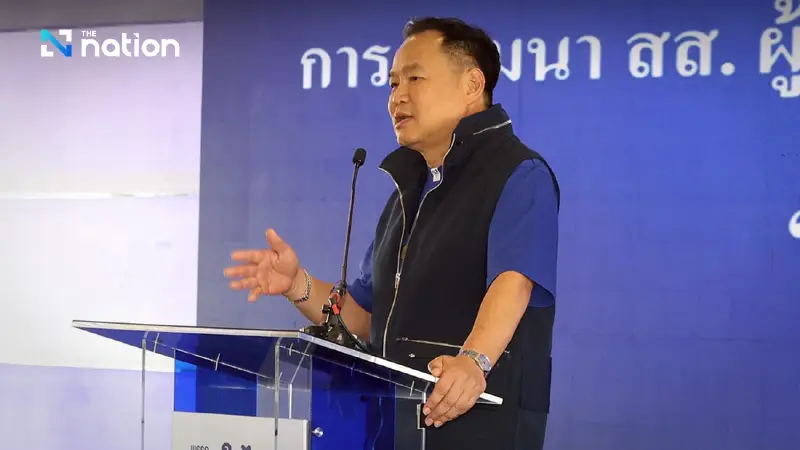


Bhumjaithai Party plans four urgent measures including ministry merger, cheaper electricity, a Super License law and a local development bill
A source from the Bhumjaithai Party revealed on March 9 that the party has identified four urgent legislative and policy priorities it intends to accelerate.
The party plans to focus on using legislative mechanisms to lead the executive branch by pushing forward laws that align with the government’s policy agenda while addressing pressing problems faced by the public.
One of the first laws the party intends to push is an amendment to transfer responsibilities by merging the Ministry of Tourism and Sports with the Ministry of Culture, as their missions are considered closely aligned. Under the proposal, the sports portfolio would be separated to focus exclusively on sports development and excellence. The amendment is expected to be submitted to parliament within six months.
The party will also push for the draft Facilitation of Licensing and Public Service Act, commonly referred to as the “Super License” law. The principle behind the legislation is to establish a one-stop service system for all permits. Businesses such as factories, hotels and spas would no longer need to seek approval from multiple agencies, but could complete the process through a single authority.
The proposal aims to make it easier for entrepreneurs and investors, both domestic and foreign, to operate in Thailand and is intended to help attract more investment. The initiative has been proposed by Ekniti Nitithanprapas and Suphajee Suthumpun, and is expected to be completed within six months.
Another piece of legislation to be pushed forward is the draft “Homeland Development Act,” which the party aims to complete within one year. The bill would include two key elements.
- First, it would allow local authorities to generate their own revenue for development. Citizens would be able to allocate 30% of their taxes to support their hometown or any locality they wish to see developed.
- Second, the bill would establish a stronger public oversight mechanism, enabling citizens to monitor how tax revenue is used. The mechanism is intended to create stronger checks than existing bodies such as the National Anti-Corruption Commission and the Public Sector Anti-Corruption Commission, ensuring that local authorities do not misuse public funds. Residents would be able to verify whether their taxes are spent for the intended purposes.
The proposal would also remove current restrictions on the age and term limits for local officials, allowing them to serve beyond the current two-term limit.
Regarding constitutional amendments, the Bhumjaithai Party believes that addressing people’s economic hardship should take priority, especially amid the current economic crisis.
A party source added that on the executive side, a Bhumjaithai-led government would aim to implement several urgent policies within three to six months.
Among them is a proposal to cap electricity costs for households. Consumers would pay no more than 3 baht per unit for the first 200 units of electricity used. Consumption beyond 200 units would be charged on a progressive tiered rate. The measure could be implemented immediately through a ministerial announcement from the Ministry of Energy.
The party also aims to liberalise the electricity sector in the longer term by introducing greater competition among electricity providers, similar to the mobile telecommunications market, allowing consumers to choose companies offering the most favourable services and benefits.
