
Thailand pushes common ticketing as MRT taps shift to EMV cards
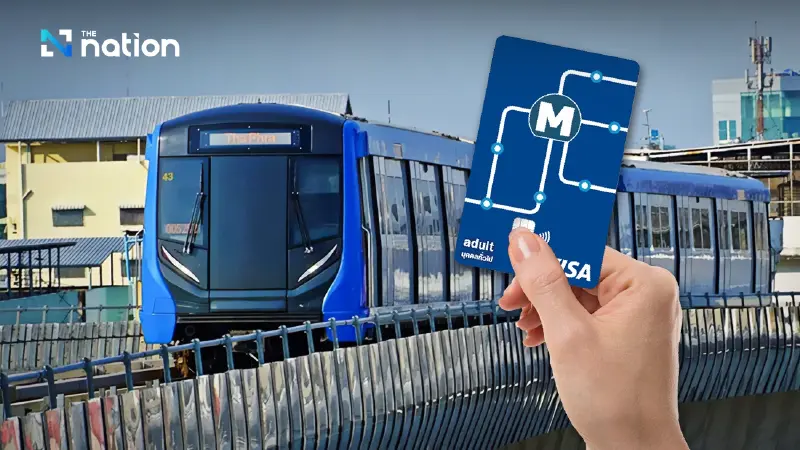


The Transport Ministry is pressing ahead with a common ticketing system, with BEM set to phase out old MRT cards and expand EMV contactless fare payment.
The Transport Ministry is stepping up efforts to roll out its common ticketing policy, aiming to make fare payments more convenient and reduce travel costs for the public.
The ministry said it had already achieved a key milestone with the Common Ticketing System Management Act 2025, which came into force on December 28, 2025. The law formally opens the way for a nationwide common ticketing system, under which passengers will eventually be able to use a single card across all forms of public transport.
The next phase will focus on issuing related subordinate laws, setting up a fund to support the common ticketing system, scrapping entry fees charged when transferring between public transport services, and introducing a common fare structure. The ministry said all of these measures were aimed at one shared goal: sustainably lowering travel costs for commuters.
New law lays groundwork for single-ticket travel
Bangkok Expressway and Metro Public Company Limited, or BEM, has emerged as one of the first operators to pilot tap-and-pay travel under the new policy. The company, which operates the MRT Blue and Purple lines, has already introduced EMV contactless fare payment.
Under the system, passengers can use EMV contactless credit and debit cards bearing the Visa, Mastercard or UnionPay logo to access MRT services more conveniently.
BEM is now preparing to complete the transition from existing MRT and MRT Plus cards to EMV contactless payment, allowing passengers to use eligible bank cards they already hold without needing a separate travel card.
BEM sets timeline for ending old MRT cards
The company has announced the following key deadlines for the transition:
- From June 1, 2026: MRT and MRT Plus cards will no longer be accepted for fare payment on the MRT Blue and Purple lines at any station. Passengers will no longer be able to tap those cards at automatic gates.
- December 31, 2026: Final day of the fee waiver period for replacing old cards with Mangmoom EMV cards.
- December 31, 2027: Final day for passengers to claim refunds on any remaining stored value in old cards.
Passengers who already hold MRT EMV cards can continue using them immediately without needing to change cards.
Three travel options offered to passengers
The ministry said passengers would have three main options going forward:
1. Use existing bank cards for travel immediately
Eligible cards include:
- Credit cards: Visa and Mastercard from all banks
- Debit cards: UOB, Krung Thai Bank, Bank of Ayudhya, Kasikornbank and Siam Commercial Bank
- UnionPay cards: AEON-UnionPay Platinum, Bangkok Bank UnionPay Platinum, Kasikornbank UnionPay credit card, Kasikornbank Express Cash UnionPay card, KTC UnionPay credit card, KTC Proud UnionPay cash card and ICBC (Thai) UnionPay credit card
- Prepaid cards: BigPay, Krung Thai Bank, Bank of Ayudhya, Kasikornbank, Siam Commercial Bank and Bangkok Bank
2. Switch to Mangmoom EMV cards to keep discount privileges
Students and senior citizens can continue receiving fare discounts by changing their MRT or MRT Plus cards to Mangmoom EMV cards free of charge by December 31, 2026. Children under 15 will receive MRT EMV student cards instead of Mangmoom EMV cards.
3. Use Smart Parking for Park & Ride journeys
Park & Ride users will no longer need to carry separate parking and rail cards, as the Smart Parking system will allow the journey to be linked more smoothly.
Passengers wishing to switch from old cards to Mangmoom EMV cards can do so without paying a new card issuance fee, provided they make the change by December 31, 2026. They must bring their old card and national ID card to a ticket office. Refunds for unused stored value on old cards will remain available until December 31, 2027.
