
Hormuz crisis opens door for Thailand’s THB1tn Land Bridge
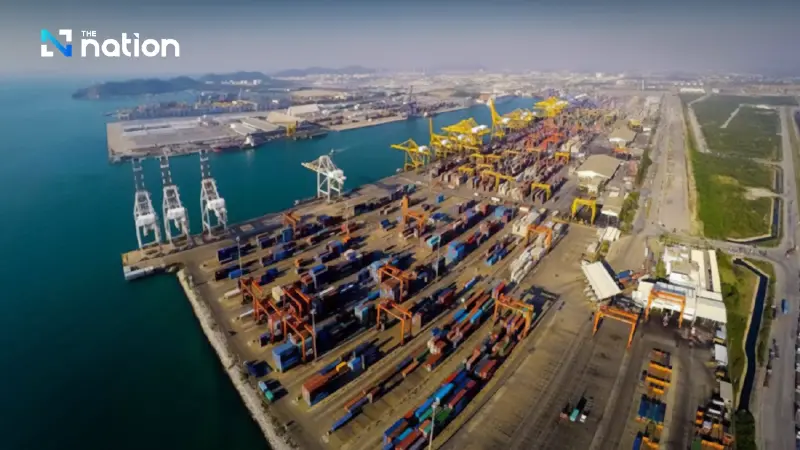


Transport Minister Phipat says Thailand’s Land Bridge could gain strategic value from Hormuz risks, with a Cabinet proposal due by July
Deputy Prime Minister and Transport Minister Phipat Ratchakitprakarn said Thailand’s trillion-baht Land Bridge project could offer the country a strategic advantage if tensions around the Strait of Hormuz create future disruption to global shipping.
Speaking at the Bhumjaithai Party on Saturday (April 25), Phipat responded to Prime Minister and Interior Minister Anutin Charnvirakul’s earlier remark that the Land Bridge should continue to be reviewed.
He said that position was correct, as problems could arise around the Strait of Hormuz in the future.
The Land Bridge has been pitched as a project linking the Andaman Sea and the Gulf of Thailand through deep-sea ports in Ranong and Chumphon, connected by transport infrastructure across southern Thailand. Earlier feasibility work valued the project at about THB997 billion.
Phipat said Thailand should use the situation as an opportunity to develop ports on both coasts, allowing the country to connect two sides of the world’s ocean routes.
Responding to criticism that the project would not save time because containers would need to be unloaded and reloaded, Pipat said critics should examine whether that argument was true.
Based on his own research, he said more than 90% of container shipping involved transshipment cargo, meaning goods were not simply transported from one country to one final destination.
Instead, cargo is consolidated from different ports before being transferred and separated for onward shipment to various countries.
Phipat argued that Thailand would not necessarily lose time through cargo handling under the Land Bridge model.
If cargo were transferred on Thailand’s coast, he said, it would otherwise have to be transferred in Singapore as well. He added that Thailand was now seeking to attract more transshipment cargo.
Phipat said the Land Bridge project would begin within this year. The Office of Transport and Traffic Policy and Planning has completed its survey, and he plans to inspect the area again.
Asked where construction would begin, he said the starting point would depend on investors. The government would open bidding to both foreign and domestic investors on an equal basis, with investors deciding which area to develop first.
Before that process can move forward, the project must be submitted to Cabinet for approval.
Pipat said he expected to propose the project to Cabinet between June and July, with the process effectively begin within this year.
The project is expected to require around THB1 trillion in funding, but Thailand would not directly invest that amount, he said. Instead, the state would grant concessions and allocate land, while private investors would fund the development.
On environmental and health concerns, Phipat said the project would need to undergo an Environmental and Health Impact Assessment, or EHIA.
He acknowledged that there were still problems to address and said the government would need to talk to local communities to determine how much of the opposition was based on accurate information.
Phipat said he would explain to residents that some of the information they had received might not be correct, while noting that non-governmental organisations were already preparing to monitor the project closely.
He said he would visit the Land Bridge area in May and expected investment to open in the third quarter of this year.
