
Phiphat to open May talks with BTS, BEM on rail buyback
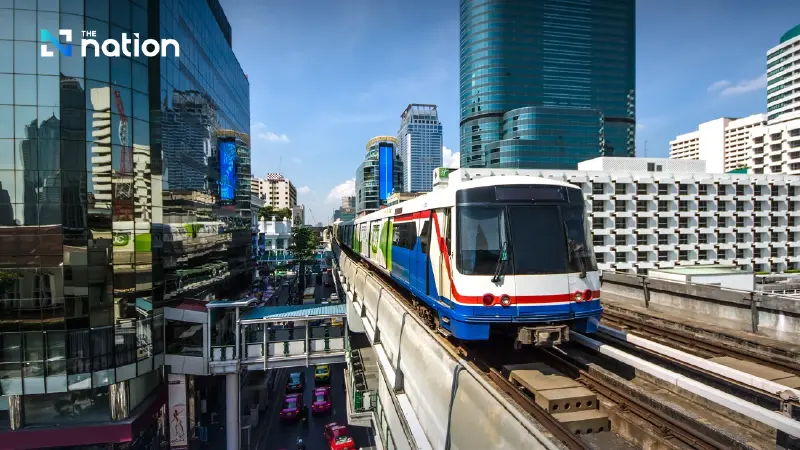


Transport Ministry plans May talks with BTS and BEM on rail concession buybacks as Thailand pushes ahead with a single-ticket system and flat fares
Deputy Prime Minister and Transport Minister Phiphat Ratchakitprakarn said the Transport Ministry will begin negotiations in May with BTS Group Holdings Plc and Bangkok Expressway and Metro Plc (BEM) on plans to buy back electric rail concessions as part of the government’s push for a unified fare and ticketing system.

He said two key laws, the Rail Transport Act B.E. 2568 (2025) and the Common Ticketing System Management Act B.E. 2568 (2025), have already cleared the Senate and are now moving into the drafting of subordinate legislation. Once that process is completed, the package will be submitted to the Cabinet.
After that, the ministry plans to move ahead with the next phase: bringing rail systems back from private operators in order to develop a single ownership model. Under that concept, every line and every colour-coded route would be transferred to the Mass Rapid Transit Authority of Thailand (MRTA), allowing the entire network to be managed as one system.
That, Phiphat said, would make it possible to introduce a shared fare framework across all lines and allow passengers to tap and pay more conveniently with a single EMV contactless card.

To speed up the process, the ministry expects the legal work and drafting of subordinate regulations to be completed by June. Negotiations with the two concession holders, BTS and BEM, will therefore begin in parallel, with talks due to start in May.
“In May, we will have to begin negotiations with both private operators on how the rail buyback can be carried out,” Phiphat said. “This is an urgent policy that the government and the ministry will push forward as a gift to the public. All rail lines must use the same fare, starting at THB40 for the whole day from January 1, 2027. The common ticketing system must also be expanded to cover buses and passenger boats.”
Pichet Kunadhamraks, director-general of the Department of Rail Transport, said the Rail Transport Act has already been in force since March. A total of 77 pieces of subordinate legislation are required, and some are already ready for immediate promulgation.
He said the Rail Transport Policy Committee will meet on April 23 to consider several measures, including changes to rules governing free travel for young children. One proposal would raise the height threshold for free travel from 90 centimetres to 120 centimetres.
A Transport Ministry source said officials have already studied a suitable fare framework based on passenger travel behaviour. Under the proposed structure, passengers would pay THB40 a day if each trip lasts no more than 40 minutes. If a journey exceeds 40 minutes, an additional THB20 would be charged, bringing the maximum daily fare to THB60, with passengers able to transfer across all lines in the system.
According to the source, the common-ticket fare model under study would apply to every rail route. The proposed structure would start at THB40 a day for trips of no more than 40 minutes per ride, with an unlimited all-day cap of THB60. Fares would then rise by THB5 a year in an effort to reduce losses and cut the need for state subsidies.
The source said, however, that the new fare system can only be implemented if the concessions are first brought back under state control, or if existing PPP Net Cost contracts are amended. Under the current structure, private operators invest in the system, run the service and collect fare revenue themselves.
The proposal is to convert those arrangements into PPP Gross Cost contracts, under which the state would assume full fare revenue risk while hiring private companies to continue operating and maintaining the systems.
The same source insisted that there would be no cash buyback that would add to the public debt burden. Instead, the preferred approach would be to amend the contracts so that the state becomes the concession owner while the private sector continues to run services under the original concession period.
Under that structure, the private operators would still be able to use the new concession arrangements as collateral for loans from financial institutions and would continue to receive operating payments under contract.
The ministry has already assessed the value of assets and operation and maintenance contracts under the existing BTS and BEM rail concessions at more than THB140 billion.
Key proposed fare model
• THB40 a day for trips of up to 40 minutes per journey
• An extra THB20 for trips exceeding 40 minutes
• Maximum daily fare capped at THB60
• Unlimited travel across all rail lines under the system
• Annual fare adjustment of THB5 proposed
Key policy goals
• Bring all rail lines under MRTA supervision through a single ownership model
• Introduce one common fare framework for all lines
• Expand EMV contactless payment across rail, bus and boat services
• Launch the unified fare policy from January 1, 2027
