
Thailand Targets Self-Reliance with Major Defence Industry Drive
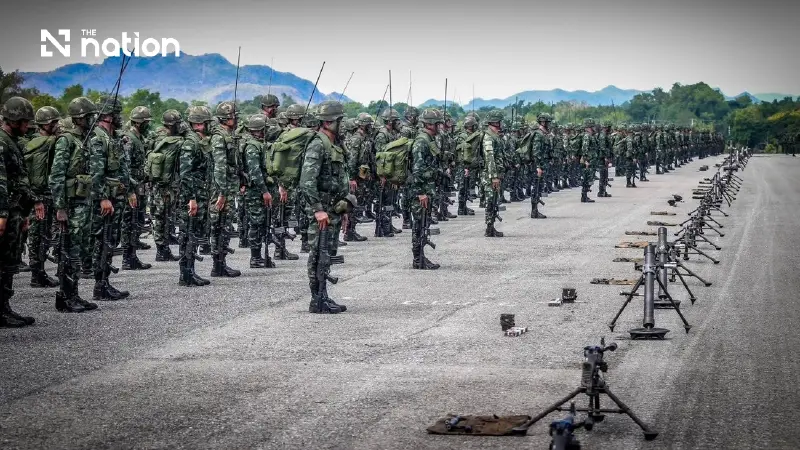


Bangkok targets self-reliance and economic growth by prioritizing domestic tech, offset policies, and regional partnerships
- Thailand is launching a "Made in Thailand" initiative to shift from being an importer of military equipment to a domestic developer and producer, aiming for greater self-reliance.
- The government is directing its armed forces to prioritize locally made products, using offset policies and local content requirements to accelerate technology transfer and build industrial capability.
- This defence drive is also an economic strategy intended to keep spending within the domestic economy, create jobs, upskill personnel, and build a high-value export sector.
- The strategy involves strengthening regional partnerships, such as with Malaysia for joint production and technology sharing, and fostering domestic collaboration between ministries to commercialise research.
Bangkok targets self-reliance and economic growth by prioritising domestic tech, offset policies, and regional partnerships.
The Thai government has outlined plans to transform the country from an importer of military equipment into an independent developer and producer of security technology, officials confirmed on Thursday.
Speaking on 30 July, deputy government spokesperson Ratchada Thanadirek stated that Prime Minister Anutin Charnvirakul is prioritising the modernisation of the domestic defence sector. The initiative aims to support the government's "Made in Thailand" strategy, keeping defence expenditure within the domestic economy to generate employment, upskill personnel, and bolster local businesses.
The announcement follows the conclusion of the THAIDEF-EX 2026 exhibition, held from 8 to 10 July. The event hosted 112 local exhibitors, drew over 4,000 visitors, and generated 53 business pairings valued at more than 500 million baht.
According to Ratchada, the event’s success demonstrates that the Thai defence sector is rapidly shifting towards a high-value industry spanning technology, investment, and exports.
In response, the Prime Minister instructed relevant government bodies to commercialise these technological advances. Security services and the armed forces have been directed to prioritise locally manufactured items, enabling domestic contractors to integrate into global supply chains.
Defence Minister Lt Gen Adul Boonthamcharoen has ordered military units to adopt "Made in Thailand" products alongside offset policies and local content requirements. These measures aim to accelerate technology transfer, modernise industrial capability, and develop engineering talent for future industries.
The strategy also emphasises international partnerships. During an official visit to Malaysia on 13–14 July, Lt Gen Adul discussed expanding bilateral defence cooperation with his counterpart, focusing on supply chain integration, technology sharing, and joint capacity building.

Both nations plan to expand on existing projects, including the production of the First Win 4x4 armoured vehicle, and explore maintenance, repair, and overhaul (MRO) opportunities with Malaysian aerospace firm AIROD. A formal Memorandum of Understanding (MOU) on Defence Cooperation is expected to be signed during the Thai–Malaysian General Border Committee meeting late this year.
Domestically, a joint MOU was signed between the Ministry of Defence, the Ministry of Industry, and the Ministry of Higher Education, Science, Research and Innovation. The agreement seeks to translate military and dual-use research into commercial and national security applications, reducing import reliance and strengthening private sector competitiveness.
"The government does not view the defence sector solely through the lens of national security but as a high-technology industry capable of driving innovation and economic opportunity," Ratchada said. "Prioritising local production and strengthening regional ties will boost self-reliance and build a high-value export sector for the future."
