
Ten-year-old rice must be tested before sold, Srettha says
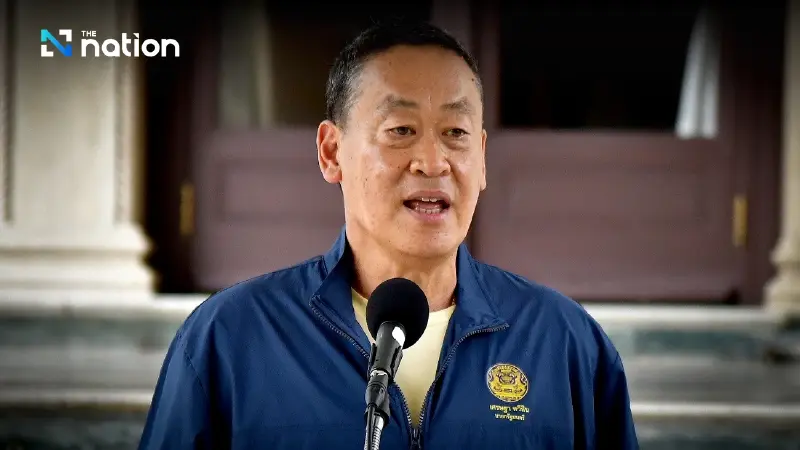


Prime Minister Srettha Thavisin said on Saturday that his government would arrange for scientific tests by “reliable agencies” on the 10-year-old rice stored under the rice-pledging programme to determine it is safe for consumption.
He said the goal was to clear any doubts about the quality and safety of the 15,000 tonnes of rice in government stocks put up for auction by the Commerce Ministry’s Warehouse Organisation.
“I want to make sure that safety comes first. If it’s not safe, we won’t sell it,” Srettha said.
“If it can be proved that the rice is edible, that’s fine. If the test finds any problem, I believe [the rice] can’t be sold.”
He added that he believed Commerce Minister Phumtham Wechayachai would agree with him that the government should not sell rice that is unsafe for consumption.
The prime minister said the agency to be selected for testing the rice’s quality should be a “highly trustworthy” one, and preferably not a state agency. “Society may have doubts if a government agency does the test.”
When asked if the rice should rather be processed into alcohol, Srettha said: “We should wait for the test results first before deciding what to do next.”
This stock is the last of 18 million tonnes of milled rice stored at various warehouses under the Yingluck Shinawatra government’s controversial rice-pledging programme before it was overthrown in a military coup in May 2014. The post-coup government led by General Prayut Chan-o-cha auctioned off most of the 18 million tonnes – more than 80% of which was described as “low quality” at that time.
Srettha’s remarks on Saturday came after Associate Professor Weerachai Phutdhawong of Kasetsart University’s Department of Chemistry disclosed the results of his test on a sample of the 10-year-old rice.
He said in a Facebook post on Friday that his tests found a “dangerously high level” of a potentially cancer-causing substance in the rice, and he suggested that it should not be eaten. The academic said more tests would be carried out next week to find if the rice contains any residue of pest-control chemicals such as phosphide or methyl bromide.
The prime minister admitted on Saturday that he ate some of the old rice in question.
When asked by reporters if there was any problem, he replied with a smile, “I am fine. Thank you for asking.”
However, he added that he had no intention of guaranteeing the quality of the rice himself. “When there are concerns [about the rice’s quality and safety], it is better to have relevant agencies do scientific tests,” he said.
Phumtham, who doubles as deputy prime minister, earlier maintained that the rice was perfectly edible even though its colouring had changed and was not as delicious as newly harvested rice.
On Monday, he led a group of civil servants, media, rice inspectors and exporters to check out the 10-year-old rice stored at two warehouses in Surin province. Before the cameras, Phumtham ate cooked rice served with spicy stir-fried chicken with basil and omelette. However, some critics claimed he had just a small amount of rice.
