
ISOC opposes Xinjiang-style model for deep South
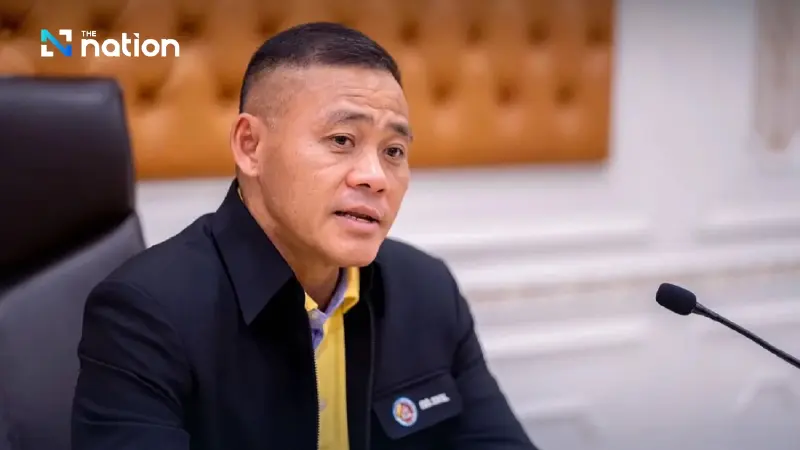


ISOC rejects justice minister’s proposal to govern Thailand’s deep South like China’s Xinjiang, citing constitutional and national unity concerns.
The Internal Security Operations Command (ISOC) has voiced strong opposition to a proposal by Justice Minister Tawee Sodsong suggesting that Thailand’s three southernmost provinces could adopt a governance model similar to that of China’s Xinjiang Uygur Autonomous Region.
Although Maj Gen Thammanoon Maison, ISOC spokesperson, did not directly mention Tawee by name, he asserted that comparing Thailand’s southern border provinces to Xinjiang was both inaccurate and inappropriate.
Thailand’s Constitution Prohibits Division of the Kingdom
Thammanoon highlighted Article 1 of the Thai Constitution, which states that “Thailand is one and indivisible Kingdom.” He emphasised that any form of autonomy or self-rule that suggests separation from the Kingdom contradicts the charter.
Tawee’s Remarks Spark Controversy
During an April 12 visit to Yarang District in Pattani, Tawee launched a community tourism project and delivered a speech comparing Thailand’s deep South to Xinjiang, citing cultural similarities, including the Muslim-majority population and the use of local dialects.
“When I visited Xinjiang, I wondered whether the three southern border provinces could become like Xinjiang. Local people must talk among themselves. Most importantly, the administrators of Xinjiang are Muslims,” Tawee said.
His statement triggered strong backlash on Thai social media platforms, with critics questioning the implications for Thai Buddhists in the region and some calling for legal action against Tawee for alleged rebellion.
Historical Context: The Ancient State of Patani
Thailand’s deep South, bordering Malaysia, historically formed part of the ancient Patani Sultanate, which included Yala, Pattani, Narathiwat, and parts of Songkhla. Today, it is commonly referred to as the three southern border provinces, excluding most of Songkhla due to its mixed demographics.
ISOC Clarifies Administrative Possibilities Within Constitutional Limits
Thammanoon stated that while the government is open to discussions on suitable administrative forms for the region, any arrangement must align with the constitution. He noted that special administrative zones such as the Bangkok Metropolitan Administration and Pattaya City still function under Thai law without infringing upon national unity.
Cultural Diversity Already Exists Within Thai Governance
Citing other regions like Chiang Mai and Mae Hong Son, Thammanoon explained that diverse local customs, dialects, and dress already coexist within the national structure. He reiterated that the Thai constitution protects religious freedom and cultural expression without requiring regional autonomy.
Government Open to Dialogue, But Unity Is Non-Negotiable
In conclusion, Thammanoon reaffirmed the government’s commitment to inclusive dialogue on governance models for the deep South, stressing that any future framework must preserve the sovereignty and unity of the Thai state.
