
Phumtham urges People’s Party to decide carefully in first bid to back non-party PM
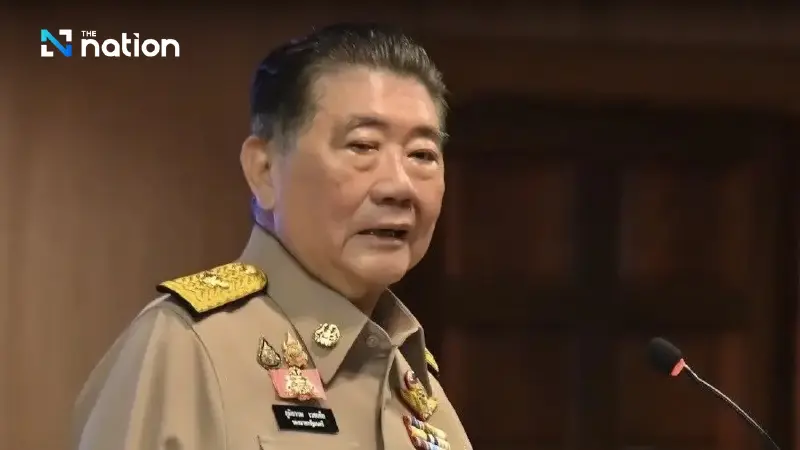


Acting Prime Minister Phumtham Wechayachai cautioned the People’s Party to weigh its decision carefully, noting this would be the first time it backs a prime minister from outside its ranks.
Acting Prime Minister Phumtham Wechayachai said on Monday (September 1) that he urged the People’s Party to carefully consider whom it would support as the next prime minister.
Phumtham said that during talks with the People’s Party on Sunday (August 31), its first question centred on the 1997 constitution. He told them that the coalition had no hidden agenda, stressing that the core principle was to draft a new charter through a Constituent Assembly, a process supported by Pheu Thai and its coalition partners, though not by Bhumjaithai in the past.
On the issue of the Cambodia-related MOUs 43 and 44, Phumtham said the matter should not be contentious, regardless of whether handled by the current or a future government. He insisted there were no hidden benefits involved and proposed attaching the matter to a referendum so the public could decide, allowing the controversy to be resolved once and for all.
He also acknowledged past frictions between Pheu Thai and the People’s Party but maintained that his party had honoured its commitments. He rejected accusations that Pheu Thai had twice broken its word, pointing out that it was Pheu Thai MPs who nominated Move Forward Party leader Pita Limjaroenrat for prime minister on both occasions, and that all Pheu Thai MPs voted in support. “The real problem,” he said, “was that senators promised to vote for him but ultimately did not.”
Asked whether Pheu Thai would accept becoming the opposition or move to dissolve the House if the People’s Party declined to support, Phumtham said no such decision had been made. “We have simply presented the issues for the People’s Party to decide. If they choose Bhumjaithai, that is their right. Whatever course Pheu Thai takes will follow constitutional processes, and we will explore all possible solutions,” he said.
He urged the People’s Party to clearly state whether it would support Pheu Thai or Bhumjaithai, and to specify its concerns so they could be addressed.
When asked if Pheu Thai had ruled out going into opposition, Phumtham replied that no final decision had been made, but the party still aimed to lead a government. “We have many policies and national agendas. We need to reset the distorted political situation, beginning with constitutional amendments,” he said.
Regarding the timeline for selecting a new prime minister, Phumtham emphasised urgency: “The sooner, the better. If this drags on, the country will be stuck with a lame-duck government. It is up to the People’s Party to decide carefully, because this is a historic choice; they have never voted for a prime minister from outside their party. If they start with Bhumjaithai, there must be guarantees that the country will not be harmed.”
He added that Pheu Thai was waiting for the People’s Party to specify what assurances it sought. “It is their responsibility to raise these issues, and I am ready to respond,” Phumtham said.
As to whether the People’s Party would deliver a firm answer on Monday, he said he was uncertain: “They told us they have many mechanisms to consult. It doesn’t matter whether the decision comes today or later, but once it is made, we ask that they inform us so we can take the next step.”
On questions about other coalition partners, such as the Democrat Party, which has yet to clarify its position, Phumtham said: “They have not withdrawn. At this point, we are still together. Each party will decide according to the political situation, and we respect that.”
