
House passes Clean Air Bill with overwhelming 309 votes
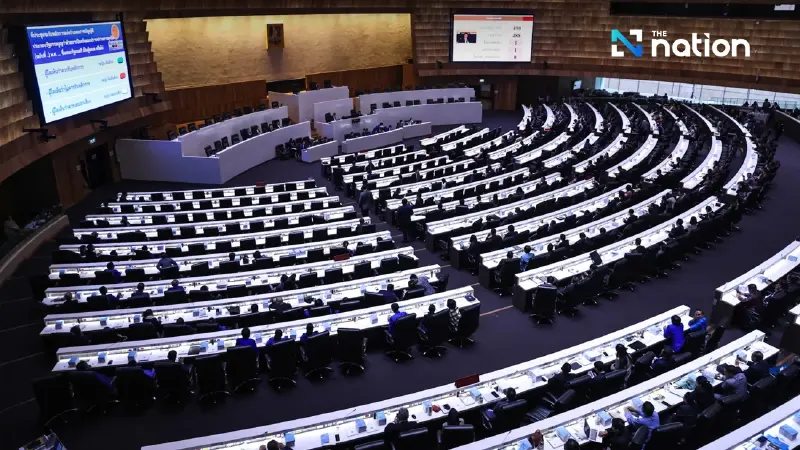


Thailand’s House of Representatives passes Clean Air Bill 309–0, guaranteeing citizens’ right to clean air and strict penalties for polluters.
The House of Representatives on Tuesday unanimously passed the Clean Air Bill in its third reading, following three days of deliberation during the second reading.
All 309 MPs present, from both coalition and opposition parties, voted in favour of the bill. It will now move to the Senate for consideration in three additional readings.
Among other provisions, the bill guarantees citizens’ right to clean air and imposes penalties on polluters and businesses that cause air pollution.
On Tuesday, the House completed deliberations on the remaining 11 of 102 articles in the second reading. The lengthy process stemmed from MPs reserving their right to amend 305 sections of the draft, which had been previously vetted by a special House committee.
After the bill’s passage, Jakkapol Tangsutthitham, chairman of the vetting panel, thanked MPs for their participation, saying the legislation would become a driving force in restoring clean air to the public. He expressed hope that the Senate would consider and approve the bill in line with its original intent.
Jakkapol noted that December marks the start of seasonal farm burning, which contributes heavily to air pollution, and said he hoped the bill would be enacted in time to provide effective tools to address such problems.
Thossaporn Serirak (Pheu Thai–Phrae) also thanked the vetting panel for working over one year and eight months to refine the draft, and expressed appreciation to all MPs who supported the bill. He added that some MPs were absent from the vote due to scheduling conflicts, not because they opposed the legislation.
Thossaporn explained that the second reading took considerable time because MPs sought amendments to 305 sections — the highest number ever recorded for a bill — with only four articles left unchanged, while 98 were amended.
Key features of the Clean Air Bill
- Establishing the right to clean air for all citizens, alongside an emphasis on public health.
- Adopting the Polluter Pays Principle, supported by economic measures to encourage behavioural change among polluters, in line with the “carrot and stick” approach.
- Introducing clear penalties for individuals or entities responsible for air pollution.
- Promoting collaborative management and data integration among all sectors, including government agencies and the public.
- Implementing a supply-chain monitoring system for products with potential to cause transboundary pollution, together with a traceability mechanism to verify data accuracy. This addresses gaps in Singapore’s transboundary pollution law, which lacks tools to hold parent companies accountable when subsidiaries act as fronts.
- Enforcing penalties for individuals or operators found to be sources of pollution, or for those who submit false or delayed information.
- Decentralising authority by empowering locally elected administrative organisations to play a clear and active role in managing air pollution.
