
EC says “7,500 baht per head” vote-buying claim is only an estimate, vows tighter checks in risk areas
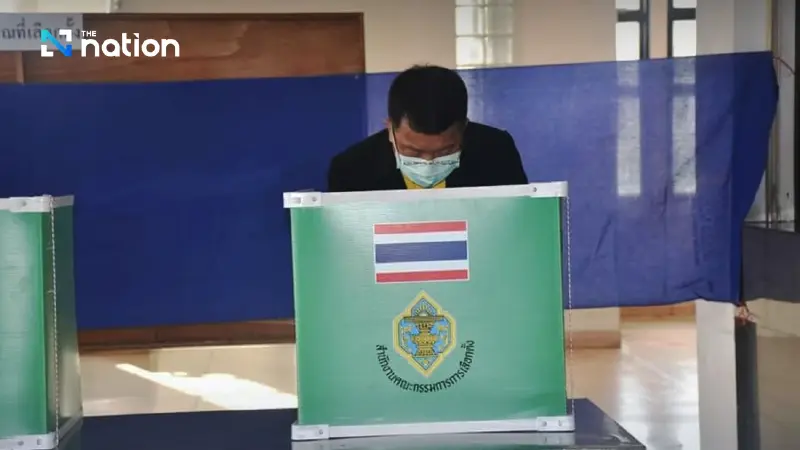


Election Commission secretary-general says a private-sector claim of vote-buying at 7,500 baht per head is an estimate, and says the EC is intensifying prevention efforts and deploying rapid teams in high-risk constituencies.
Sawang Boonmee, secretary-general of the Election Commission (EC), responded to claims disclosed by the Joint Standing Committee on Commerce, Industry and Banking (JSCCIB) based on a survey suggesting vote-buying has become intense—reportedly reaching 7,500 baht per person—saying the EC must respond to such information.
Sawang said the EC’s focus is on prevention and deterrence, using concrete processes and networks to stop such incidents from occurring.

He said the EC’s intelligence function was already aware of related information, but it did not know the precise amounts involved. The figure cited, he said, may be an estimate or an academically framed opinion by the private sector. Regardless, he stressed, it should not happen. It is the EC’s duty to ensure such practices do not become significant to voting outcomes or a condition that determines election winners.
Asked whether the EC would invite private-sector researchers who conducted the survey to provide information, Sawang said this was not necessary, insisting the EC’s role is to prevent and to use information it receives to block wrongdoing.
“Stories are one thing—sometimes they are about local politics or power games—but what we do is operational,” he said. “At this time, deterrence involves using intelligence in coordination with civil authorities, and deploying rapid-response teams into areas we have categorised—whether red, yellow or white. We do this every time. Intelligence and reality may not always be the same.”

Asked which regions contained most of the “red” areas, Sawang said red areas exist in every region, and are not concentrated in any single part of the country. The designation depends on the level of competition in each constituency. He said “intensity” does not necessarily mean the use of force, but refers to how fiercely contested an area is.
“Anyone can commit offences—candidates themselves, members of the public, or even EC officials involved in running the election,” he said. “We do not want that to happen because it will make the election result unacceptable.”

On reports that he had sent a message in a Line group to EC staff urging them to campaign against vote-buying, Sawang said he wanted an election that is accepted, conducted in a positive atmosphere, and based on clean votes, which reflect the quality of the election.
He said the EC wants two things: high turnout—which he said was not a concern, as he expects turnout to exceed the last election’s 75%—and votes cast based on policies. Voters, he said, should choose the party or candidate whose policies they believe best represent them, not for other reasons.
He reiterated that the EC wants an election that is accepted by the public and serves as a starting point for developing the country to its full potential.
