
Supreme Court jails ‘Jeng Dokjig’ 5 years, 4 months over 2010 unrest
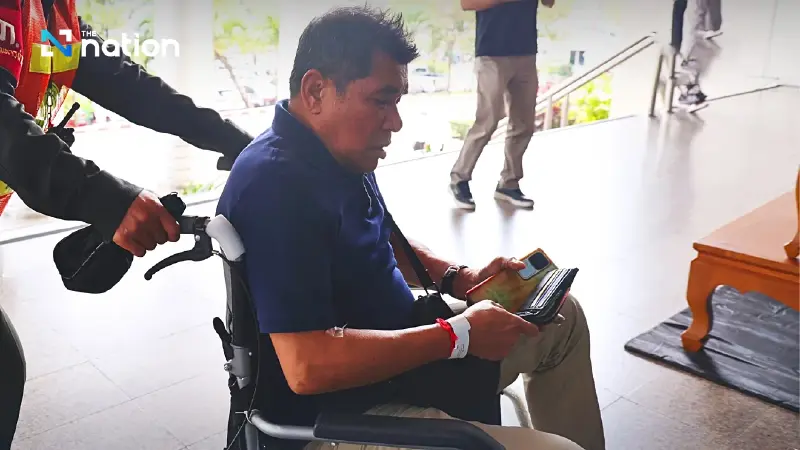


The Supreme Court has upheld an appeal court ruling sentencing political activist Yoswaris Chuklom, known as “Jeng Dokjig”, to five years and four months in prison and Suksek Poltue to life imprisonment, in a case tied to political violence during the 2010 protests.
The Supreme Court on Tuesday sentenced political activist Yoswaris Chuklom, better known as “Jeng Dokjig”, to five years and four months in prison, while handing life imprisonment to Suksek Poltue, in a case linked to political violence during the 2010 protests against the Abhisit Vejjajiva government.
The ruling was read out at Courtroom 609 of the Criminal Court on Ratchadaphisek Road, with the Supreme Court upholding the Court of Appeal’s judgment.
Supreme Court upholds appeal court ruling
The court originally sentenced Yoswaris, the 7th defendant, to eight years, before reducing the term by one-third to five years and four months. The sentence was not suspended.
Suksek, the 12th defendant, was sentenced to life imprisonment.
Both had appealed to the Supreme Court after the Court of Appeal’s decision.
Case tied to UDD protest period in 2010
Prosecutors from Special Litigation Division 1 filed the case against 24 defendants, including Veera Musikapong, Jatuporn Prompan and Nattawut Saikua, over alleged offences including terrorism and causing public disorder in connection with rallies linked to the United Front for Democracy Against Dictatorship (UDD).
The indictment covered the period from February 28 to May 20, 2010, when demonstrators sought to pressure the government and demand that then-prime minister Abhisit dissolve the House and call a new election.
Indictment alleges incitement, disorder and weapons
According to the indictment, the defendants were accused of inciting people to join sustained protests, organising rallies at Phan Fa Lilat Bridge and the Ratchaprasong intersection, and taking part in marches to surround various locations.
It also alleged the use of weapons and dangerous ordnance, attacks on private residences, and the stockpiling of personnel and military-grade weapons, along with training in the use of weapons for terrorist acts.
All defendants denied the allegations. The trial court initially acquitted all defendants, prompting an appeal by prosecutors.
Appeals, health claim and court’s decision to proceed
The Court of Appeal amended the trial court’s ruling on January 9, 2023, sentencing Yoswaris and Suksek, while acquitting the other defendants.
The Criminal Court first set the Supreme Court ruling to be read on December 16, 2025, but it was postponed after Yoswaris’s lawyer submitted medical documents saying he was being treated for a blocked cerebral blood vessel.
On Tuesday, the court rejected a further postponement request and ordered the defendant to appear, warning that failure to do so could lead to an arrest warrant and a fine for his guarantor. Yoswaris was brought to court from hospital in a wheelchair.
Supreme Court: multiple offences, appeals dismissed
In its reasoning, the Supreme Court said the offence of coercion involving five or more persons, as alleged in the case, involved intent to assault military personnel and to cause fear of danger to life and property, which differed from offences relating to damage to property.
The court found the acts constituted multiple separate offences.
The court dismissed the appeals by Yoswaris and Suksek and upheld the Court of Appeal’s ruling.
Detention warrants were then issued, with officials ordered to transfer both defendants to the Bangkok Remand Prison.
