
Natthaphong accepts election result, urges EC probe into alleged ballot irregularities
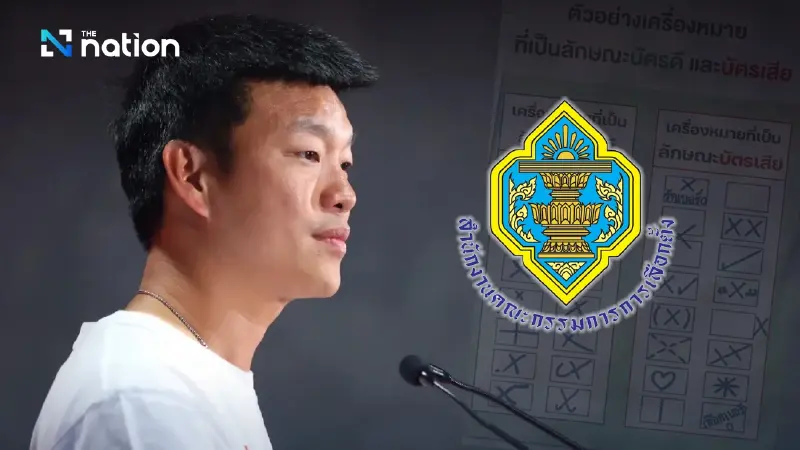


People’s Party leader Natthaphong Ruengpanyawut said he accepted the election outcome but urged the Election Commission to investigate alleged ballot irregularities, citing unusually high invalid ballots and turnout discrepancies in areas including Lampang and Khon Kaen, while calling on supporters to report suspected cases and remain engaged in politics.
People’s Party leader and prime ministerial candidate Natthaphong Ruengpanyawut said on Monday he accepted the election outcome, but called on the Election Commission (EC) to investigate multiple allegations of ballot irregularities, including unusually high numbers of invalid ballots and discrepancies between voter turnout figures and ballots cast at several polling stations.
Natthaphong said the party had received numerous complaints about suspiciously high invalid-ballot totals and inconsistencies between the number of voters who signed in and the number of ballots counted.
“Every vote matters, and the People’s Party and I will do our utmost to defend every vote of the people,” he said.
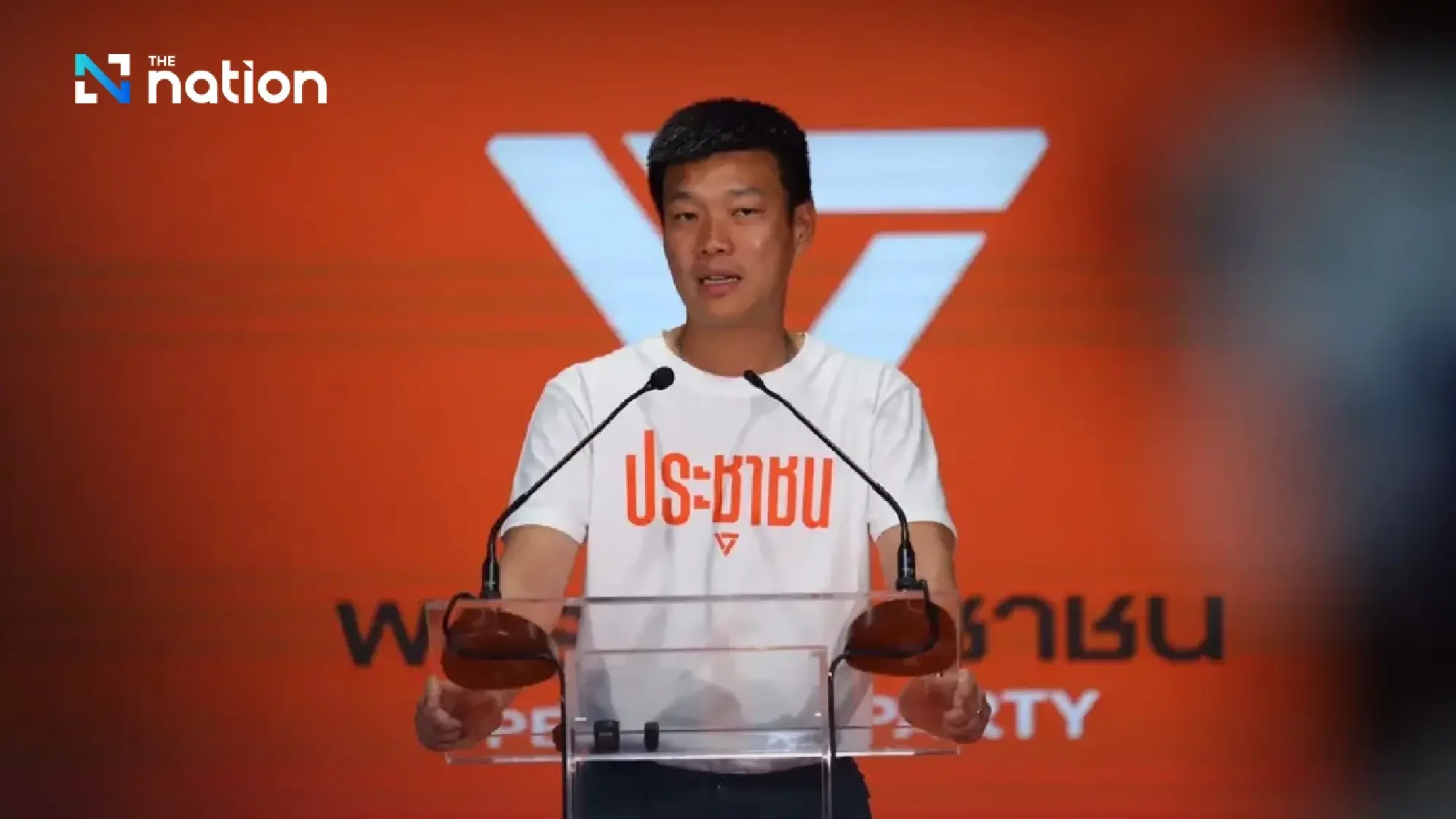

Lampang and Khon Kaen cited in recount requests
Natthaphong pointed to Lampang Constituency 2 as one area with a suspiciously high number of invalid ballots. He said more than 7,000 ballots were deemed invalid, while the People’s Party candidate lost by about 2,000 votes.
“For this case, the People’s Party will ask the EC to recount the ballots,” he said.
He also raised concerns about Khon Kaen Constituency 3, where the People’s Party candidate lost by only a few hundred votes, while the number of invalid ballots and the gap between the number of sign-ins and the number of ballots cast appeared unusually large. He said the party’s candidate in Khon Kaen Constituency 3 had already filed a complaint requesting a recount.
Pathum Thani recount questioned
Natthaphong also criticised a recount in Pathum Thani, saying it lacked transparency after officials conducted the recount in a closed room, even though the revised tally did not differ significantly from the initial count.
He said there were too many cases to list at once and that he had tasked the party’s legal adviser, Thira Suteewarangkul, together with the executive board, to review the allegations and prepare formal complaints to the EC.
He also urged supporters to report suspected irregularities to the party via its website so the party could act accordingly.

Supporters urged to stay hopeful
Natthaphong said he wanted to offer moral support to party supporters who may feel disappointed by the result.
He reiterated that as long as they remained committed to the power of the people’s voice and believed the country still had a way forward, the People’s Party—and he himself—were ready to represent the public by pushing forward agendas on other issues. He urged the public not to feel discouraged and to remain engaged in politics.
MP projections and unofficial count
Natthaphong said that based on reports from the party’s polling-station teams nationwide, he expected the People’s Party to win 88 constituency MPs and more than 30 party-list MPs.
The EC’s unofficial results, based on 92.83% of ballots counted, indicated the People’s Party would win 118 seats—87 constituency MPs and 31 party-list MPs—compared with 193 seats for the Bhumjaithai Party (174 constituency MPs and 19 party-list MPs).
People’s Party: opposition role and post-election lessons
Natthaphong reiterated the party’s position that it would allow Bhumjaithai to form a coalition government first and would not join a Bhumjaithai-led administration.
He said the party would review and study why it fell short, adding that it would continue doing what it had already been doing—working harder and better understanding opponents’ strategies to prepare for the next election.
He attributed defeats in some constituencies partly to opponents avoiding contests against one another in the same areas, which he said reduced vote-splitting among rival camps. He argued this was plausible because the People’s Party’s vote totals were not lower than in 2023, but higher.
However, he stressed this was not the only factor behind the result. The People’s Party, he said, respected the will of the people and would conduct a detailed analysis once the official results were announced.
The party also acknowledged that winning elections requires more than winning the battle of ideas and promoting a progressive agenda—it also requires deeper grassroots networks in local communities.
Natthaphong said building closer ties with voters would be a key priority going forward. While the party had continuously worked on this, he said it must draw lessons from the election and strengthen on-the-ground networks that are not linked to old patronage systems, but instead focus on direct engagement with the public.
