
Natthaphong says PM vote debate could be his last, questions next government’s legitimacy
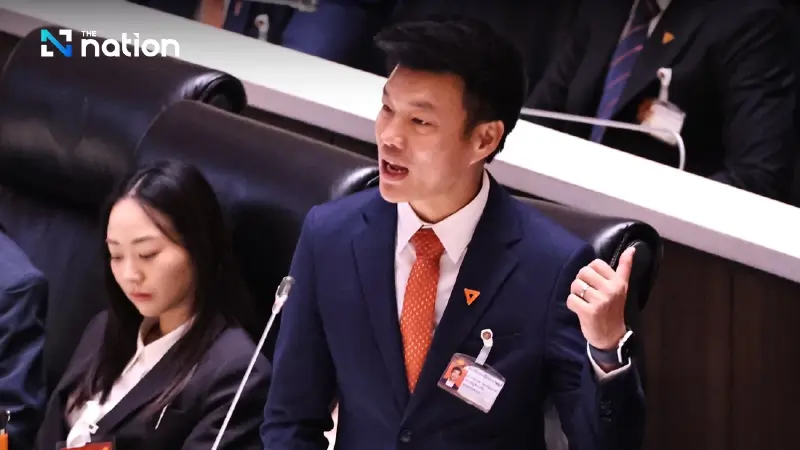


People’s Party leader Natthaphong Ruengpanyawut says his party never tried to form a rival government, but warns that the next administration must restore legitimacy, rebuild public confidence and tackle mounting national crises.
Natthaphong Ruengpanyawut, a party-list MP and leader of the People’s Party, said during Thursday’s debate ahead of Parliament’s vote for a new prime minister that the session could be the last time he and the party’s current leadership take part in such a debate. Parliament convened on March 19 to elect a new premier following last month’s general election.
“As the party’s current leadership, we do not know whether today will be our last debate, or whether we will be suspended from performing our duties. But we will continue to carry out our duties in this way, standing alongside all of you, until the highest power belongs to the people,” Natthaphong said.
He said he wanted to use the parliamentary floor to send a message to members of the People’s Party, adding that he believed what they were doing mattered.
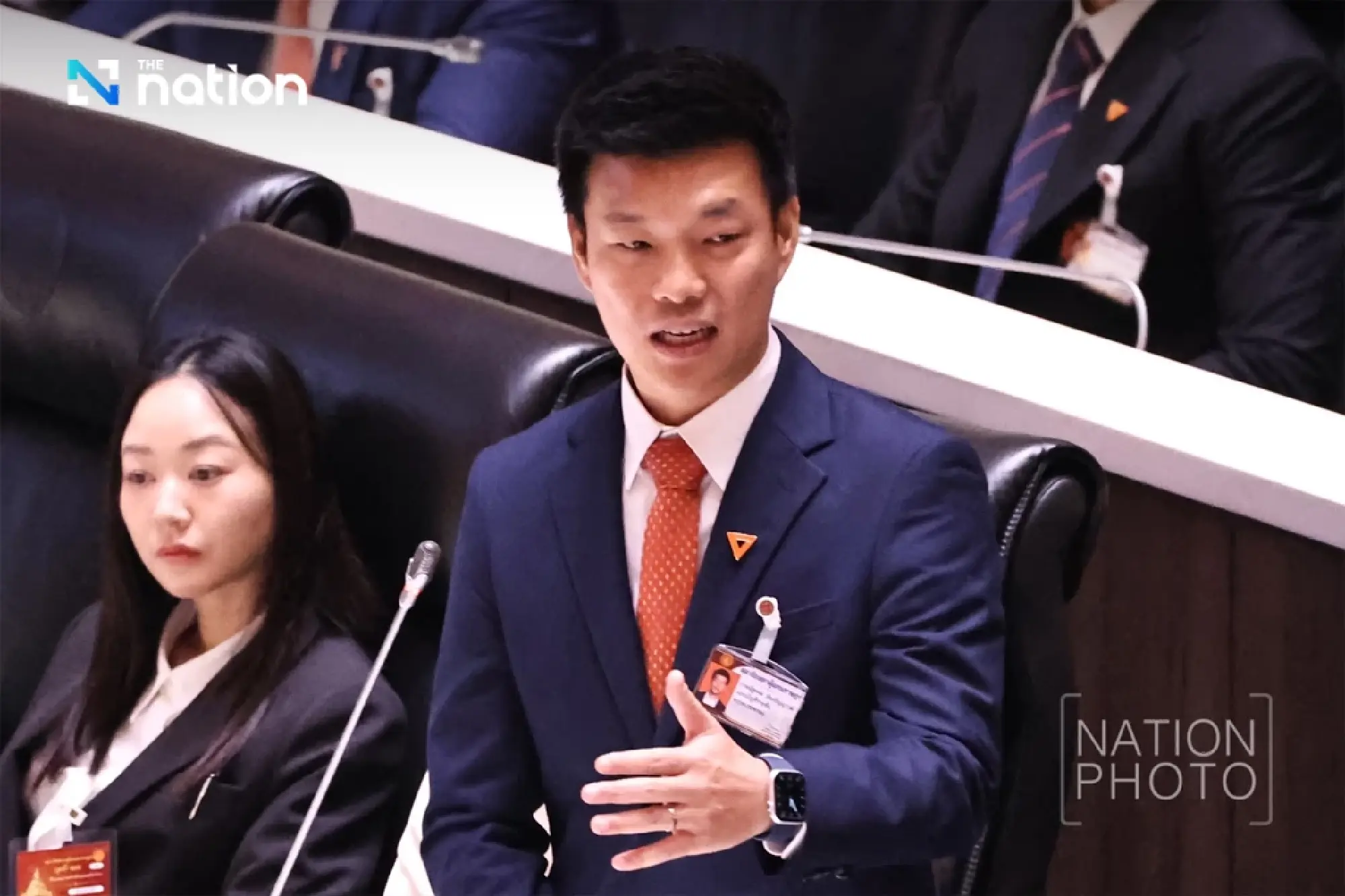

No attempt to form a rival government
Natthaphong told the chamber that the People’s Party had no intention of trying to form a rival government. He said the real process of government formation had taken place in the days leading up to the vote, not in the chamber itself, and insisted that his party had never sought to challenge Bhumjaithai’s right, as the election winner, to be the first to form a government.
He said that principle should be upheld as a parliamentary norm after every election, regardless of how many times the country goes to the polls. In his view, the party that comes first should always have the first opportunity to form an administration.
Natthaphong said the debate was therefore not a platform for presenting a political vision, but a forum for expressing concern for the country. Those concerns, he said, could only be addressed by a government with legitimacy and a cabinet made up of the right people to solve national problems.
Legitimacy and public confidence
He said the first and most immediate issue was the legitimacy of the incoming administration, as he renewed criticism over election-related controversies, including the reshuffle of Interior Ministry officials and broader questions surrounding the handling of the vote.
Natthaphong said Bhumjaithai might argue that matters involving the Election Commission, ballot barcodes and the Constitutional Court were not directly within the party’s control. Even so, he said the party could still help restore public confidence by closely scrutinising its own ranks and taking responsibility if anyone linked to the controversy was found to be involved.
He also pointed to questions surrounding the recount in Suphan Buri’s second constituency as part of what he described as a broader crisis of confidence.
“One thing the prospective prime minister from the Bhumjaithai Party can do is scrutinise his own people rigorously. If they are found to be connected to this matter, what society expects is straightforward action. If you do that, it may be enough to restore at least some faith and confidence,” Natthaphong said.
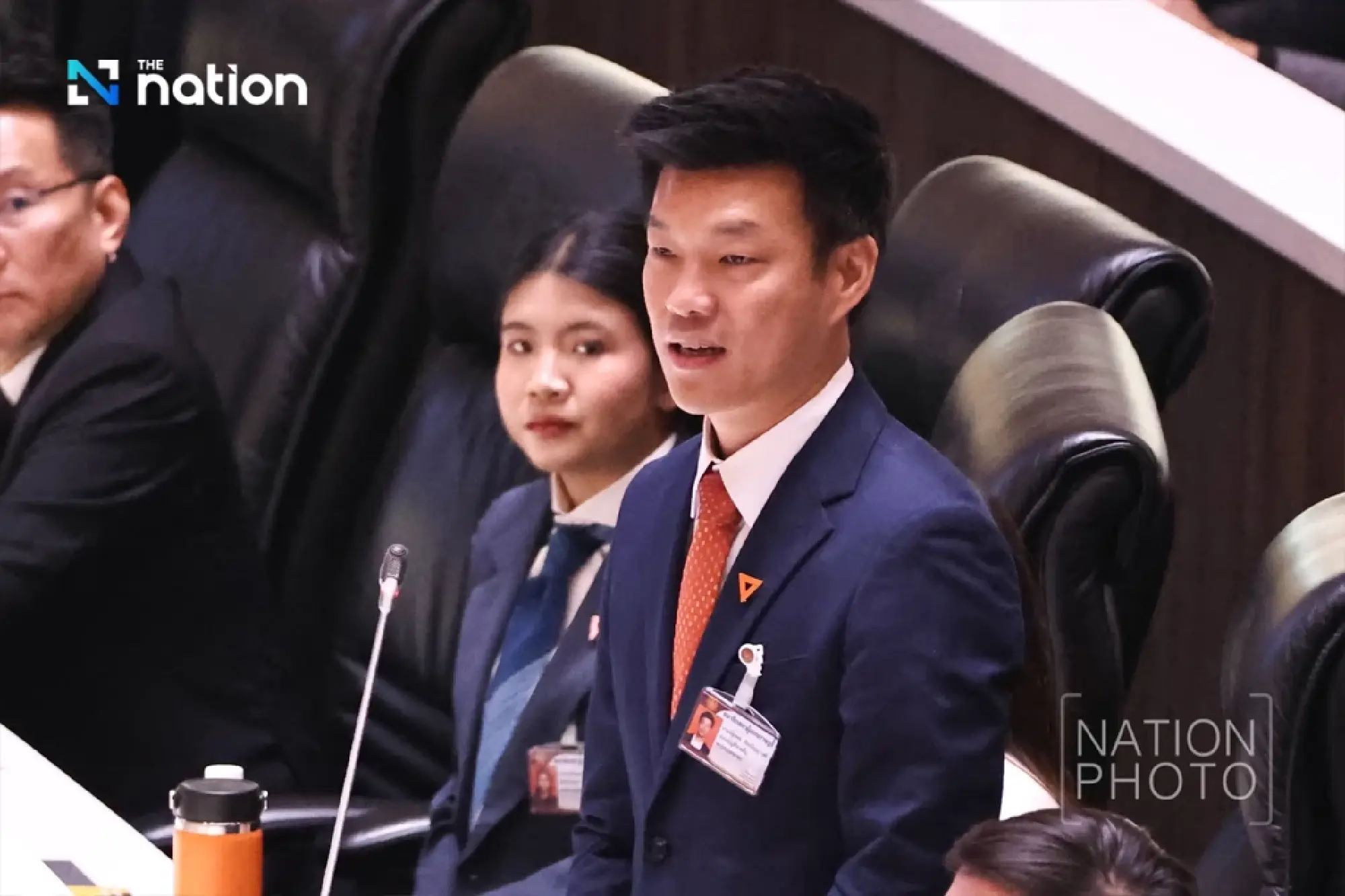

Crises on multiple fronts
Natthaphong said Thailand was facing pressure on multiple fronts, including security, the economy, quality of life and governance in the public sector, all of which were affecting people’s livelihoods.
What mattered most, he said, was not simply whether a government could be formed, but whether it had both the legitimacy and the political will to confront structural problems. That, he said, meant a government willing to examine its own side and one that did not come to power in order to conduct political business or secure personal benefit.
He argued that the country’s long-accumulated problems were now eroding public hope and that only a credible administration prepared to deal honestly with those structural weaknesses would be able to move the country forward.
Accepting the vote, but choosing a different path
Natthaphong said the People’s Party was ready to accept the outcome of the vote and wanted the House Speaker to convey to the incoming government and the next prime minister that they should be allowed to carry out their duties as fully as possible.
At the same time, he said his party understood that its own political path might be different. Others might believe politics had to be conducted in a certain way in order to gain power, but he said the People’s Party had chosen a different road, one that had left it in opposition.
Even so, he said he believed that the way his party had conducted politics, both in the past and at present, had helped move Thai society forward. He also said members on the other side of the aisle likely understood that, whichever side they were on, they could still do something useful for the country.
Plea to supporters and the public
Natthaphong urged the public not to lose hope in what was happening in the country. He said Thailand could still change if people joined together to monitor those in power, scrutinise politicians and make the best possible decisions when they entered the polling booth.
He said he also wanted to leave a message for members of the People’s Party: to keep faith in what they were doing, because it mattered.
That message, he suggested, was not only for party members but also for the wider public, at a time when many people may feel disillusioned with the political process.
Legal uncertainty hanging over party leadership
Natthaphong said he did not know whether Thursday’s sitting would be his last parliamentary debate or whether he and others in the party leadership would be ordered to stop performing their duties, but vowed to continue carrying out that role and standing alongside supporters until power belonged to the people.
His remarks come as the People’s Party faces legal uncertainty after the National Anti-Corruption Commission ruled that 44 former Move Forward MPs had committed serious ethical violations over a bill to amend Section 112, with the case due to go before the Supreme Court.
The party has also said it will ask the court not to suspend affected MPs while the case is under consideration.
