
Anutin II Cabinet list finalised, set for royal submission on March 27
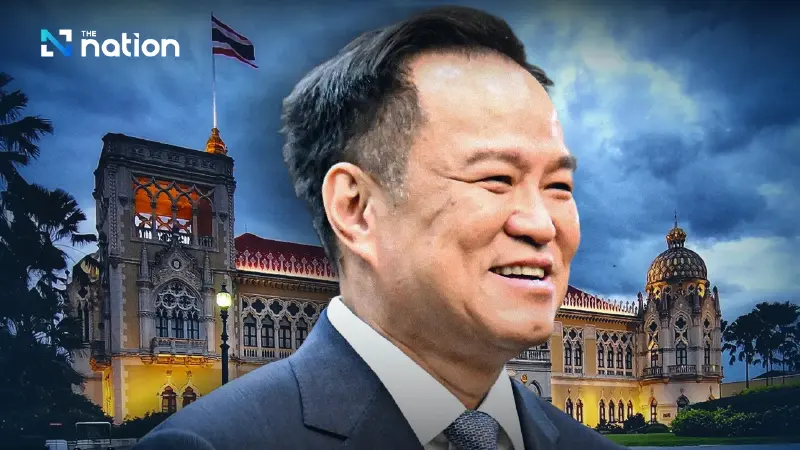


Background checks are under way on the proposed Anutin II Cabinet, with the new line-up expected to be submitted for royal command on March 27.
The line-up for the second Cabinet under Prime Minister Anutin Charnvirakul has been completed, with nominees now undergoing qualification screening before the list is expected to be submitted for royal command on March 27.
Well-informed sources said prospective ministers had been contacted to submit their personal records and supporting documents for scrutiny by 18 state agencies. Representatives and working teams of those named in the proposed line-up began arriving at the Secretariat of the Cabinet on Monday morning to file the paperwork.
Screening process moves ahead
The atmosphere at the Secretariat of the Cabinet was busy from early morning on March 23, as representatives of several ministerial nominees gradually arrived to submit documents for background and eligibility checks.
Wanlop Rujirakorn, from the team of Prasert Jantararuangtong, was the first to arrive at 9.45am. He was followed at 10.43am by the team of prospective Justice Minister Pol Lt Gen Ruththaphon Naowarat.
Near midday, representatives of Yossanan Wongsawat, who has been tipped for the posts of Deputy Prime Minister and Minister of Higher Education, Science, Research and Innovation, as well as representatives of Julapun Amarnvivat, who is expected to become Labour Minister, also submitted documents.
Sources said that if any nominee fails the qualification or prohibited-characteristics checks, reserve names will be considered. Anutin had earlier said that more than 40 names had been submitted for screening, including backup candidates.
Proposed line-up takes shape
According to sources, the proposed Anutin II Cabinet line-up is as follows:
- Anutin Charnvirakul, Prime Minister and Interior Minister;
- Songsak Thongsri, Deputy Prime Minister;
- Pakorn Nilprapunt, Deputy Prime Minister;
- Phiphat Ratchakitprakarn, Deputy Prime Minister and Transport Minister;
- Ekniti Nitithanprapas, Deputy Prime Minister and Finance Minister;
- Sihasak Phuangketkeow, Deputy Prime Minister and Foreign Minister;
- Yossanan Wongsawat, Deputy Prime Minister and Minister of Higher Education, Science, Research and Innovation;
- Suphajee Suthumpun, Deputy Prime Minister and Commerce Minister;
- Paradorn Prissanananthakul, Minister attached to the Prime Minister’s Office;
- Supamas Isarabhakdi, Minister attached to the Prime Minister’s Office;
- Naphinthorn Srisanpang, Minister attached to the Prime Minister’s Office;
- Suksomruay Wantaneeakul, Minister attached to the Prime Minister’s Office;
- Lt Gen Adul Boonthamcharoen, Defence Minister;
- Surasak Phancharoenworakul, Minister of Tourism and Sports;
- Sudawan Wangsuphakijkosol, Minister of Social Development and Human Security;
- Suriya Jungrungreangkit, Minister of Agriculture and Cooperatives;
- Watcharaphol Khawkhum, Deputy Minister of Agriculture and Cooperatives;
- Piyarat Tiyapairat, Deputy Minister of Agriculture and Cooperatives;
- Siripong Angkasakulkiat, Deputy Minister of Transport;
- Phattharaphong Phattharaprasit, Deputy Minister of Transport;
- Sanphet Boonyamanee, Deputy Minister of Transport;
- Chaichanok Chidchob, Minister of Digital Economy and Society;
- Boonyathida Somchai, Deputy Minister of Digital Economy and Society;
- Suchart Chomklin, Minister of Natural Resources and Environment;
- Akanat Promphan, Energy Minister;
- Jessada Thaiset, Deputy Interior Minister;
- Vorasit Liangprasit, Deputy Interior Minister;
- Polpheer Suwannachee, Deputy Interior Minister;
- Pol Maj Gen Ruththaphon Naowarat, Justice Minister;
- Julapun Amarnvivat, Labour Minister;
- Sabida Thaised, Culture Minister;
- Prasert Jantararuangtong, Education Minister;
- Akkharanan Kannakittinan, Deputy Education Minister;
- Phatthana Phromphat, Public Health Minister;
- Varawut Silpa-archa, Industry Minister.
Sources noted that the Palang Pracharath Party has not yet been included in the list so far.
Pakorn name emerges amid legal role speculation
Pakorn Nilprapunt, Secretary-General of the Council of State, has also emerged as a key name in the new cabinet line-up after Bovornsak Uwanno reportedly declined to join the incoming administration.
Another line of speculation suggests the new cabinet may not appoint a Deputy Prime Minister for Legal Affairs. Instead, it may rely on the Council of State’s 14 committees, which are tasked with drafting legislation and providing legal advice on matters referred by the government, cabinet and state agencies.
Royal submission expected this week
The Secretariat of the Cabinet is expected to take about one week to examine the nominees’ backgrounds and qualifications. Even so, there is growing expectation that the Prime Minister could submit the cabinet list for royal command as early as Friday, March 27.
Once the royal command appointing ministers is issued, the Prime Minister will lead the new cabinet in taking the oath before its first formal meeting.
Policy statement planned before Songkran
The first cabinet meeting is expected to cover several key items, including the appointment of the Secretary-General to the Prime Minister, consideration of the government’s policy statement to Parliament, and revisions to the fiscal 2027 budget calendar.
Bhumjaithai, the core party in the coalition, has set a tentative timeline of April 7-9 for the policy statement in Parliament, just ahead of the Songkran holiday.
Urgent policy measures are expected to be grouped under a “Plus” label, particularly in the economic sphere, under the banner “Thailand 10 Plus”. The framework is expected to cover four main pillars: inclusive growth, competitiveness, economic stimulus and debt management, and industry-led income generation.
Fiscal and legislative agenda to follow
Several important draft laws are also being prepared in parallel, including a bill to transfer fiscal 2026 budget expenditure, a bill to move the Ministry of Tourism under the Ministry of Culture, a bill aimed at improving licensing and public services, and the draft Homeland Bill.
Pheu Thai is meanwhile expected to push policies focused on living costs, stronger communities, education reform and science and technology, based on 47 proposals it plans to submit to the House of Representatives.
After the policy statement is delivered, the cabinet is expected to move quickly on urgent fiscal issues, including an emergency decree to borrow funds for the Oil Fund and a proposal to raise the public debt ceiling under Section 50 of the State Fiscal and Financial Discipline Act.
