
Dusit Poll: Abhisit leads opposition figures while public confidence in politics declines
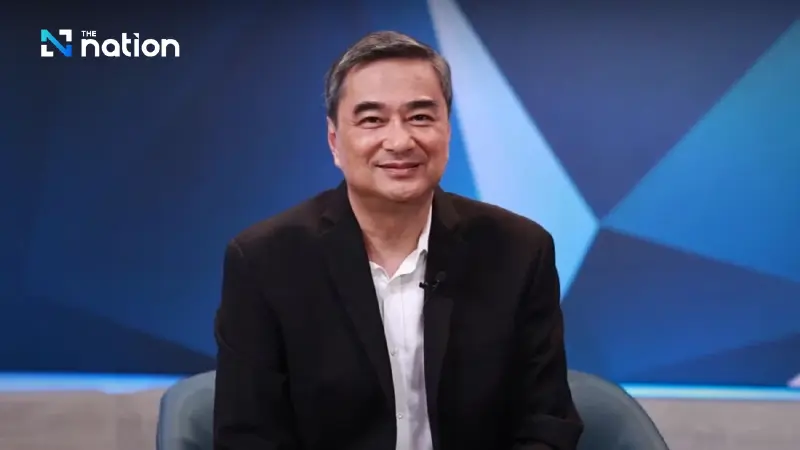


Suan Dusit Poll says Thailand’s political confidence index fell to 3.79 out of 10 in April, with all 25 indicators declining and the public urging the government to tackle living costs.
Thai political confidence drops in April
Thailand’s political confidence weakened in April, with the Thai Political Index falling to 3.79 out of 10, down from 3.89 in March, according to the latest Suan Dusit Poll by Suan Dusit University.
The poll surveyed 2,214 people nationwide through online and field interviews between April 27 and 30, 2026. It measured public confidence across 25 political indicators, each scored out of 10.
All 25 political indicators decline
Suan Dusit Poll said all 25 indicators declined from the previous month. The highest-scoring indicator was opposition performance, at 4.31, while the lowest was tackling drugs and influential figures, at 3.22.
Question: What score did the public give to Thailand’s political indicators in April 2026?
- Opposition performance: 4.31
- Rights and freedoms of the people: 4.24
- Public participation: 4.22
- Education development for the public: 4.18
- National security: 4.13
- Overall social conditions: 4.06
- Political stability: 4.03
- Overall performance of political parties: 3.99
- Safety of life and property: 3.95
- Conduct and behaviour of politicians: 3.91
- Government performance: 3.85
- Government information disclosure: 3.83
- Overall problem-solving: 3.83
- National development and progress: 3.78
- Prime minister’s performance: 3.76
- Administration in line with announced policies: 3.71
- Law and justice system: 3.69
- People’s livelihood: 3.55
- Solving unemployment: 3.54
- Cost of living, salaries, wages and welfare: 3.49
- Overall economic conditions: 3.46
- Tackling corruption and transparency: 3.35
- Solving poverty: 3.34
- Product prices: 3.23
- Tackling drugs and influential figures: 3.22
- Overall Thai Political Index: 3.79
Anutin named most prominent government-side politician
The poll also asked respondents which government-side politician had played the most prominent role. Anutin Charnvirakul ranked first with 39.07%, followed by Yoschanan Wongsawat at 28.22%.
Question: Which government-side politician had the most prominent role?
- Anutin Charnvirakul: 39.07%
- Yoschanan Wongsawat: 28.22%
- Suphajee Suthumpun: 17.01%
- Akanat Promphan: 9.78%
- Sihasak Phuangketkeow: 5.92
Abhisit leads opposition-side rankings
On the opposition side, Abhisit Vejjajiva was ranked as the most prominent politician with 27.82%, followed by Rukchanok Srinok at 23.25%.
Question: Which opposition-side politician had the most prominent role?
- Abhisit Vejjajiva: 27.82%
- Rukchanok Srinok: 23.25%
- Natthaphong Ruengpanyawut: 17.24%
- Rangsiman Rome: 16.07%
- Thamanat Prompow: 15.62%
Public urges government to ease living costs
The top message respondents wanted to send to the government was to solve livelihood problems and reduce the cost-of-living burden, cited by 49.82%. Another 31.03% urged the government to lower electricity and fuel prices.
Question: What would the public like to tell the government?
- Solve livelihood problems and reduce the cost-of-living burden: 49.82%
- Lower electricity and fuel prices: 31.03%
- Work seriously and develop the country in line with campaign promises: 19.15%
Opposition told to scrutinise corruption and budget spending
For the opposition, the public’s top message was to scrutinise corruption and government budget spending, cited by 44.37%. Another 34.57% wanted the opposition to perform its duties fully and uphold its principles.
Question: What would the public like to tell the opposition?
- Scrutinise corruption and government budget spending: 44.37%
- Perform duties fully and uphold principles: 34.57%
- Be a voice for the people: 21.06%
Poll chief says public still sees no clear results
Dr Pornpan Buathong, president of Suan Dusit Poll, said the decline across all indicators showed that public concern was not limited to one issue. Instead, people were looking at politics, national administration, the economy and quality of life in the same direction, with many still not seeing clear results.
She said economic and livelihood-related scores remained low, reflecting public calls for the government to urgently address living costs. The government’s main challenge, she added, was not simply announcing policies, but making people feel that their lives were actually improving.
External crises seen as test of government performance
Assistant Professor Kanyakan Sathiensukhon of Suan Dusit University’s School of Law and Politics said public confidence in the government had fallen over the past two months. She said external factors, including conflict in the Middle East, had affected public perception, especially through energy prices, electricity costs, fuel prices and rising goods prices.
She said the pressure had become a test of the government’s ability to cushion the impact through price controls, policy implementation and proactive measures. A slow, unclear or non-transparent response would widen the gap between public expectations and government performance, she said.
