
Energy shock exposes Thailand’s fossil-fuel vulnerabilities
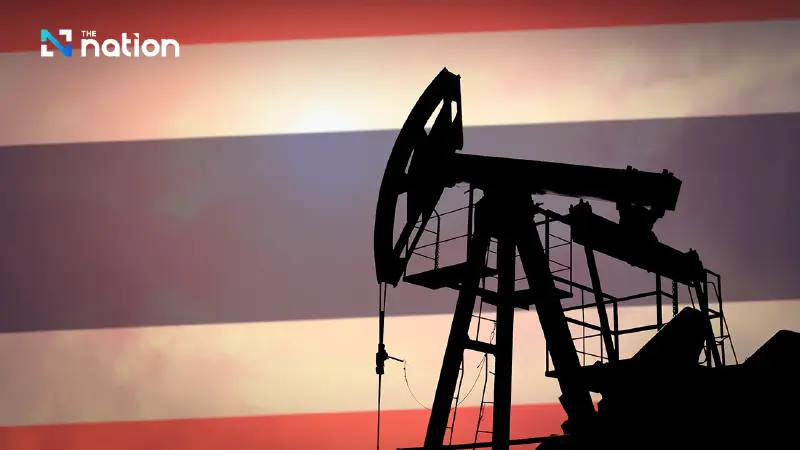


The analysis says Thailand’s oil fund deficit, costly LNG and limited reserves show why clean power and efficiency must move faster than planned.
- Thailand's fossil fuel dependency has created a severe financial strain, with its Oil Fuel Fund accumulating a deficit of over THB60 billion from subsidizing diesel prices.
- The nation's heavy reliance on natural gas for nearly 60% of its electricity forces it to import expensive and volatile Liquefied Natural Gas (LNG) as domestic supplies dwindle, raising costs for consumers.
- Despite having over 100 days of oil reserves, the country's energy security is vulnerable to geopolitical risks like maritime blockades on key transport routes due to its reliance on imports.
At this moment, the world is facing an “Energy Shock”, an energy tremor more severe and complex than any in history.
It is not merely a matter of soaring oil prices, but a structural crisis affecting every dimension of the economy, especially developing countries that must shoulder huge energy import costs amid unpredictable global geopolitical volatility.
Looking back to 1973, the world faced a major oil price crisis driven by politics in the Middle East.
That crisis led to the establishment of the International Energy Agency (IEA) in 1974 to create a mechanism for responding to unexpected events.
In 2026, the IEA’s role has again become prominent after it decided to release as much as 400 million barrels from emergency oil reserves to support a tense global market situation.
Lessons from history: when “conservation” is the most powerful weapon
An article by a former IEA oil market expert states clearly that, although the release of oil reserves is commendable, it is only a temporary “painkiller”.
The real solution is to reduce reliance on fossil fuels sustainably, with lessons from the past serving as a guide.
The power of cooperation (G7 Model): In 1979, the G7 countries showed their strength by agreeing to impose strict caps on oil imports, forcing domestic economies to adjust to an era of conservation and the search for alternative energy.
Japan’s “Power Forecast”: After the Fukushima nuclear power plant crisis in 2011, Japan faced a severe electricity shortage but came through the crisis by using data-driven measures to encourage national discipline.
It reported electricity status in the same way as weather forecasts, helping to cut peak demand by as much as 18% without compulsion.
Thailand’s energy situation in 2026: challenges amid debt and costly gas
Turning back to Thailand, the latest information from the Ministry of Energy and the economic situation in 2026 reflect a worrying picture:
Oil Fuel Fund crisis: As of April 2026, the Oil Fuel Fund’s accumulated deficit stood at more than THB60.167 billion, according to the Oil Fuel Fund Office.
Although the government has tried to cap diesel prices to limit the impact on the transport sector, managing liquidity has become increasingly difficult amid interest rates that remain high.
The LNG trap: Thailand currently relies on gas for almost 60% of electricity generation.
As gas volumes in the Gulf of Thailand decline, the need to import gas from the global market through spot LNG, whose price is highly volatile depending on war situations, has become a direct burden passed on to the “fuel adjustment charge” (Ft) in people’s electricity bills.
Limited reserves: Although the Department of Energy Business has reported that Thailand has enough oil reserves to last more than 101 days, including crude oil and refined products, the country’s energy security would be tested heavily and immediately if a maritime blockade occurred on key transport routes.
A new option under PDP 2024 for clean energy
Thailand’s target under the Power Development Plan (PDP 2024) is to raise the share of renewable energy to more than 50% by 2037 to achieve carbon neutrality in 2050.
However, the analysis says Thailand must “accelerate” faster than planned.
Digital Energy: The adoption of smart grids and smart meters to create a Japanese-style “energy forecast” model would allow people to manage their electricity use through applications, reducing the burden of generating power from costly peaker plants.
Unlocking solar rooftop schemes and promoting fair net metering would also help turn households from “consumers” into “producers”, reducing reliance on imported gas in a concrete way.
“This crisis is the last opportunity for us to undertake a serious energy transition. If we continue on the old path of relying on fossil fuels for 80% as we did 50 years ago, we will not only lose to global warming but also lose in the unforgiving arena of the global economy.”
The Thai government and the business sector must stop seeing clean energy as a matter of “image” and instead view it as the nation’s “survival”.
Ending blanket fossil-fuel subsidies and redirecting those budgets to support energy-saving innovation and battery storage is the most sustainable answer for future generations.
