
NBTC chairman qualification re-examination hits ‘document wall’
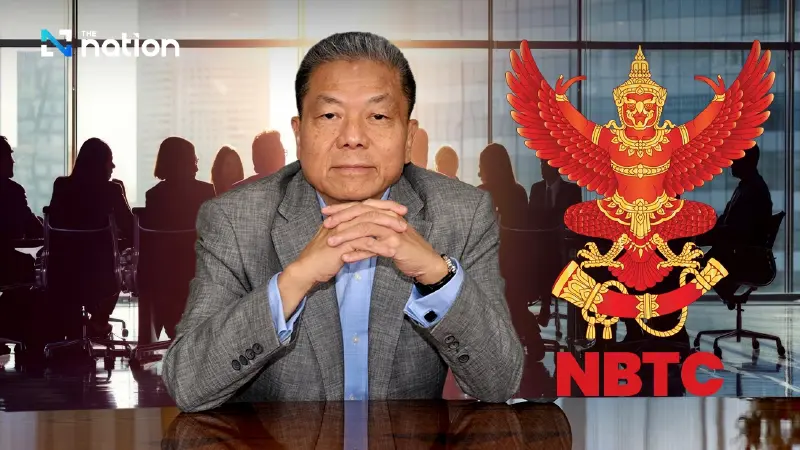


Confidential meeting documents show the panel re-examining NBTC chairman Dr Sarana Boonbaichaiyapruck’s qualifications has yet to receive key records from several agencies, raising transparency questions over the review of a chairman.
The re-examination of National Broadcasting and Telecommunications Commission chairman Clinical Professor Dr Sarana Boonbaichaiyapruck’s qualifications is facing a transparency test after confidential meeting documents showed that key records requested by the review panel had not been fully submitted by several agencies.
The documents, prepared for the second meeting of the Selection Committee for NBTC Commissioners on June 5, 2026, indicate that the panel has asked several state agencies for information and supporting records related to questions over Dr Sarana’s qualifications.
Although the body is formally the NBTC commissioner selection committee, the current issue is not an ordinary selection process. Dr Sarana has already been in office for years, and the committee is now dealing with a re-examination of whether he possessed, and continued to possess, the legally required qualifications to serve as NBTC chairman.
According to a senior parliamentary source, several agencies either declined to provide the documents, said they could not send them, or had not yet replied, despite the records being directly relevant to the qualification dispute.
Key records missing from review file
According to the meeting file, the committee requested documents from the Office of the Ombudsman concerning a Mahidol University letter referred to in a memorandum by the Office of the Council of State.
However, the file stated that no response had yet been received from the Office of the Ombudsman.
A senior parliamentary source said the committee was not asking other agencies to certify whether the documents were complete or legally decisive. Instead, it wanted the records so committee members could assess the evidence themselves.
“The committee wanted information and evidence that had already been examined so it could exercise its own judgement. The problem is that important documents were not submitted for consideration from the beginning,” the source said.
Senate Secretariat refuses to send ICT report
The most sensitive missing document concerns a fact-finding report by the Senate Committee on Information Technology, Communications and Telecommunications, or the Senate ICT Committee, from the 12th Senate.
The committee had asked the Senate Secretariat for a copy of the report, chaired by Gen Anantaporn Kanjanarat, along with supporting documents.
However, the Senate Secretariat replied that it could not send the report because it remained an internal fact-finding document, had not been completed, and had not yet been considered by the Senate for approval or rejection.
The position reportedly angered Dr Wissanu Waranyu, Vice-President of the Supreme Administrative Court, in his capacity as secretary of the NBTC commissioner selection committee.
A senior parliamentary source said Dr Wissanu believed the report was directly relevant to the re-examination of the NBTC chairman’s qualifications and should have been submitted for the committee’s confidential consideration.
“If the Senate Secretariat considered it a confidential document, it could have sent it as a confidential document for the committee to review. It should not have refused to send everything,” the source said.
Earlier Senate handling comes under scrutiny
The source said the Senate Secretariat’s claim that the report was incomplete should be traced back to the previous Senate, when Special Professor Pornpetch Wichitcholchai served as Senate president.
Although the Senate ICT Committee had prepared a fact-finding report, it was not placed on the Senate meeting agenda for formal presentation.
The source questioned whether the failure to table the report was merely an administrative matter, or whether it effectively prevented the qualification issue from entering the Senate’s formal consideration process.
The source also noted that Pornpetch had been viewed in political circles as close to Gen Prawit Wongsuwan, then deputy prime minister. However, the remark remains a political observation, not a formal finding.
SEC cites personal-data concerns
Another agency named in the meeting file is the Securities and Exchange Commission.
The committee had requested copies of two letters from the SEC. However, the SEC replied that the letters involved personal information of individuals named in the documents and could be information that should be withheld from disclosure.
The SEC said no exception allowing disclosure to another person had been identified, and therefore it could not submit copies to the committee.
Taken together, the responses show the panel encountering several barriers: no reply, claims of incomplete reports, confidentiality concerns and personal-data restrictions.
“What we are seeing is that the committee asked for information to consider the NBTC chairman’s qualifications, but agencies have not released important information that should be on the table,” the parliamentary source said.
Legal dispute centres on outside roles
The controversy surrounding Dr Sarana centres on a technical legal question: whether any professional roles or engagements after he took office could amount to prohibited characteristics under the NBTC Act.
Under the law, NBTC commissioners are expected to hold office with strict independence. The dispute focuses on whether Dr Sarana fully severed previous professional ties when he became NBTC chairman in 2022.
Allegations raised in the case include whether he continued medical work, held executive or advisory roles, or received compensation from medical institutions after assuming office.
Dr Sarana’s side has argued that medical duties, clinical teaching and academic contributions should be distinguished from commercial business interests. His defence has generally been that medical and academic work serves the public interest and does not overlap with, influence or create a conflict in the regulation of broadcasting and telecommunications.
Re-examination could affect current tenure
The issue escalated after the Senate ICT Committee examined the qualification dispute and the matter moved towards the NBTC commissioner selection committee for legal consideration.
Because Dr Sarana has already served as chairman for years, the key question is not whether he should be newly selected, but whether any alleged prohibited characteristics affected his eligibility to hold the post in the first place or could affect his continuing tenure.
The June 5 meeting is therefore being watched not only for its conclusion on Dr Sarana’s qualifications, but also for whether the committee can obtain enough evidence to make a credible decision.
Broader battle over NBTC leadership
The dispute is unfolding against a wider backdrop of tension inside the NBTC, whose decisions can affect some of Thailand’s most valuable communications assets.
The regulator has played a central role in major issues such as telecom mega-mergers and the allocation of satellite orbital slots, both of which carry major implications for market competition, telecom operators and state spectrum interests.
That context has led some political observers to view the qualification challenge not only as a legal dispute over one chairman, but also as part of a broader struggle over the direction and leadership of the country’s broadcasting and telecommunications regulator.
NT union allowed to submit documents
Separately, the National Telecom Plc State Enterprise Workers’ Union, or NT union, has reportedly received a response saying the chair of the committee will allow it to give clarification and submit documents to the remaining six committee members.
The committee is scheduled to meet at Parliament on the Senate side at 11am on June 5.
A source from the complainant side said those seeking to submit evidence should stand by at the Senate on the meeting day, prepare a formal letter requesting permission to clarify the matter, and submit documents directly to the committee.
The source said this would help ensure that evidence does not become stuck in administrative procedures or get rejected by any one agency before reaching the panel.
June 5 meeting becomes transparency test
The central question now is whether the committee can break through the “document wall” before reaching a decision on Dr Sarana’s qualifications.
The committee’s request for information does not mean it must accept every document as decisive evidence. Rather, the documents are needed so members can weigh the evidence and determine how much importance each record should carry.
If key documents still do not reach the committee, the June 5 meeting may become more than a legal review of Dr Sarana’s qualifications.
It could become a test of the transparency of Thailand’s oversight process for independent organisations — and whether crucial facts can be blocked before they reach those legally responsible for making the decision.
