
Thailand appoints multi-stakeholder committee for open government
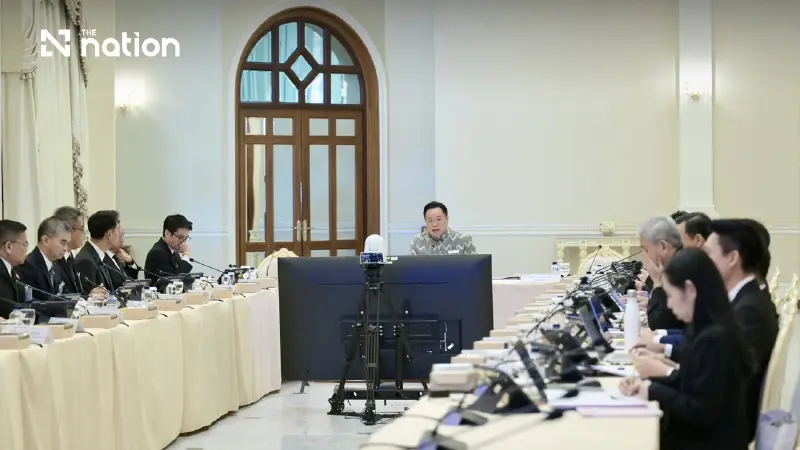


Led by Deputy Prime Minister Pakorn Nilprapunt, the panel will set policy direction, review a national action plan and support Thailand’s efforts to join the OGP.
- Thailand has appointed a new committee, the Multi-Stakeholder Forum (MSF), to formalize cooperation between the public sector, private sector, civil society, and experts.
- The committee's primary goals are to set policy direction for open government and to support Thailand's efforts to join the Open Government Partnership (OGP).
- Its key duties include preparing a National Action Plan (NAP) and monitoring government operations to make them more transparent, accountable, and responsive to the public.
- The initiative aims to change the public sector's working methods by promoting transparency, public participation, and using digital technology to improve services and reduce corruption.
Government spokesperson Ratchada Dhnadirek said Prime Minister Anutin Charnvirakul had signed a Prime Minister’s Office order appointing a committee known as the Multi-Stakeholder Forum (MSF).
It will serve as a formal mechanism for co-operation among the public sector, private sector, civil society and experts to jointly set policy direction, advance open government and support Thailand’s efforts to join the Open Government Partnership (OGP).
The spokesperson said the committee, chaired by Deputy Prime Minister Pakorn Nilprapunt, aims to improve the way government works by moving from operations conducted solely by state agencies towards integrated co-operation with all sectors.
Its work will range from policy formulation and the preparation of a National Action Plan (NAP) to monitoring and evaluation, to make government operations transparent, accountable and responsive to the public in tangible ways.
Pakorn said open government would change the public sector’s mindset and working methods.
It would be based on transparency and information disclosure, giving people access, opportunities for scrutiny and a role in policymaking.
Digital technology would also be used in government work to connect public-sector data and improve services, subject to security-related exceptions in line with international principles.
This would make government operations more efficient and reduce corruption.
He said open government, digital government, responsive government, transparency and anti-corruption were therefore interconnected parts of the same approach to improving the efficiency and transparency of public administration, reducing corruption and responding better to people’s needs.
The committee also comprises representatives of the public and private sectors, civil society and experts, including Kobsak Pootrakool, Mana Nimitmongkol, Weerasak Kowsurat, Kitti Tangjitrmaneesakda and Suriyadeo Tripathi.
Its duties are to set the direction and strategies for open government administration, consider the NAP before it is submitted to the Cabinet, oversee and monitor results, and appoint subcommittees or working groups.
The Office of the Public Sector Development Commission (OPDC) has been assigned to act as the central agency coordinating and supporting the implementation of the committee’s work.
“The government aims to raise the standard of people-centred public administration by giving all sectors opportunities to participate in policymaking and monitor implementation.
This will help ensure that government decisions are comprehensive, transparent and accountable, strengthen good governance in the country and continue to support Thailand’s efforts to join the Open Government Partnership,” Ratchada said.
