
Sunken WWII rail station resurfaces in Sangkhlaburi after 42 years
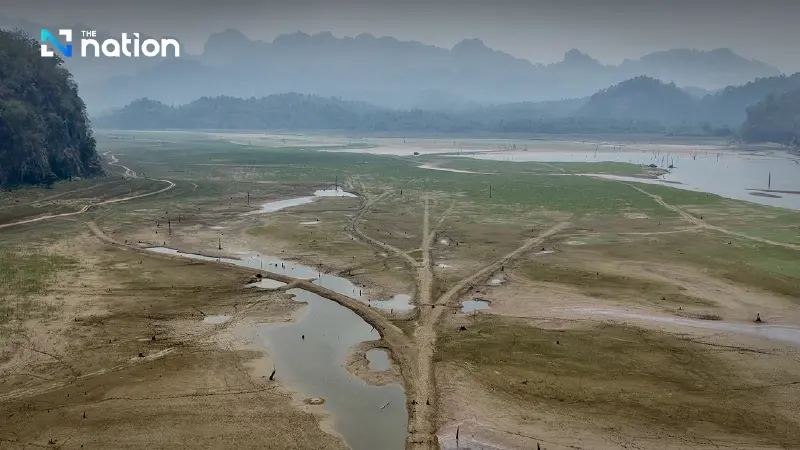


A rare WWII-era rail site re-emerges in Sangkhlaburi as water levels drop, revealing traces of the historic Death Railway
A long-lost World War II railway site has re-emerged in Sangkhlaburi, Kanchanaburi, offering a rare glimpse into history after more than 42 years underwater.
The site, known as Nithe Station, has become visible following a significant drop in water levels caused by the release of water from Vajiralongkorn Dam for maintenance work in 2026.

The dam, completed in 1984, normally submerges the area as part of its reservoir for electricity generation and agricultural use. However, the recent drainage has exposed parts of the terrain that had remained hidden for decades.
Nithe Station was one of six key stations along the Death Railway, constructed during World War II. It served as a crucial stop for refuelling and replenishing water supplies before trains continued towards Myanmar.

Aerial views now reveal sections of the old railway line and structural remains that once formed a central hub for train operations and locomotive maintenance.

Among the most significant discoveries is an inspection pit located south of the locomotive turning point. While the upper concrete structure remains visible, its wooden components have long since decayed, with parts buried beneath layers of sediment.
Historians regard the inspection pit as a rare surviving feature, as most other stations along the route have either been dismantled or redeveloped, leaving little trace of their original structures.

The temporary reappearance of Nithe Station offers a unique opportunity for those interested in wartime history to explore the remnants of the Death Railway firsthand.
More than just a travel destination, the site stands as a powerful reminder of the human cost of war and a fading chapter of history that risks being lost over time.


