
Japan struggling for LNG 3 years after Ukraine War
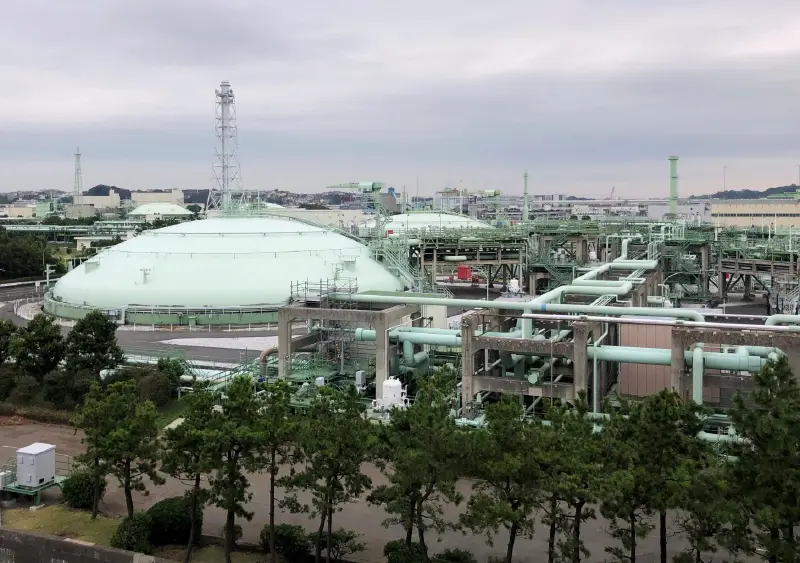


Japan is grappling with the challenge of ensuring stable energy supplies, facing the impact of Russia's full-fledged aggression against Ukraine, which started three years ago.
In particular, the fierce global competition for liquefied natural gas has led to spikes in electricity and gas bills, heavily weighing on household finances.
Japanese power and gas companies are struggling to diversify sources of LNG for stable supplies amid the risk of disruptions in imports from Russia, which account for nearly 10 % of Japan's overall LNG procurement.
Japan relies on imports for most of LNG it consumes. According to the industry ministry, market prices of LNG, used as fuel for thermal power generation and materials for city gas, had been on an uptrend since 2021 and surged further in 2022 in the wake of the Russian invasion of Ukraine.
In Asia, LNG prices shot up about sixfold in 2022 on average from 2019. Japan procured about 65.89 million tons of LNG in 2024.
Of the total, 5.68 million tons were from Russia, all of which came from the Sakhalin-2 offshore project in the Far East region.
Russian energy is subject to Western countries' sanctions on Moscow over the military aggression, and Japan is following suit.
Still, Japan is continuing to import LNG from the Sakhalin-2 project from the viewpoint of energy security.
But risks such as production cuts linger. LNG development in the Arctic LNG 2 project in Russia, participated by major Japanese trader Mitsui & Co., has been stalled due to the fallout of the sanctions.
For the Sakhalin-2 project, the deadline for renewing the current long-term contract will come in 2026 at the earliest, with participating companies seen having to make a difficult decision on whether to keep their investments in or pull out of the project.
At a bilateral summit in Washington on Feb. 7, Japan agreed with the United States to expand imports of U.S. LNG. However, Europe, which has been dependent on Russian LNG, is also switching to imports from the United States, a development that leaves Japan with fewer options, pundits said.
[Copyright The Jiji Press, Ltd.]
Photo by Reuters
