
US government buys 10% stake in Intel, marks latest move in Trump administration's push for private sector control
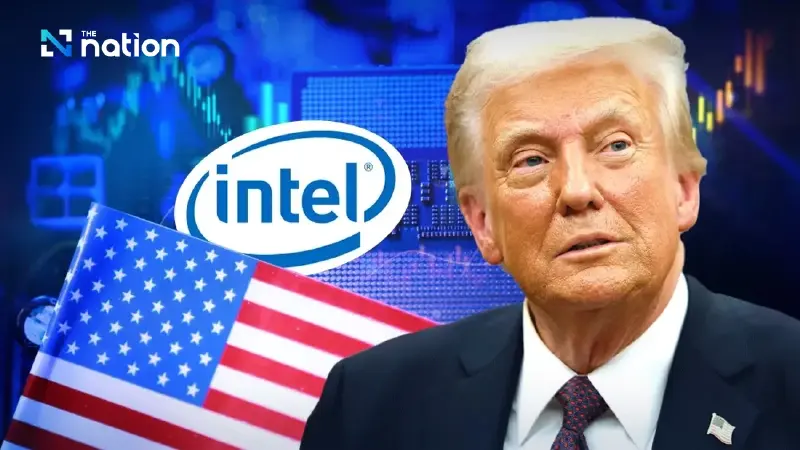


The US government purchases a 10% stake in Intel worth $8.9bn, part of Trump’s strategy to exert control over American companies, with a focus on national security.
US Secretary of Commerce, Howard Lutnick, announced on Friday that the US government has purchased a 10% stake in Intel, the leading chip manufacturer, in a bid to strengthen its control over major American companies.
Intel’s stock surged by approximately 6% during Friday’s trading, but stabilised during after-hours trading. The government invested $8.9 billion, acquiring 433.3 million shares at $20.47 each, below current market price.
Intel, the only US-based company capable of producing advanced chips, confirmed in a press release that the government’s investment was made in common stock.
The funds used for this purchase were derived from the CHIPS Act—$5.7 billion already allocated but not yet disbursed, and an additional $3.2 billion from a separate chip production security programme.
President Donald Trump posted on his social media platform Truth Social, “The US didn’t pay a penny for these shares, and now they’re worth around $11 billion. This is a great deal for America and for Intel.”
Additionally, the US government received warrants to purchase an additional 5% of Intel’s shares if the company no longer controls a majority of its semiconductor manufacturing operations.
Intel clarified that the US government will not have a seat on its board or any governance rights.
Intel CEO Lip-Bu Tan explained, “As the only semiconductor company researching, developing, and producing cutting-edge logic in the US, Intel is deeply committed to ensuring the world’s most advanced technologies are made in America.”
Earlier on Friday, President Trump stated that the US government should hold about 10% of Intel, a company with a market value of over $100 billion.
“This was agreed upon, and I think it’s a great deal for them,” Trump told reporters at the White House.
The move marks the latest example of a shift in US industrial policy, with the government taking a more active role in the private sector. Lutnick explained in a CNBC interview that the US government was seeking to acquire Intel shares in exchange for funds allocated under the CHIPS Act.
“We should get stock for our money,” Lutnick said on CNBC’s Squawk on the Street. “So we’re going to deliver the money already agreed upon under the Biden administration, and we’ll receive stock in return.”
Earlier this week, Japan’s SoftBank Group announced a $2 billion investment in Intel, acquiring around 2% of the company’s shares.
Intel’s technology has been seen as lagging behind Taiwan Semiconductor Manufacturing Company, which produces chips for various companies, including Apple, Nvidia, Qualcomm, AMD, and even Intel itself.
Intel has committed billions to build semiconductor plants in Ohio, which the company once referred to as the “Silicon Heartland,” where it aims to produce the most advanced chips, including those for artificial intelligence (AI).
However, in July, Tan informed employees in a memo that the company would “no longer be writing blank checks” and would slow down construction in Ohio, depending on market conditions.
Intel’s Ohio plant is scheduled to begin operations in 2030.
Last autumn, Intel announced it had secured nearly $8 billion in CHIPS Act funding to support the construction of its factory. The CHIPS Act was passed in 2022 under the Biden administration to boost semiconductor production in the US.
