
Britain, Canada, Australia and Portugal recognise Palestinian state
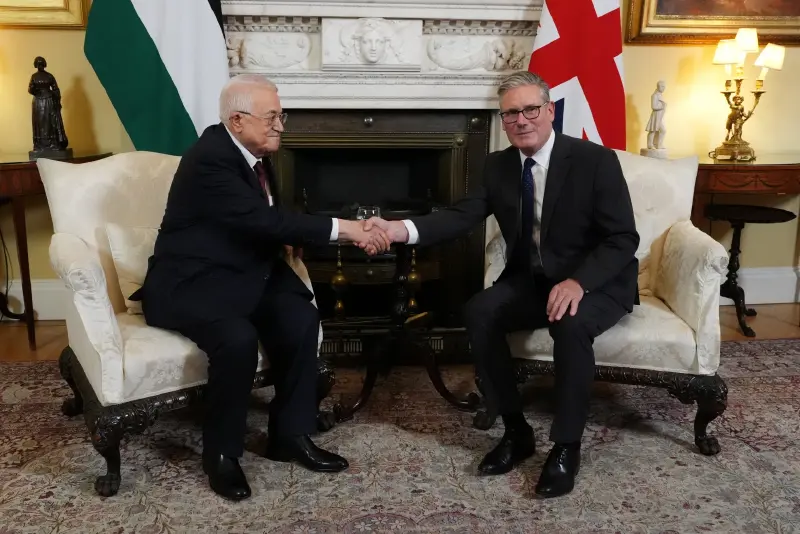


Four Western countries, Britain, Canada, Australia and Portugal , formally recognised the State of Palestine on Sunday, breaking with decades of policy and aligning themselves with more than 140 nations worldwide that already back Palestinian statehood.
The move was framed as an attempt to revive the two-state solution amid the prolonged Gaza conflict but immediately drew fierce condemnation from Israel.
British Prime Minister Keir Starmer said the recognition was intended to “revive hope” for peace between Israelis and Palestinians. “The humanitarian catastrophe in Gaza has reached unprecedented levels. The Israeli government’s escalating bombardment, coupled with starvation and devastation, is intolerable,” he declared, emphasising that Palestinians and Israelis alike deserve a viable path to peace.
The announcement carried particular weight in Britain, given its historical role in the creation of Israel following World War Two. Starmer confirmed the decision in a letter to Palestinian President Mahmoud Abbas, acknowledging the UK’s 1917 support for a Jewish homeland while stressing the equal rights of non-Jewish communities.
Canadian Prime Minister Mark Carney stressed that Ottawa’s recognition was intended to support peaceful coexistence and was “no reward for terrorism”. Portugal’s Foreign Minister Paulo Rangel echoed this view, describing the step as consistent with Lisbon’s long-standing foreign policy and calling urgently for a ceasefire. Australia issued a similar statement, aligning itself with calls for a two-state outcome.
Israel condemns move as “reward for terror”
Israeli Prime Minister Benjamin Netanyahu denounced the decisions, accusing the four countries of rewarding Hamas for its 2023 attacks. “After the horrific massacre of October 7, any recognition of Palestinian statehood hands terrorism a prize,” he said. Netanyahu vowed that no Palestinian state would be established west of the Jordan River.
Israel cites the October 7 Hamas-led assault that killed 1,200 people and saw over 250 hostages taken as justification for its ongoing campaign in Gaza. That campaign, according to local health officials, has since killed more than 65,000 Palestinians, the majority civilians, displaced most of the territory’s population, and left widespread destruction and famine.
Israeli officials responded further by suggesting possible annexation measures in the West Bank. Security Minister Itamar Ben-Gvir said he would propose extending Israeli sovereignty to parts of the occupied territory, effectively amounting to annexation.
Palestinian reactions
Palestinian leaders and residents welcomed the recognition. President Abbas said it could pave the way for Palestine to exist peacefully alongside Israel. Hamas praised the move but urged that it be accompanied by concrete steps to halt the war in Gaza and prevent annexation in the West Bank.
In Hebron, Sharaf Al Tarda, a resident of the occupied West Bank, called the recognition “a human duty”, particularly in light of Britain’s historical role. At the Palestinian Mission in London, officials hailed the decision as “correcting history”, with Husam Zomlot, the head of mission, describing the moment as one of justice and dignity.
Western pressure and divided public opinion
The decisions come as Western governments face mounting domestic criticism over the scale of Gaza’s destruction and their continued supply of arms to Israel. The rising death toll, images of starving children, and calls within political parties for stronger action have all increased pressure.
Public opinion remains divided. In London, some residents saw the recognition as a step towards peace, while others, including families of Israeli hostages, accused Starmer of legitimising Hamas while the conflict continues.
Meanwhile, France and other countries are expected to signal similar recognition during the United Nations General Assembly in New York this week. The United States, Israel’s closest ally, has remained silent for now, though President Donald Trump has consistently opposed Palestinian statehood recognition.
Reuters
