
Beyond the Berlin Wall: Germany Marks 35 Years of Unity While Building Bridges to Thailand
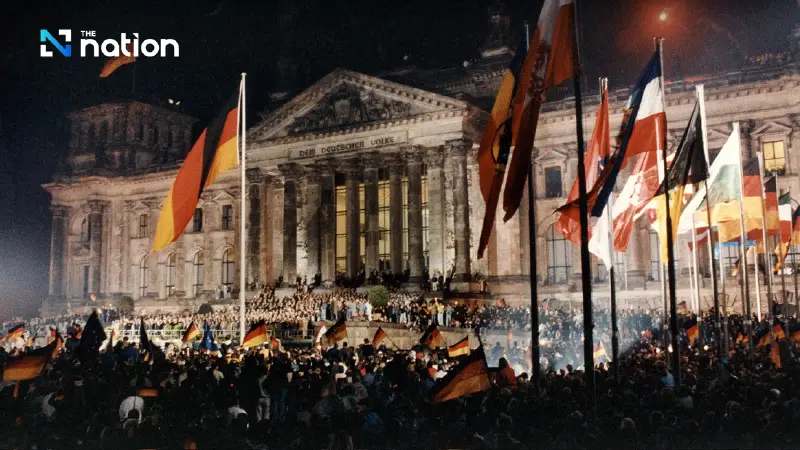


October 3, 2025 marks another milestone in Germany's remarkable journey of unity while strengthening strategic ties with Thailand
- Germany is celebrating the 35th anniversary of its reunification on October 3, using the theme "Future through Change" to reflect on its history and highlight its global partnerships.
- A key focus of Germany's international outreach is its strengthened relationship with Thailand, which was elevated to a strategic partnership following a historic visit by the German president in January 2024.
- The German-Thai partnership is built on strong economic ties, with Germany as Thailand's largest EU trading partner, and focuses on collaboration in green energy, hydrogen technology, and digital innovation.
As Germany celebrates the 35th anniversary of its reunification on October 3, the nation reflects not only on its historic achievement of overcoming division but also on its growing international partnerships.
This year's German Unity Day celebrations in Saarbrücken, under the motto "Future through Change," symbolize both the country's forward-looking vision and its commitment to global collaboration—particularly with strategic partners like Thailand.
A Day That Changed History
German Unity Day commemorates one of the most significant moments in modern European history. On October 3, 1990, the Federal Republic of Germany and the German Democratic Republic officially united, ending 45 years of division that had split families, communities, and a nation.
The journey to this historic moment began with the peaceful Monday demonstrations in Leipzig on September 4, 1989, culminating in the fall of the Berlin Wall on November 9 of that year.
The Brandenburg Gate, once a symbol of division, transformed into an icon of freedom and unity. Today, these symbols resonate far beyond Germany's borders, inspiring nations worldwide about the power of peaceful change and democratic transformation.

Modern Celebrations and National Pride
Each year, German Unity Day brings the nation together through elaborate celebrations that rotate among different cities.
This year, Saarbrücken, the capital of Saarland, takes center stage with the motto "Future through Change," hosting ceremonial acts, concerts, communal meals, and cultural presentations from Germany's diverse regions.
Last year's celebrations in Schwerin successfully demonstrated the theme of "Setting sail as one: strengthening democracy and diversity together."
The festivities include political speeches, fireworks displays, and open mosque initiatives that welcome all Germans to foster understanding and emphasize the multicultural fabric of modern Germany.
As the only truly national holiday in Germany—with all other holidays managed by individual states—Unity Day represents the federal character of the nation and its commitment to democratic values that emerged from the peaceful revolution of 1989.

A Nation Transformed
The past three decades have witnessed remarkable economic transformation, particularly in eastern Germany. Federal Chancellor Olaf Scholz summed up the developments of recent years by saying, "In many regards, the East of Germany is now one of the country's most attractive regions economically."
Major international companies including Tesla in Grünheide, Intel in Magdeburg, and TSMC in Dresden have established operations there, testament to the region's economic dynamism.
Strengthening Bonds with Thailand
Germany's commitment to international partnership exemplifies the democratic values it fought to achieve. The relationship with Thailand has flourished remarkably, reaching new heights with the elevation to strategic partnership status agreed upon during high-level visits in 2024.
German President Frank-Walter Steinmeier's historic state visit to Thailand in January 2024—the first by a German president in 22 years—marked a watershed moment in bilateral relations.
The visit, spanning January 24-26, included audiences with Their Majesties the King and Queen of Thailand and substantive discussions with former Prime Minister Srettha Thavisin on expanding cooperation across multiple sectors.
Economic Partnership and Innovation
The economic ties between Germany and Thailand demonstrate the practical benefits of international cooperation.
With bilateral trade reaching approximately $10.8 billion in 2024, Germany has become Thailand's most significant trading partner within the European Union.
Alongside some 600 German companies active in Thailand, German tourists (approximately 800,000 in 2024) play a part in bilateral economic relations.
Key areas of collaboration reflect Germany's expertise in green technology and innovation:
Green Energy Transition: Both sides are committed to promoting cooperation in the areas of sustainability, climate protection and energy transition and Germany is willing to support Thailand in developing renewable energy technologies to increase the share of renewable energy in electricity production.
Hydrogen Technology: German development agency GIZ has partnered with PTT and thyssenkrupp Uhde Thailand to advance green hydrogen and Power-to-X markets, assessing commercial potential and developing strategic blueprints for implementation.
Digital Innovation: A 2024 memorandum of understanding between Thailand's Ministry of Digital Economy and Society and Fraunhofer IFF promotes joint research in cybersecurity, artificial intelligence, and e-government solutions.

Diplomatic and Social Cooperation
The relationship extends beyond economics into broader diplomatic and social spheres.
Thailand and Germany partner in trilateral cooperation to provide development assistance to countries including Laos, Vietnam, and Timor-Leste, demonstrating shared commitment to regional development.
Thailand and Germany have agreed to elevate their relations to a strategic partnership, which Thailand believes that bilateral cooperation will significantly increase in an inclusive manner, covering regional cooperation with ASEAN and in the Indo-Pacific region.
Cultural exchanges flourish through the Goethe-Institut Thailand, which has been implementing the cultural agreement signed by both countries in 1984. Educational partnerships and human resource development programs continue to strengthen people-to-people connections.

Looking Forward: Shared Values, Common Goals
As Germany celebrates Unity Day 2025, the parallels between its own journey toward unity and its partnerships with nations like Thailand are striking.
Both countries have navigated complex political transitions to emerge as stable democracies committed to international cooperation.
This year's motto "Future through Change" particularly resonates in the context of German-Thai relations, as both nations embrace innovation and transformation in their bilateral cooperation.
The planned Future Centre for German Unity and European Transformation in Halle an der Saale, set to open by 2028, will highlight not only Germany's transformation but also its role in fostering international partnerships that promote democracy and regional cohesion.
The ongoing negotiations for a Thailand-EU free trade agreement, supported by Germany, promise to further expand bilateral opportunities. Regular high-level consultations through the Joint Economic Commission and bilateral Political Consultations ensure sustained momentum in the relationship.
The country's partnership with Thailand exemplifies how nations can embrace transformation while building on shared democratic values, economic cooperation, and mutual respect.
As fireworks light up German skies on October 3, they celebrate not just national unity achieved 34 years ago, but also the ongoing journey of building bridges with partners worldwide.
The German-Thai strategic partnership stands as a testament to what can be accomplished when nations commit to working together toward common goals of prosperity, sustainability, and democratic governance.
The spirit of October 3, 1990—when barriers fell and divisions healed—continues to inspire new forms of international cooperation. In Thailand's partnership with Germany, we see the enduring power of the democratic ideals that guided Germany's peaceful reunification, now helping to shape a more connected and sustainable future for both nations and their people.
