
Millions rally across US in ‘No Kings’ protests against Trump’s rule
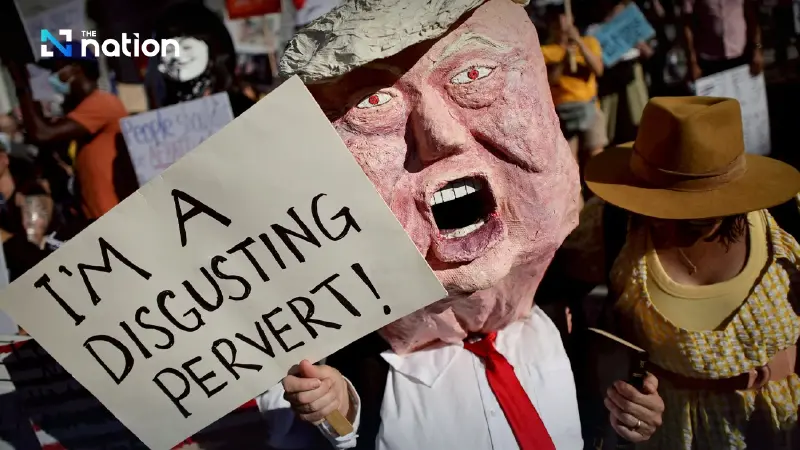


From New York to Houston, demonstrators of all ages denounce what they see as authoritarianism and corruption under the Trump administration.
Waves of protesters, parents with prams, retirees, students, even dogs in costume, poured onto the streets of American cities on Saturday for nationwide “No Kings” rallies, condemning what they describe as the authoritarian drift and unchecked corruption of President Donald Trump.
Organisers anticipated millions would join more than 2,600 marches held from coast to coast, challenging a presidency that, in their view, has dismantled democratic safeguards and reshaped government institutions with alarming speed.
While the tone was defiant, the atmosphere was largely festive: red, white and blue outfits, giant inflatable figures and brass bands filled public squares. Police departments across major cities reported few, if any, disturbances. In New York, authorities said over 100,000 people marched peacefully across all five boroughs, with “zero protest-related arrests.”
“There is nothing more American than saying, ‘We don’t have kings,’” said Leah Greenberg, co-founder of the progressive group Indivisible, which helped coordinate the day’s actions. “Peaceful protest is our birthright.”

Unease over Trump’s use of power
The demonstrations underscored growing disquiet, particularly among left-leaning Americans, over Trump’s alleged targeting of political opponents through criminal prosecutions, his militarised immigration policy, and the deployment of National Guard troops in US cities.
Critics say Trump has filled senior government posts with loyalists lacking experience, while using his influence to pressure the press, law firms and universities.
In Washington, protesters marched towards the Capitol in a carnival-like procession, waving flags and holding “No Kings” placards. Many participants wore symbolic costumes, including Statue of Liberty crowns, wigs and blood-streaked face paint, reflecting what they called the “erosion of liberty.”

Voices from across America
“I want to show that democracy still matters,” said Aliston Elliot, wearing a Statue of Liberty headpiece and holding a sign reading “No Wannabe Dictators.”
In Houston, US Marine veteran Daniel Aboyte Gamez, who served in Iraq, Afghanistan and Syria, told reporters he was baffled by the direction of the country. “I don’t understand what’s happening to this nation,” he said, standing among a crowd of 5,000 outside city hall.
At a rally in Portland, Oregon, 70-year-old veteran Kevin Brice wore a sweatshirt emblazoned with the phrase “No Kings since 1776.”
“Everything I believed I was defending in the military feels at risk now,” he said. “Even though I’ve always been a Republican, I can’t support where the party is headed.”
Former oil industry worker Steve Klopp, 74, echoed that sentiment in Houston:
“I’ve been a Republican forever, and so has my family. But one man has driven me away from my party, that’s extraordinary.”
In Denver, 38-year-old Kelly Kinsella, dressed as the Statue of Liberty with “bloody tears,” blamed Trump’s tariff policies for fuelling inflation. “Everyone’s stressed, everything’s more expensive,” she said. “We just want change.”

Trump: ‘I’m not a king’
Trump made light of the protests in an interview with Fox Business aired on Friday, saying, “They’re referring to me as a king, I’m not a king.”
More than 300 grassroots organisations coordinated the demonstrations, with the American Civil Liberties Union providing legal guidance and training volunteer marshals to prevent escalation. Political figures from across the Democratic spectrum, including Senate Minority Leader Chuck Schumer and Representative Alexandria Ocasio-Cortez, voiced support for the movement.
The “No Kings” campaign previously drew millions on 14 June, Trump’s 79th birthday, coinciding with a rare military parade in Washington.
Republicans push back
Republican House Speaker Mike Johnson dismissed the movement as “the hate-America rally,” while other party members accused organisers of inflaming tensions that could lead to political violence, a concern heightened by the September assassination of right-wing activist and Trump ally Charlie Kirk.
Dana Fisher, a sociologist at American University who studies political activism, predicted that the latest round of protests could be among the largest in modern US history, estimating more than three million participants nationwide.
Although the rallies are unlikely to alter Trump’s policies directly, Fisher noted they could embolden elected officials critical of him.
“These protests may not change Trump,” she said, “but they remind the country that Americans still believe in democracy, and they’re not afraid to defend it.”
Reuters
