
Sanae Takaichi becomes Japan’s first female prime minister
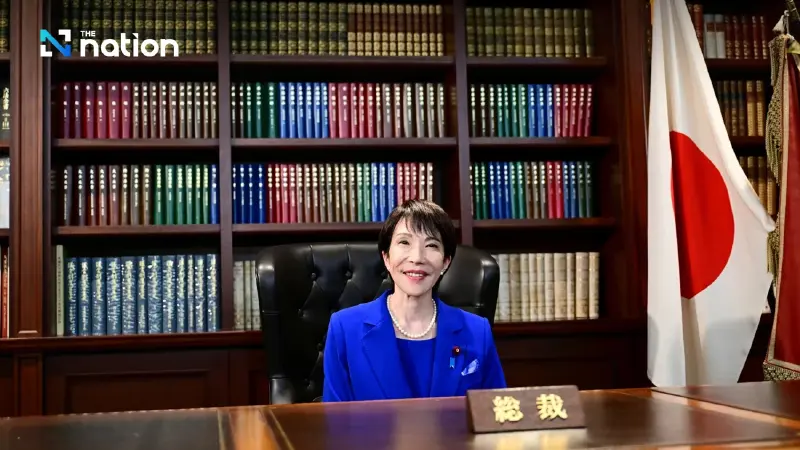


Sanae Takaichi becomes Japan’s first female prime minister after a right-wing coalition deal, promising stability, reform and a firm conservative agenda.
Hardline conservative Sanae Takaichi was elected Japan’s first female prime minister on Tuesday ( October 21), breaking the nation’s political glass ceiling and steering its government sharply to the right after weeks of intense manoeuvring.
Takaichi, 64, replaced Shigeru Ishiba, who resigned earlier in the day with his Cabinet following months of political deadlock after the ruling Liberal Democratic Party (LDP) suffered a crushing defeat in July’s election.
She won 237 votes, four more than the required majority in the 465-member lower house, defeating opposition leader Yoshiko Noda of the Constitutional Democratic Party of Japan, who gained 149 votes.
Her victory was secured after the LDP struck a last-minute coalition deal on Monday with the right-wing Japan Innovation Party (Ishin no Kai), ending weeks of uncertainty after the LDP’s moderate ally, the Buddhist-backed Komeito, pulled out of their 26-year partnership.
“Political stability is essential right now,” Takaichi said at the coalition signing ceremony alongside Osaka Governor Hirofumi Yoshimura, the JIP leader. “Without stability, we cannot pursue strong economic or diplomatic measures.”
Under the coalition agreement, JIP will not immediately hold Cabinet positions until both sides are confident in the partnership. Analysts say the fragile alliance could leave Takaichi vulnerable, as her bloc still lacks a firm majority in both houses of parliament.
Thatcher-inspired conservative sets new course
A protégé of the late Prime Minister Shinzo Abe, Takaichi is a staunch nationalist known for her hawkish defence and revisionist views. She has often cited Britain’s former leader Margaret Thatcher as her political inspiration, praising her “iron will and womanly warmth.”
Like Thatcher, Takaichi rose from modest roots, her father worked for a car company and her mother was a police officer, in a political culture dominated by elite dynasties. But unlike her idol, she favours big spending and loose monetary policies, championing Abe’s “Abenomics” stimulus and calling for tax cuts and greater government influence over the Bank of Japan.
Takaichi’s economic plans, which include high public spending, could test investor confidence in one of the world’s most indebted nations. She must also prepare for an early visit by US President Donald Trump next week and a major policy address outlining her government’s agenda.
Nationalist stance and regional friction
A self-described patriot and drummer in her spare time, Takaichi is a regular visitor to the Yasukuni Shrine, which honours Japan’s war dead, including convicted war criminals, and is viewed by neighbours China and South Korea as a symbol of Japan’s wartime aggression.
She has advocated revising Japan’s pacifist postwar constitution and even suggested forming a “quasi-security alliance” with Taiwan, a move likely to irritate Beijing.
Although she has promised to appoint more women to her Cabinet, her conservative positions, including opposition to same-sex marriage, separate surnames for married couples, and female imperial succession, have alienated many women voters.
Softer image amid hardline politics
Supporters describe Takaichi as a disciplined yet approachable leader. Her former hairdresser Yukitoshi Arai said her signature “Sanae Cut” hairstyle reflects her attentive nature: “It’s sleek and sharp, but she tucks the sides behind her ears, a sign she listens carefully to others.”
A graduate of Kobe University, Takaichi began her political career in 1993 as an independent before joining the LDP three years later. She has served as Minister for Economic Security and Minister for Internal Affairs, but her diplomatic experience remains limited.
Takaichi has recently toned down her hawkish rhetoric; on Friday she sent a religious offering instead of visiting Yasukuni in person. Still, her election signals a decisive ideological shift in Japan, one that could reshape its domestic and foreign policies for years to come.
