
Hurricane Melissa begins lashing Jamaica as 'catastrophic' Category 5 storm
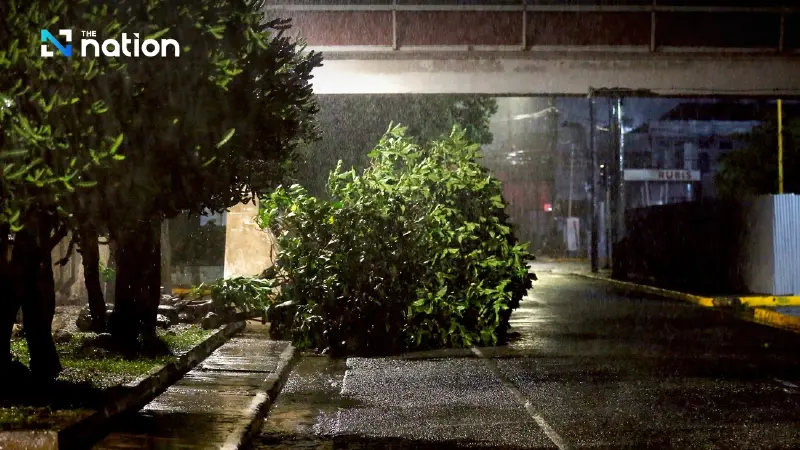


Hurricane Melissa intensified on Monday afternoon (October 27), unleashing sustained winds of up to 175 mph (282 kph) as it crept toward Jamaica, threatening to become the most powerful storm ever recorded to strike the country.
By 2 pm (1800 GMT), the US National Hurricane Centre (NHC) classified Melissa as a “catastrophic” Category 5 hurricane, the highest level on the Saffir-Simpson scale. The storm was projected to sweep across Jamaica late Monday or early Tuesday, move over eastern Cuba by Tuesday night, and reach the Bahamas and Turks and Caicos by Wednesday.
Meteorologists warned that Melissa’s sluggish pace over abnormally warm Caribbean waters had supercharged its growth, setting the stage for several days of devastating winds and up to 3 feet of rainfall. The storm’s wind field already stretched wider than Jamaica itself, an island comparable in size to the US state of Connecticut, with key airports sitting just above sea level.

Prime Minister Andrew Holness ordered mandatory evacuations across parts of southern Jamaica, including the historic coastal town of Port Royal, and appealed for international assistance. He warned that farmlands, homes, and vital infrastructure, including bridges, roads, ports, and airports, faced “significant destruction.”
Despite evacuation orders, some residents told Reuters they were reluctant to leave their homes over fears of looting. Authorities said buses were standing by to move around 28,000 people from affected areas. “No infrastructure in the region can withstand a Category 5,” Holness cautioned.
He said the government had mobilised an emergency response fund of US$33 million, along with insurance and credit facilities to cover damage expected to surpass that caused by last year’s deadly Hurricane Beryl.
Beryl was the fastest Atlantic hurricane on record to reach Category 5 strength, and scientists warn that climate change, by heating ocean waters, is making tropical cyclones intensify more rapidly.
“Tens of thousands of families will face hours of winds above 100 mph and relentless downpours lasting days,” said Jonathan Porter, AccuWeather’s chief meteorologist. “Infrastructure damage could severely delay relief efforts.”

Porter noted that slow-moving hurricanes often cause the worst devastation: “This is a crisis unfolding in slow motion.”
Although Jamaica has endured major storms before, including 1988’s Category 4 Hurricane Gilbert, meteorologists say a direct hit from a Category 5 system would be unprecedented. Melissa’s slow crawl compared to Gilbert means residents must prepare for a prolonged assault, with some communities potentially isolated for weeks.
In Hagley Gap, a remote town in Jamaica’s Blue Mountains, teacher Damian Anderson said landslides and flooding had already blocked the roads. “We can’t move,” he said. “We’re terrified. We’ve never faced something like this before.”
Neighbouring Haiti and the Dominican Republic have already been battered by Melissa’s outer bands, with torrential rains killing at least four people. In Haiti, where gang violence has crippled public services, more than 3,600 people sought shelter as flights were suspended and coastal travel banned.
In the Bahamas, Prime Minister Philip Davis ordered evacuations for residents in the southern and eastern islands, while eastern Cuba braced for landfall. Cuban officials said over 500,000 people had been moved from vulnerable coastal and mountain regions, schools and transport suspended, and more than 250,000 residents sheltered in and around Santiago de Cuba, directly in the path of the approaching storm.
