
Japan says Chinese fighter jets targeted its aircraft near Okinawa


Japan has reported radar incidents involving Chinese fighter jets near Okinawa, with both sides offering conflicting accounts of what occurred.
- Japan has accused Chinese jets of twice targeting its military aircraft near Okinawa with fire-control radar, calling the action "highly unsafe."
- China has flatly rejected the accusation as "false," claiming instead that Japanese aircraft disrupted its navy's pre-announced training exercises.
- The use of fire-control radar is considered a hostile act because it suggests a potential missile lock, prompting Japan to lodge a formal protest.
- The incident involved Chinese J-15 jets launched from the Liaoning aircraft carrier, to which Japan responded by scrambling its own F-15 fighters.
Japan has accused China of twice directing fire-control radar at its military aircraft near Okinawa, calling the incidents highly unsafe, a claim Beijing has flatly rejected on Sunday (December 7).
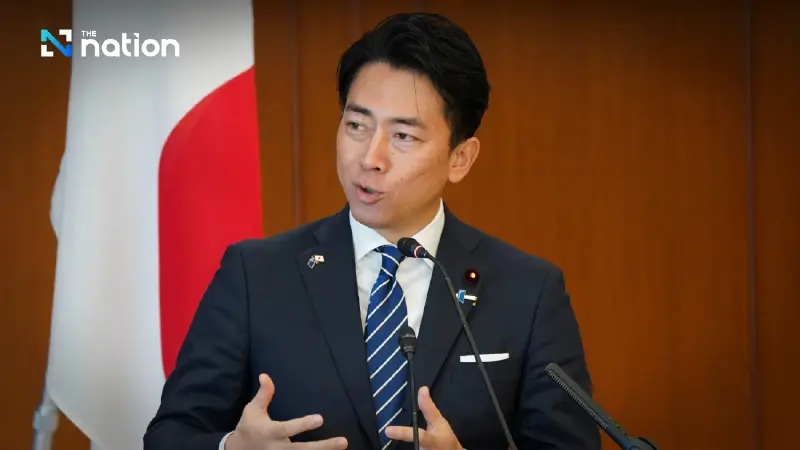
Defence Minister Shinjiro Koizumi said the radar “illumination” recorded on Saturday exceeded anything required for routine aviation safety, adding that Tokyo had lodged a formal protest.
Speaking in Tokyo alongside Australian Defence Minister Richard Marles, Koizumi vowed that Japan would respond “firmly yet without provocation” to safeguard regional stability.

China, however, countered that Japanese aircraft had repeatedly approached and disrupted its navy while it conducted pre-announced carrier flight training east of the Miyako Strait.
Navy spokesperson Colonel Wang Xuemeng insisted Japan’s account was “false”, accusing Tokyo of endangering Chinese pilots and demanding that it “stop its slander immediately”.
Escalating pressure in strained China-Japan ties
The encounters, which took place near islands claimed by both countries, mark the most serious confrontation between their militaries in years.
Tensions have intensified since Prime Minister Sanae Takaichi warned that Japan could act if any Chinese operation against Taiwan threatened Japanese security.
Fire-control radar is considered a hostile signal as it suggests a possible missile lock, potentially forcing targeted aircraft to take evasive action.
Japan did not disclose whether the Chinese jets had completed a radar lock or how its own aircraft reacted.
Marles voiced Australia’s “deep concern” over Beijing’s actions, affirming that it would continue coordinating closely with Tokyo to uphold a rules-based order.
Domestic unease rises as regional tensions widen.
China has urged its citizens to avoid travelling to Japan, and has postponed plans to resume seafood imports halted after Japan released treated water from the Fukushima nuclear plant.
The renewed friction comes as China ramps up military pressure on Taiwan, which lies just 110 kilometres from Japan’s westernmost island, Yonaguni.
Japan hosts the largest concentration of US military assets overseas, including thousands of Marines in Okinawa.
Washington has yet to publicly comment on the radar incidents.
Although US Ambassador to Japan George Glass has voiced support for Tokyo on social media, President Donald Trump and senior officials have remained notably silent.
According to sources, Trump privately urged Takaichi last month not to escalate the dispute after a call with Chinese President Xi Jinping, who reiterated that Taiwan’s unification remains central to Beijing’s strategic ambitions.
Carrier operations and past confrontations
Tokyo said the Chinese J-15 jets involved were launched from the carrier Liaoning, which was operating with three missile destroyers south of Okinawa.
Japan scrambled F-15 fighters in response to the carrier’s flight operations.
Radar-related confrontations between the two nations are not new.
Japan accused a Chinese warship in 2013 of locking fire-control radar on one of its destroyers.
In 2016, Beijing levelled a similar accusation at Japanese jets.
Earlier this year, Tokyo said Chinese fighters flew dangerously close to a Japanese patrol aircraft in the same region.
The latest incidents come amid a surge in Chinese military and maritime activity.
On Thursday, more than 100 Chinese naval and coastguard vessels were observed across East Asian waters, according to intelligence cited by Reuters.
Taiwan warned that the expanded presence posed a “regional threat”.
Tensions extend into the Taiwan Strait.
Taiwan’s coast guard said on Sunday it was tracking drills by three Chinese maritime safety vessels west of the Taiwan Strait’s median line but described the broader maritime situation as “normal”.
Chinese state media said the ships were conducting search-and-rescue training in the central parts of the strait.
Taipei accused Beijing of using “misleading and false wording” to mask its intentions, saying such activities were aimed at intimidation and psychological pressure.
While China claims full sovereignty over the Taiwan Strait, both Taiwan and the United States maintain that the waterway is an international passage and integral to global shipping.
Reuters
