
Nobel winner Sakaguchi stresses importance of medical science
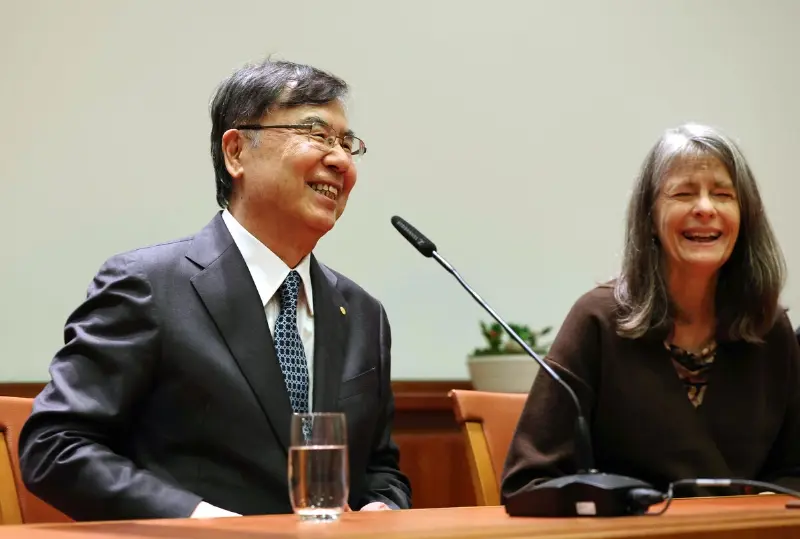


Shimon Sakaguchi, distinguished honorary professor at the University of Osaka, who won this year's Nobel Prize in Physiology or Medicine, underscored the significance of medical science at a press conference at the Karolinska Institute in Sweden on Saturday (December 6).
- Nobel winner Sakaguchi used his award to express hope that society will recognize the importance of medical science and research.
- His prize-winning discovery was the identification of "regulatory T cells" in 1995, which suppress excessive immune responses and are crucial in disease, organ transplantation, and cancer immunity.
- While clinical applications of his research are still in an early stage, Sakaguchi is optimistic that it will lead to future treatments for various diseases and cancers.
With his Nobel prize win, Sakaguchi said at a press conference, "I hope...our society will recognise the importance of medical science and medical research."
Sakaguchi attended the press conference with his two co-winners, ahead of the award ceremony to be held on Wednesday local time.

Looking back on his research, the Japanese laureate highlighted his discovery in 1995 of the molecular marker for "regulatory T cells" that suppress excessive immune responses.
"It was kind of fun" to see the importance of the cells in actual disease settings, organ transplantation and also cancer immunity, he said.
Referring to prospects, Sakaguchi said that his research is still in an early stage for clinical application and that developing new treatments will take time.
Still, he added that he and his co-winners are optimistic that someday treatment using regulatory T cells will become a reality for various diseases, cancers and so on.
Sakaguchi won the Nobel prize with two US researchers--Mary Brunkow and Fred Ramsdell.
At the press conference, Brunkow emphasised that Sakaguchi's "contributions to the field have been...over decades." Ramsdell said that Sakaguchi's discovery was "key to all of what we've done."
