
Trump brands Iran apology a ‘surrender’, says US is ‘winning the war by a lot’
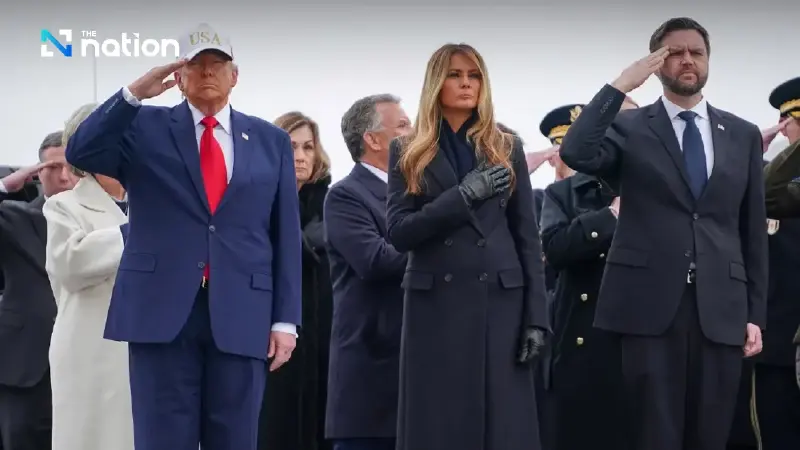


President Donald Trump dismissed Iran’s apology to neighbouring countries as a “surrender”, saying Tehran was weakening under pressure as he signalled the US could expand its military campaign.
President Donald Trump on Saturday (March 7, 2026) described Iranian President Masoud Pezeshkian’s apology to neighbouring countries as a “surrender”, arguing that Tehran’s message reflected military weakness rather than an attempt to prevent the regional war from widening.
Trump rejects Tehran’s regional message as a sign of weakness
Speaking to reporters aboard Air Force One while returning from Dover Air Force Base, Trump said Iran had apologised to its Middle East neighbours because it was “being beat to HELL”. He claimed Tehran had promised not to fire at them again and asserted that regional countries were thanking him for what he portrayed as the decimation of Iran’s military capacity.
Trump also doubled down on his demand for Iran’s “unconditional surrender”. When asked what that would mean in practice, he said it would come when Iran would “cry uncle” or no longer be able to continue fighting.
US president signals possible escalation despite apology to neighbours
Trump rejected the idea of a ceasefire and suggested Washington was considering expanding its target list.
His remarks came after Pezeshkian apologised to neighbouring states affected by Iranian strikes and said Tehran would halt attacks on those countries unless Iran itself was attacked from their territory. The move appeared intended to discourage Gulf states from joining the US-Israeli military effort, even as the wider conflict continued.
Asked whether the deaths of six US service members had caused him to rethink the war, Trump said they had not. He told reporters the United States was “winning the war by a lot” and added that deaths were “a part of war”, underscoring the administration’s determination to press ahead despite mounting costs.
The exchange highlighted the sharp contrast between Tehran’s attempt to reassure neighbouring countries and Trump’s effort to cast the apology as proof of Iran’s collapse. While Iranian officials presented the message as conditional restraint, Trump used it to reinforce his argument that pressure on Tehran should intensify rather than ease.
