
Oil climbs further after US strike on Iran export hub
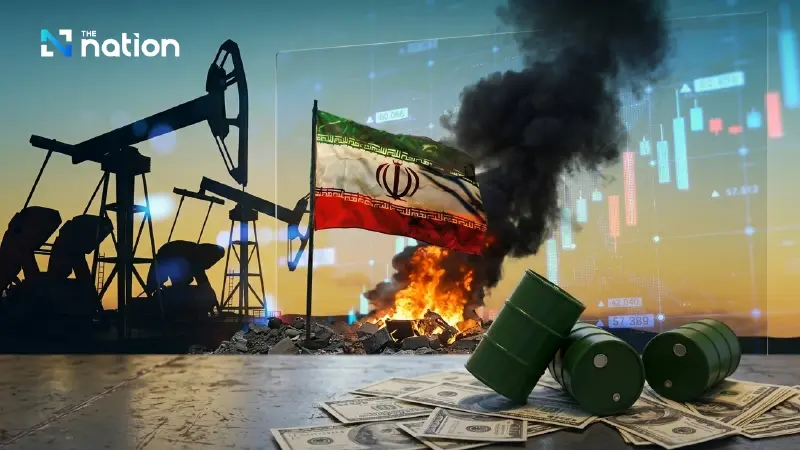


Brent tops $105 and WTI nears $100 after the US hit Iran’s Kharg Island, deepening supply fears and worsening disruption at the Strait of Hormuz
Crude oil prices continued to rise after the United States attacked Kharg Island, Iran’s main oil export hub, marking a further escalation in the US-Iran war and disrupting oil flows through the Strait of Hormuz.
Bloomberg reported that oil prices climbed by as much as 3.3% after the US struck Iran’s principal export centre, escalating the conflict yet again and threatening crucial energy supplies from the region to consumers around the world.
Brent crude traded at about $105 a barrel after surging by more than 40% this month, while West Texas Intermediate (WTI) stood at around $100. Iran has launched retaliatory attacks against Israel and Arab Gulf states after the US struck Kharg Island on Saturday. Reuters reported Brent at $105.15 a barrel and WTI at $100.32 early on March 16, 2026.

The bombing of Kharg Island has further widened the conflict. Last week, the International Energy Agency said the war had already caused the biggest supply disruption in the history of the global oil market. Traffic through the Strait of Hormuz, the vital shipping route linking the Gulf to international markets, has remained almost entirely disrupted since the fighting began.
Iran’s Fars News Agency reported that exports from Kharg Island were continuing as normal. At the same time, the military said some locations in Doha and Dubai that host US forces could come under attack within the next few hours, according to the agency’s report on Monday morning. Reuters also reported that a drone strike had earlier disrupted operations at Fujairah in the United Arab Emirates, although activity resumed on Sunday.
A senior aide to President Donald Trump said the Pentagon assessed that the war with Iran, now in its third week, could last around four to six weeks. Kevin Hassett, director of the White House National Economic Council, gave that timeframe while noting that the final decision on when to end the war would rest with the president.
Over the weekend, Trump raised the possibility of negotiations to end the conflict, although Iranian Foreign Minister Abbas Araghchi said the Islamic Republic had not requested talks or a ceasefire.
Trump has also called for the Strait of Hormuz to be reopened, urging allies to send warships to assist. According to reports cited by Reuters, the US is seeking broader action to protect shipping, while discussions continue over the timing and scope of any maritime coalition.
In a sign that the war is tightening global crude supply, the IEA said on Sunday that oil from the record emergency stockpile release would be made available in Asia immediately. The agency’s statement followed plans for an unprecedented release of more than 400 million barrels, the largest in its history. Reuters said the package includes 271.7 million barrels from government stocks, 116.6 million from industry obligations and 23.6 million from other sources.
Monday morning price update, March 16, 2026:
Brent crude for May delivery rose 1.8% to $105.00 a barrel at 6:01am Singapore time, while WTI crude for April delivery gained 1.7% to $100.37 a barrel.
