
Xi offers four-point Middle East plan in talks with UAE prince
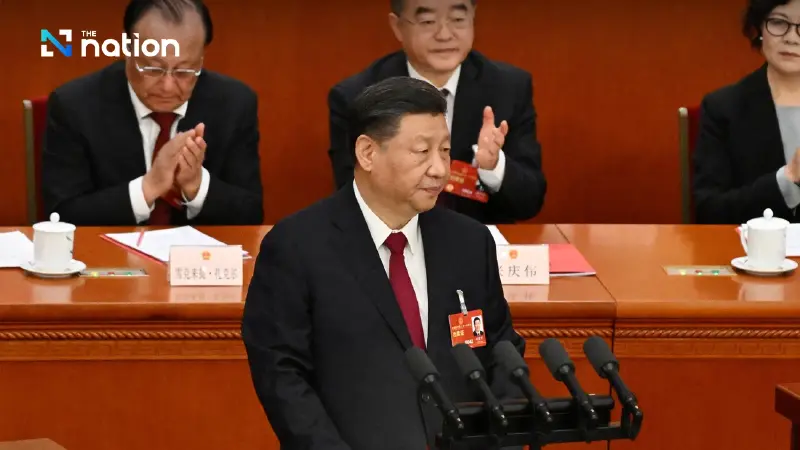


Chinese President Xi Jinping has proposed a four-point framework for peace and stability in the Middle East, as Beijing steps up diplomacy amid fragile regional tensions.
Chinese President Xi Jinping has put forward a four-point proposal aimed at promoting peace and stability in the Middle East, using talks in Beijing with Abu Dhabi Crown Prince Sheikh Khaled bin Mohamed bin Zayed Al Nahyan to call for a rules-based and development-led approach to regional security. State media first reported the proposal on Tuesday (April 14).
According to Xinhua, Xi said the region should follow four broad principles: peaceful coexistence, respect for national sovereignty, adherence to international law, and coordination between development and security. He also said the world must not be allowed to slide back into the “law of the jungle”.
Xi sets out four principles for regional stability
Xi’s four-point proposal included:
- Peaceful coexistence: building what he described as a “common, comprehensive, cooperative, and sustainable” security architecture for the region.
- National sovereignty: fully respecting the sovereignty, security and territorial integrity of Middle Eastern and Gulf states, while protecting people, facilities and institutions.
- International rule of law: upholding international law and rejecting unilateralism and power politics.
- Development and security together: creating conditions for growth and stability, while sharing the opportunities generated by China’s modernisation.
Plan stresses sovereignty, law and development
Xi made the proposal as heightened tensions continue to ripple across the Middle East following failed weekend talks between Washington and Tehran, with China increasingly vocal about the need to prevent a wider regional crisis. Reuters said Xi’s remarks amounted to a rebuke of the U.S.-Israeli military campaign against Iran, although he did not directly name either country in the comments reported by Xinhua.
He also used the meeting to signal that China wanted to deepen ties with the United Arab Emirates, saying Beijing was ready to work with Abu Dhabi to build a more robust, resilient and dynamic strategic partnership.
Proposal comes as China raises diplomatic activity
The proposal lands as Beijing tries to present itself as an active diplomatic player in the Gulf and wider Middle East. On April 8, Chinese Foreign Ministry spokeswoman Mao Ning said Foreign Minister Wang Yi had made 26 phone calls with counterparts from relevant countries since the fighting began, while China’s special envoy for the Middle East had also travelled to the region in mediation efforts.
China has also publicly described the current ceasefire between the United States and Iran as “very fragile”, while urging all sides to avoid steps that could trigger a fresh escalation.
Beijing pushes wider Middle East role
The latest proposal also fits into Beijing’s broader regional strategy. Reuters reported that Xi is expected to hold talks with US President Donald Trump in Beijing next month, while China is also preparing to host the second China-Arab States Summit later this year.
China has been trying to cast itself as a constructive actor in the Middle East as the Iran conflict disrupts energy flows, threatens Gulf infrastructure and raises pressure on major importers including China. Oil and gas shipments through the Strait of Hormuz have been badly disrupted since the conflict intensified, while official Chinese data showed March natural gas imports fell to their lowest level since October 2022 and crude oil shipments also declined.
