
Oil jumps as Hormuz shutdown jolts markets again
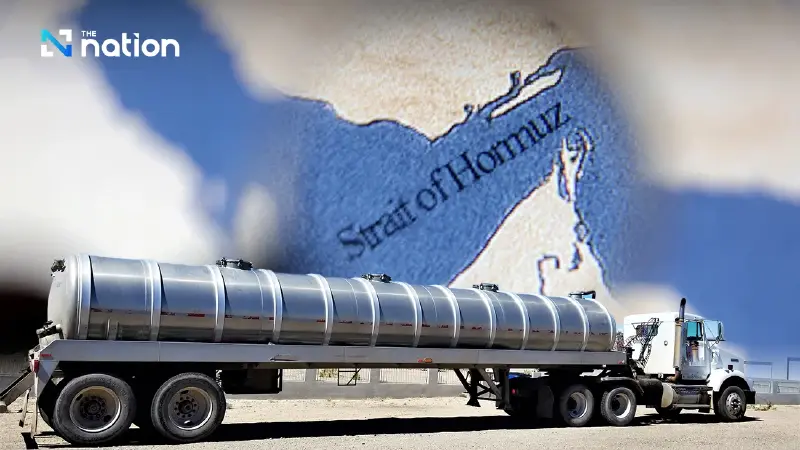


Crude prices rebounded sharply after the Strait of Hormuz was shut again, renewing fears over disrupted oil flows and a worsening US-Iran standoff
Oil prices surged back on Monday after a brief market reprieve collapsed, with traders rattled by the renewed closure of the Strait of Hormuz following fresh accusations of ceasefire violations by both the United States and Iran.
The rebound came after a brutal sell-off on Friday, when crude prices tumbled more than 9% on hopes that shipping through the strategic waterway might resume. Those hopes faded quickly over the weekend after both sides accused each other of attacking vessels despite the ceasefire, pushing the market back into risk mode.
By 2327 GMT, Brent crude had climbed US$6.11, or 6.76%, to US$96.49 a barrel, while US West Texas Intermediate rose US$6.53, or 7.79%, to US$90.38 a barrel.
The latest gains followed a renewed escalation in tensions after US President Donald Trump said on Sunday that the US military had seized an Iranian cargo ship that attempted to break through Washington’s blockade.
Iran, in turn, said it would not join a second round of peace talks and rejected further negotiations despite Trump’s threat of renewed air strikes.
The confrontation has kept pressure squarely on one of the world’s most important energy chokepoints.
Before the war began nearly two months ago, the Strait of Hormuz handled roughly one-fifth of global oil supply. While the United States has maintained its blockade of Iranian ports, Iran had briefly lifted restrictions on the strait before reimposing them once again.
That reversal sent another shock through the oil market, reinforcing concerns that any recovery in shipping flows could prove far slower and more fragile than earlier optimism suggested.
Saul Kavonic, head of research at MST Marquee, said the market was continuing to swing wildly in response to political signals rather than any real improvement in conditions on the water.
“Oil markets continue to gyrate in response to oscillating social media posts by the U.S. and Iran, rather than the realities on the ground which remain challenging for oil flows to resume in a rapid fashion,” he said.
Friday’s steep drop had come after Iran said commercial vessels would be allowed to pass through Hormuz for the remainder of the ceasefire period, while Trump said Tehran had agreed never to close the strait again. That message briefly eased supply fears and triggered the biggest one-day decline in both oil benchmarks since April 18.
But the market’s relief proved short-lived.
“The announcement of the Strait opening proved premature,” Kavonic said. “Ship owners will be twice shy about heading towards the Strait again without receiving much more confidence that any announced passage is real.”
Shipping data still showed some movement through the waterway. According to Kpler, more than 20 vessels carrying oil, liquefied petroleum gas, metals and fertilisers crossed the strait on Saturday, the highest number recorded since March 1.
Even so, the renewed closure has once again underlined how fragile the situation remains. With diplomacy still uncertain and military tensions flaring, the oil market is being forced to price in the risk that disruption in Hormuz could drag on far longer than many had hoped.
