
US widens global pressure on Iran-linked oil tanker shipping
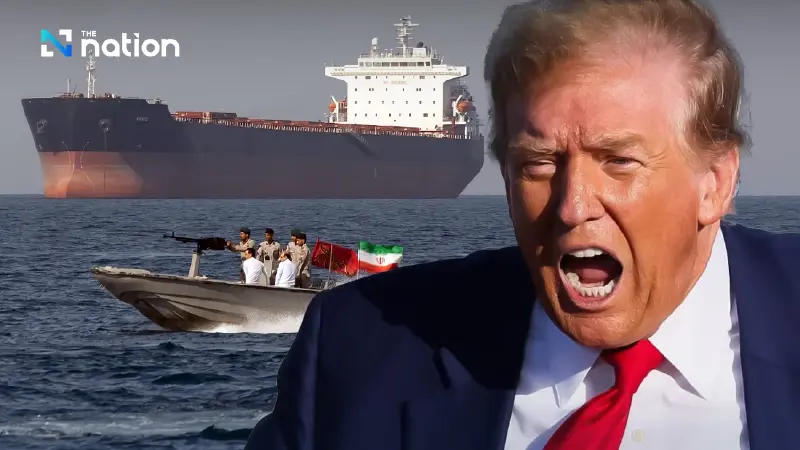


Washington is preparing broader maritime enforcement in international waters as it targets ships tied to Tehran beyond the Gulf.
- The US military is preparing to expand its maritime crackdown by boarding and seizing Iran-linked oil tankers and commercial vessels in international waters, beyond the Middle East.
- The operation will target Iranian-flagged ships, vessels providing material support to Iran, and the "shadow fleet" used to smuggle oil while evading sanctions.
- This global expansion is demonstrated by the involvement of the US Indo-Pacific Command, extending the pressure campaign into Asian waters.
- In addition to potential seizures, the US is increasing financial pressure by adding more ships and individuals to its sanctions list and threatening legal prosecution for anyone involved in the sanctioned oil trade.
In a special report, The Wall Street Journal cited US officials as saying that the US military is preparing in the coming days to board oil tankers linked to Iran and seize commercial vessels in international waters, widening its maritime crackdown beyond the Middle East.
The plan follows a dramatic reversal in the Strait of Hormuz between Friday and Saturday.
Late on Friday, Iran announced that the waterway had been fully reopened to commercial shipping, a move that immediately sent global oil prices down by 10% and drew a favourable response from President Donald Trump.
But by Saturday, Iranian forces had tightened control again, attacking several merchant vessels and declaring that the waterway was under Iran’s “strict control”, while arguing that the United States was continuing to blockade Iranian ports.
US Central Command later said the United States had already “intercepted 23 vessels” trying to leave Iranian ports under the naval blockade.
The expanded operation would allow Washington to “take control of vessels worldwide linked to Iran”, including Iranian oil tankers operating outside the Persian Gulf and ships carrying weapons in support of the Iranian government.

General Dan Caine, chairman of the Joint Chiefs of Staff, said the United States “will persistently pursue vessels flying the Iranian flag or any vessel attempting to provide material support to Iran”.
He said that would also cover the “shadow fleet”, a network used to smuggle Iranian oil while evading regulations, sanctions and international insurance requirements.
Part of the operation will be carried out by the US Indo-Pacific Command, which covers waters in Asia, marking a broader new stage in the economic pressure campaign that the Trump administration calls “Economic Fury”.
White House spokeswoman Anna Kelly said President Trump believed that the “naval blockade”, together with measures under “Economic Fury”, would help facilitate a “peace deal”.
The Trump administration’s decision to intensify economic pressure is aimed at forcing Tehran to reopen the strait and soften its position on the “nuclear programme”, which remains the core issue in negotiations between the United States and Iran.
The push has accelerated as the temporary ceasefire between the two sides is due to expire next week.
Talks held in Pakistan over the weekend failed to produce a settlement, and no date has been set for the next round.

The Journal said both sides were preparing for the possibility that fighting could erupt again, even though neither wants the war to resume.
Iran still has thousands of short- and medium-range missiles and is bringing launchers back up from underground storage, while US officials say the country’s defence industry has been severely damaged and cannot quickly produce more missiles.
Defence Secretary Pete Hegseth said US forces were at the “highest readiness” if diplomacy failed, but officials in the Trump administration do not want to use ground troops because of the possible loss of American lives and the lack of support among the US public.
Hegseth also said that “attacks on Iran’s power plants” remained an option, but warned that such action would carry high risks because it could provoke Iranian retaliation against energy infrastructure in Saudi Arabia and other Arab states allied with Washington.
That has turned “economic leverage” into the White House’s main tool in trying to end the conflict.
Iran is currently exporting around 1.6 million barrels of crude a day, most of it to China and much of it bought by small independent refiners.
Although China has been building up oil stockpiles to cushion itself against wartime volatility, Caine’s remarks were widely seen as a warning to Beijing.
The US Treasury said on Wednesday that it had added more ships, companies and individuals to its sanctions list to increase pressure on Iran’s illegal oil trade.
The latest batch is controlled by Mohammad Hossein Shamkhani, an oil shipping billionaire and the son of Ali Shamkhani, a former security adviser to Ayatollah Ali Khamenei, the former supreme leader of Iran, whose death in an Israeli air strike in late February triggered the war.
The move expands earlier sanctions that had already targeted hundreds of Iran-linked vessels, some of which could also face boarding.
Acting US Attorney General Todd Blanche has also pledged to prosecute anyone involved in buying or selling sanctioned Iranian oil.
Meanwhile, the US Attorney’s Office in Washington, under Jeanine Pirro, said it was moving against sanctioned networks and threatening operations that support the Iranian government.
Units within the office had previously played a key role in issuing ship-seizure warrants during the Trump-era crackdown on vessels linked to Venezuela.
Earlier this year, the US military had already shown that it could “track oil tankers worldwide” after intercepting ships linked to Venezuela in the Atlantic and Indian oceans.
The Pentagon worked with the Justice Department and law enforcement agencies, including the US Coast Guard, to seize vessels accused of violating sanctions.
Mark Nevitt, an associate professor of law at Emory University, said the Trump administration appeared to be operating across “three maritime dimensions”: a blockade near Iran, the possible seizure of shadow-fleet vessels in other parts of the world, and a broader crackdown on smuggling, including illegal cargo such as missile components.
“This is an all-in-one approach. If you want to pressure Iran, you have to use every legal authority available,” Nevitt said.
