
Iran slams Trump’s ‘done deal’ claim, warns Hormuz could shut again
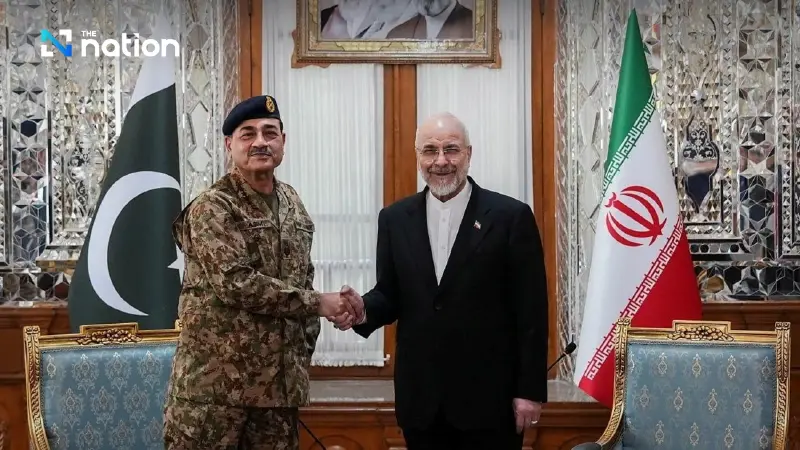


Iran rejected Donald Trump’s claim that a US-Iran deal was nearly complete and warned the Strait of Hormuz could close again if pressure persists
The atmosphere surrounding peace talks between the United States and Iran has grown tense again after Iran’s parliament speaker rejected Donald Trump’s claim that negotiations were nearly 100% complete, while also warning that the Strait of Hormuz could be shut again if Washington does not end its naval blockade.
In the latest round of the war of words, Trump posted on social media and continued to speak optimistically in public, claiming there were no sticking points left on the negotiating table.
He also said Iran had agreed to hand over its entire stockpile of enriched uranium, which he described as “nuclear dust”, to the United States, and to permanently shut down its nuclear programme.

However, Mohammad Bagher Ghalibaf, speaker of Iran’s parliament, quickly hit back, saying at least seven of Trump’s claims were false.
The spokesman for Iran’s National Security Committee also stressed that exporting enriched uranium out of the country was a strategic red line that Tehran would never accept.
“Enriched uranium is sacred to us, equal to the soil of Iran itself, and under no circumstances will it be moved anywhere,” said Esmaeil Baqaei, spokesman for Iran’s Foreign Ministry.
Although both sides have announced that the Strait of Hormuz has been reopened to commercial shipping, the details remain sharply disputed.
Under Iran’s conditions, parliament is drafting legislation to impose what it calls a “security protection” fee, while also making clear that warships from “enemy states”, particularly the United States and Israel, will not be allowed to pass through under any circumstances.
Ghalibaf also warned that the Strait of Hormuz would not remain open permanently if the United States continued its naval blockade of Iranian ports.
Trump, meanwhile, has insisted that the blockade will remain in place until every part of the “transaction” is completed 100%.
As for actual shipping activity, data from Kpler shows that traffic remains thin, with only eight commercial vessels passing through the strait on Friday as shipping companies around the world continue to act cautiously.
Amid the conflict, Trump has also tried to reassure markets through other geopolitical moves.
On China, Trump claimed that President Xi Jinping was “very happy” that the Strait of Hormuz had reopened, and said he was preparing to travel to China for what he described as a historic meeting.
On Russia, the US Treasury Department has extended a waiver allowing several countries to continue buying Russian seaborne oil until May 16.
The move is intended to increase global oil supply and reduce the pressure caused by soaring energy prices after the war with Iran.
According to Kpler, the US-Israel war with Iran has removed as much as 500 million barrels of oil from the global market, making it the biggest energy supply disruption in modern history, equivalent to more than a month of oil demand across Europe.
Even though investors on Wall Street have responded with optimism, sending US stocks to record highs, Asian markets fell this morning amid fears that diplomacy could still collapse.
If Iran follows through on its threat to shut the Strait of Hormuz again, oil prices, which have only recently eased to around US$90 a barrel, could surge back above US$100 and drag the global economy towards another recession.
