
Japan makes major shift, allowing exports of lethal weapons including fighter jets
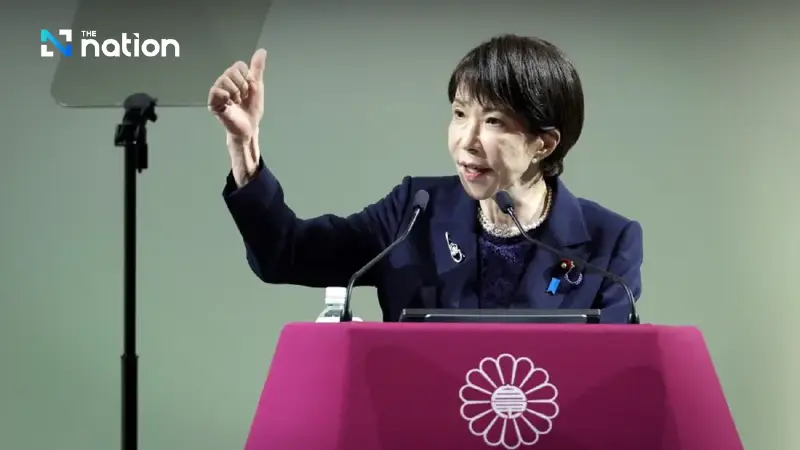


Japan’s cabinet under Prime Minister Sanae Takaichi has scrapped restrictions on exporting lethal weapons, with reports saying fighter jets, missiles and warships could be included, as Tokyo cites a tougher security environment.
Japan’s cabinet under Prime Minister Sanae Takaichi has lifted restrictions on exporting lethal weapons, including fighter jets, in what is being framed as a major departure from the country’s post-World War II, peace-oriented framework.
Al Jazeera, citing a post on X published on Tuesday, reported that Takaichi did not specify which weapons Japan would sell overseas. Japanese media, however, said the policy shift could include the export of fighter aircraft, missiles and warships—coming shortly after Japan signed a deal to build ships for Australia.
“With this amendment, transfers of all defence equipment will be possible in principle,” Takaichi wrote, adding that any recipient would be limited to countries that pledge to use the weapons in line with the UN Charter.
“In an increasingly severe security environment, no country can protect its own peace and security alone,” the Japanese prime minister said.
Japan’s Shuichi newspaper reported that at least 17 countries could be eligible to buy Japanese-made weapons under the latest change, noting the list could expand if more countries sign bilateral agreements with Japan.
The Asahi newspaper reported that a law adopted in 1967 and implemented in 1976 had limited Japan’s military exports to non-lethal equipment such as surveillance tools and mine-clearing devices, reflecting Japan’s post-war position.
Asahi also reported that Japan plans to restrict exports to countries currently engaged in conflict, but could make exceptions in “special circumstances”, prioritising Japan’s national security needs.
Japan’s Defence Ministry has said multiple countries have expressed interest in buying Japanese-made weapons, including Australia, New Zealand, the Philippines and Indonesia, amid a more competitive regional security landscape.
The policy shift comes soon after Japan and Australia signed a US$7 billion agreement under which Mitsubishi Heavy Industries will build the first three warships for the Royal Australian Navy.
The announcement also came amid reports that the prime minister sent an offering to Yasukuni Shrine in Tokyo during a festival period. The shrine, established in the 1800s to honour Japan’s war dead, includes the names of more than 1,000 convicted Japanese war criminals from World War II, including 14 classified as “Class A” war criminals. Visits and offerings by Japanese officials have long drawn criticism in China, South Korea and other countries that suffered under Japan’s wartime actions.
Takaichi, often described as hawkish on China and sometimes dubbed Japan’s “Iron Lady”, has been among Japanese leaders in recent years backing a stronger security stance.
China said it would oppose what it called Japan’s “irresponsible” military build-up.
“The international community, including China, will continue to closely watch this and resolutely oppose Japan’s new form of irresponsible military build-up,” said Guo Jiakun, a spokesperson for China’s Ministry of Foreign Affairs.
