
MV Hondius passengers ferried ashore in Spain under strict virus controls
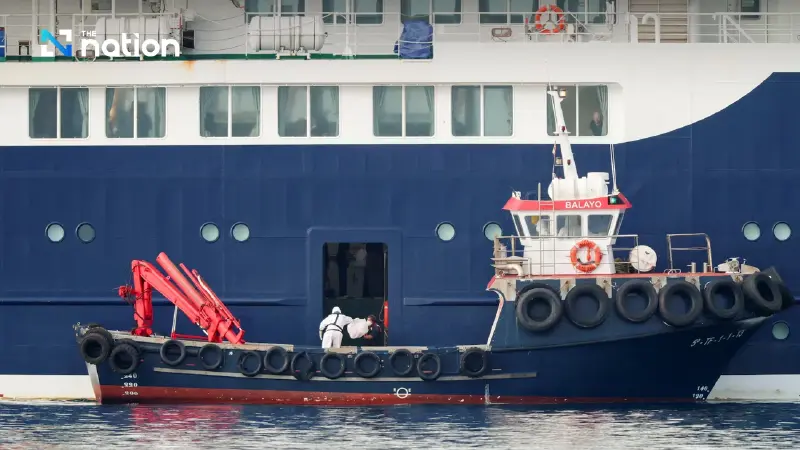


Passengers and crew from the MV Hondius begin disembarking in Tenerife under strict controls after a hantavirus outbreak.
The evacuation of more than 140 passengers and crew from the cruise ship MV Hondius began on Sunday (May 10, 2026) at the port of Granadilla on Tenerife in Spain’s Canary Islands, as authorities sought to contain a hantavirus outbreak linked to the Andes virus.
The operation is being carried out under close supervision by the World Health Organisation (WHO) and Spanish authorities to prevent the Andes virus, a strain capable of limited human-to-human transmission, from spreading into the community. WHO has said such transmission is linked mainly to close and prolonged contact, while assessing the wider public-health risk as low.

High-level quarantine measures: hazmat suits used as passengers come ashore
Images from the port showed officials and passengers being ferried from the ship in small vessels. Those disembarking were required to wear hazmat suits, face masks and respirators.
Spanish authorities allowed 14 Spanish nationals to leave the vessel first, before taking them to a military medical facility for quarantine.
Passengers were permitted to carry only small essential items, mobile phones, chargers and important documents. All luggage had to be left on board pending disinfection.
No one still on the ship has shown additional symptoms. However, the outbreak has already left three people dead, while five confirmed patients had previously disembarked from the vessel.

Countries send aircraft to repatriate citizens
Several governments sent chartered aircraft to collect their citizens as soon as they left the ship, before placing them under quarantine measures set by their respective countries.
The United States is taking its citizens to a medical centre in Nebraska, while France is requiring 72 hours of hospital quarantine before a further 45 days of home quarantine. British passengers are to be taken for hospital observation immediately after arriving home. Norway has sent a special European Union medical evacuation aircraft to collect high-risk individuals.

Parachute mission reaches suspected case on remote island
In another striking development, the British military sent medical personnel by parachute to Tristan da Cunha, one of the world’s most remote inhabited islands, to assist a former passenger from the ship who had developed suspected symptoms.
The island has no airport and is about six days by sea from Cape Town. The rapid operation also included the airdrop of oxygen cylinders and essential medical equipment.
The large-scale evacuation reflects international concern over the Andes strain of hantavirus, which can, in rare cases, spread between humans. After passengers are repatriated, authorities are expected to maintain close monitoring throughout the one- to eight-week incubation period.
Although the MV Hondius is expected to head to the Netherlands for cleaning and disinfection, the outbreak is likely to become a new reference point for managing high-risk emerging disease incidents on cruise ships in the future.

