
Thai hantavirus distinct from Andes strain, risk remains very low
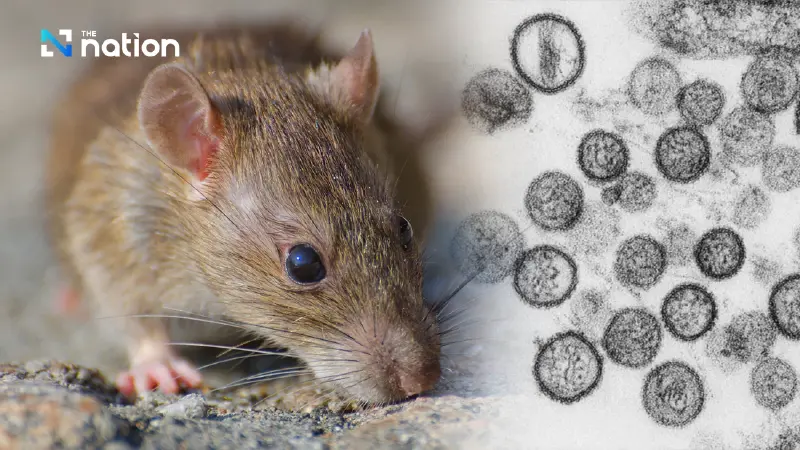


Prof Dr Yong Poovorawan reassures that Thailand's hantavirus risk remains very low, as the deadly Andes strain from South America has not been detected locally.
- The hantavirus strain found in Thailand is genetically distinct from the more severe "Andes" strain circulating in South America.
- According to health experts, the risk of hantavirus infection within Thailand is very low and not a cause for concern.
- Unlike the Andes strain, the Thai hantavirus does not spread from person to person, and the Andes strain has not been reported in the country.
Prof Dr Yong Poovorawan, Fellow of the Academy of Science, Royal Society of Thailand, and Head of the Centre of Excellence in Clinical Virology at the Faculty of Medicine, Chulalongkorn University, addressed concerns regarding the spread of hantavirus.
He stated that although genetic evidence of the virus has been detected in rodents such as bandicoot rats in Thailand, and antibodies have been found in some groups of the population for over 40-50 years, the strain present in Thailand is completely different from the "Andes" strain currently making news in South America.
Therefore, the risk within the country is considered very low and is not a cause for concern.
Biologically, hantavirus is an RNA virus in the Hantaviridae family, with rats and rodents acting as its primary reservoirs.
Human infection typically occurs through the inhalation of dust contaminated with animal secretions, such as urine, faeces, or saliva.
The disease is classified into two main symptom groups:
Haemorrhagic fever with renal syndrome (HFRS) is mostly found in Asia and Europe.
Hantavirus pulmonary syndrome (HPS) is mostly found in the Americas and is highly severe.
Initial symptoms for patients include high fever, muscle pain, and nausea and vomiting.
In severe cases, patients may experience kidney failure or pulmonary oedema, leading to respiratory failure.
However, Yong emphasised that, generally, this virus "does not spread from person to person," except for the Andes strain found in South America, which has a fatality rate of 30-40 per cent.
Nevertheless, there have been no reports of the spread of this strain in Thailand.
