
Japan to roll out upgraded five-level disaster warning system
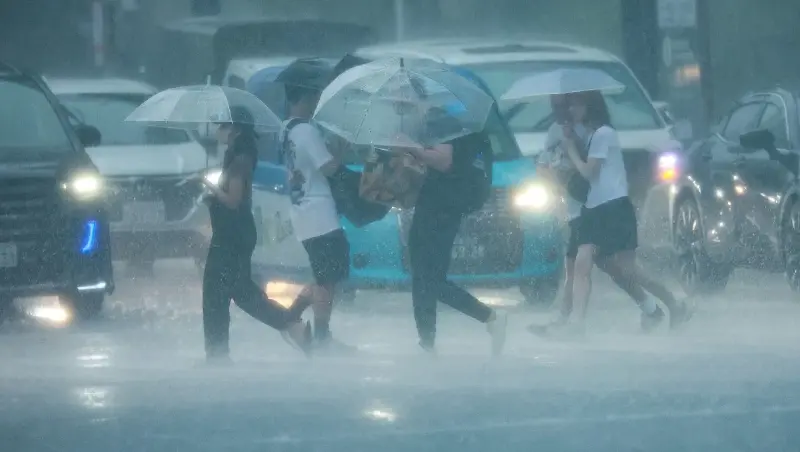


The Japan Meteorological Agency and the land ministry will use clearer alerts for floods, heavy rain, landslides and storm surges before the rainy and typhoon seasons.
- Japan is launching an upgraded five-level disaster warning system covering flooding, heavy rain, landslides, and storm surges.
- The new framework links each level to specific actions, with Level 5 being an emergency warning for when a disaster may have already occurred and Level 4 triggering a general evacuation order.
- Level 3 will be a warning for elderly and vulnerable residents to evacuate, while Level 2 is an advisory and Level 1 is an early warning for a possible disaster within five days.
- The system will be enhanced with more specific alerts, such as for 400 large rivers, and shorter-range forecasts for smaller areas.
Japan will begin using an overhauled weather warning framework on Thursday (May 27), as the country prepares for its rainy and typhoon seasons.
The Japan Meteorological Agency and the land ministry will introduce a revised five-level alert system covering flooding, heavy rain, landslides and storm surges. The new structure links each stage of danger with the action municipalities are expected to take.
At Level 5, an emergency warning will be issued when a natural disaster may have already occurred. Municipalities will then declare a Level 5 situation and order residents to take emergency action to protect themselves.
A newly created danger warning will apply to Level 4 and will lead municipalities to instruct residents to evacuate. A regular warning will be used for Level 3, when evacuation orders will be announced for elderly people and other vulnerable residents.
For Level 2, authorities will issue an advisory. Level 1 will be covered by early warning information, which alerts people to a possible disaster that may occur within the next five days.
Flood alerts will cover 400 large rivers across Japan, with an urgent warning newly added to the country’s list of warnings and alerts. Heavy rain alerts will focus on flooding in smaller rivers, while landslide alerts will warn of landslides on steep slopes and debris flows.
Storm surge alerts will cover rises in seawater levels caused by falling atmospheric pressure and tides driven against coasts by strong winds from typhoons. They are different from tsunamis, which are triggered by earthquakes.
Storm surges can leave coastal areas flooded for a prolonged period, with high tides causing further damage. The alerts will be based on tide levels and will also reflect wave run-up heights in the future.
Run-up height will first be included in alerts for the city of Kurobe and the towns of Nyuzen and Asahi in Toyama Prefecture, central Japan. These municipalities were especially hard hit by a 2008 tsunami. The measure will later be expanded to other areas of the country.
Because disaster risk increases when a linear precipitation zone develops, the agency will add shorter-range forecasts for smaller areas. In addition to its 12-hour forecast, it will begin providing two- to three-hour forecasts with narrower coverage.

[Copyright The Jiji Press, Ltd.]
