
Iran closes Hormuz as US strikes deepen regional crisis
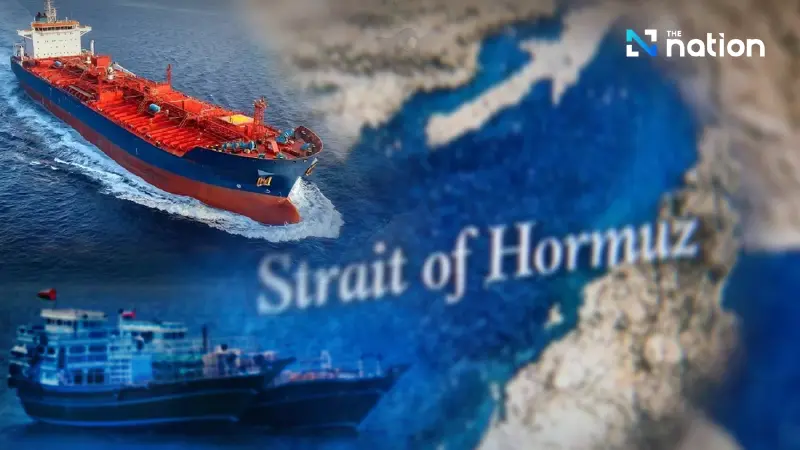


Iran says the Strait of Hormuz is closed after new US strikes, while Washington denies transit has stopped as Gulf tensions intensify
The confrontation between the United States and Iran has escalated sharply after Tehran announced the closure of the Strait of Hormuz, warning that all vessels, including oil tankers and commercial ships, would be barred from passing through the strategic waterway.

Iran’s top joint military command issued the order after a new round of US strikes on Iranian targets, saying any vessel attempting to enter or cross the strait could be fired upon. The announcement marked one of the most serious threats yet to global shipping through a route that had already been largely disrupted for months by the conflict.

Washington, however, rejected Iran’s claim that the strait had been shut. US Central Command said commercial vessels were still moving in and out of the Strait of Hormuz despite Tehran’s warning. It also denied Iranian state media reports that US warships in the area had been hit by missiles or drones.
The latest confrontation began after the US military launched overnight strikes on multiple targets in Iran. Central Command said the operation was a response to what it called Iran’s “unwarranted and continued aggression”, adding that the strikes began after midnight in Tehran.

The attacks followed the downing of a US attack helicopter near the Strait of Hormuz on Monday. US forces later struck Iranian air-defence and radar sites around the waterway. Iran responded with missile and drone attacks on US bases in Jordan, Kuwait and Bahrain, though a US official said there had been no significant damage.
Explosions were reported in several southern Iranian cities, including Sirik, Kangan, Bandar Abbas and Minab. Iran accused the US of hitting reservoirs supplying drinking water to 10 villages, with Foreign Ministry spokesman Esmaeil Baqaei describing the strikes as a violation of international law and human rights.

US President Donald Trump warned that the strikes could intensify if Iran did not accept a peace deal. He said the attacks would stop soon, but threatened stronger military action if Tehran’s leaders did not immediately sign an agreement with Washington.
US Defence Secretary Pete Hegseth framed the operation as both a military and diplomatic move, saying the strikes were intended to strengthen Washington’s position in negotiations. He said the US would continue to apply pressure if necessary, while also suggesting the action could help push Iran towards a deal.
The exchange threatens to unravel a fragile ceasefire reached in early April, which had paused a wider conflict that is now in its fourth month. Although both sides have continued to exchange fire since then, negotiators have so far failed to secure a lasting settlement.

Despite the escalation, there were still signs of diplomacy. Iranian media reported that a Qatari delegation had arrived in Tehran on Wednesday to discuss the latest developments. Qatar has been mediating between Washington and Tehran.
The dispute over Hormuz has become central to any possible settlement. Iran wants recognition of its control over the strait, an end to Israeli attacks in Lebanon, sanctions relief and the release of billions of dollars in frozen assets. Washington is demanding an end to Iranian restrictions on shipping through Hormuz and insists that any peace agreement must prevent Iran from developing a nuclear weapon. Iran denies seeking one.
Trump also claimed that vessels carrying 100 million barrels of oil had crossed the strait without Iranian permission as part of a secret US military mission. Hegseth said ships had been moving through the area at night under US protection in a way Iran could not stop or detect.
The conflict has already taken a heavy toll on global energy markets. The war has killed thousands and disrupted about one-fifth of the world’s oil and natural gas supply. Oil prices rose by nearly US$3 after Trump’s threat of further escalation, reaching about US$94 per barrel.
The crisis has also become a domestic political problem for the White House, with polls showing Trump’s approval ratings under pressure as voters react to higher petrol prices. Some Republicans have expressed concern that the war’s unpopularity could affect the party’s chances in the November midterm elections.
The confrontation is also unfolding alongside continued fighting in Lebanon between Israel and Iran-backed Hezbollah. Lebanese security sources said Israeli airstrikes in southern Lebanon killed at least 13 people on Wednesday, while Hezbollah claimed new attacks against Israeli forces.
On the nuclear front, the UN nuclear watchdog’s 35-nation Board of Governors passed a US-backed resolution calling on Iran to declare its remaining enriched uranium stocks and allow inspectors to verify them. Tehran dismissed the resolution as political.
The latest Hormuz announcement has further raised the stakes. Iran’s military says the strait is closed to all vessels. The US says ships are still passing. Between those two positions lies a widening risk to global energy flows, Gulf security and the fragile diplomacy still trying to prevent the conflict from sliding back into full-scale war.
