
Malaysia seeks overland durian export route to China via Thailand


Talks with Thailand and China’s customs authority aim to cut freight costs, ease a durian glut and open smaller Chinese cities to growers.
- Malaysia is in discussions with Thailand and China's customs authority (GACC) to establish an overland export route for durians.
- The primary goal of the land and rail route is to lower logistics costs, as it is a cheaper alternative to the currently used air freight.
- This initiative is intended to support local growers and widen access for Malaysian durians to the Chinese market.
- The proposed route would also enable Malaysian durians to reach smaller Chinese cities, which are seen as having strong market potential.
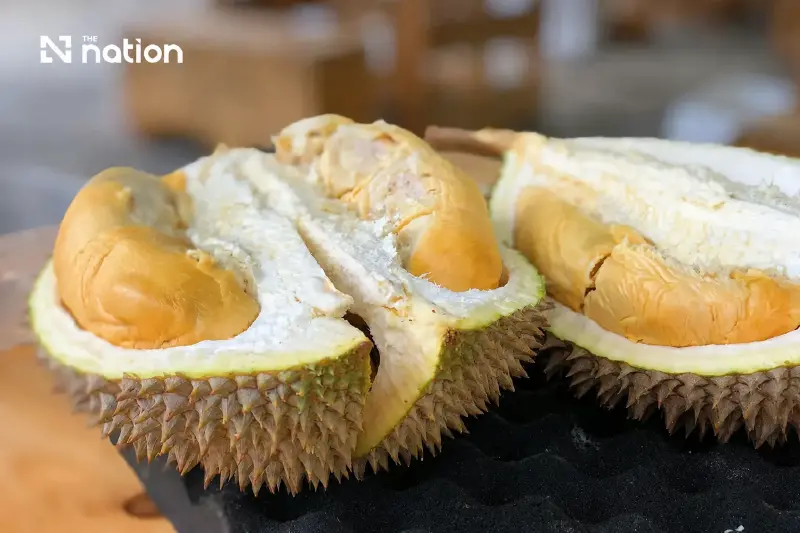
Malaysia is pursuing an overland route through Thailand to send local durians to China, as the government seeks to lower logistics costs, support growers and widen access to the Chinese market.
Agriculture and Food Security Minister Datuk Seri Mohamad Sabu said talks were underway with the Thai government and the General Administration of Customs of China (GACC), with land transport seen as a cheaper alternative to the air freight currently used by producers.
“The Thai Agriculture Minister (Minister of Agriculture and Cooperatives Suriya Juangroongruangkit) has met me, and we will discuss how to facilitate exports to China via land and rail routes.
“We are currently in intensive discussions with Thailand and GACC,” he told Bernama on Monday (July 6), after meeting residents in Masai Lama with Pakatan Harapan (PH) candidate for the Permas state seat Sharon Teo Siew Hui.
Mohamad said the proposed route could also help Malaysian durians reach smaller Chinese cities, which he described as having strong market potential, with each city estimated to have about two million residents.
The move comes as the durian season has arrived simultaneously in Kedah, Penang, Perak, Selangor, Johor and Pahang, increasing supply and pushing down farm-gate prices.
Consumers, however, are now able to buy premium varieties such as Musang King and Black Thorn at lower prices.
Turning to Johor’s agricultural sector, Mohamad said the state remained one of Malaysia’s important producers of pineapples, fruits and vegetables.
He said the ministry’s pineapple industry development campaign had raised production by 100 per cent over the past three years and attracted more young farmers, who were earning better incomes from the sector.
On food security, he said Malaysia still needed to lift self-sufficiency levels in several key commodities, including rice, meat and maize for animal feed.
Citing his recent visit to Iran, Mohamad said the country was able to meet about 85 per cent of its food needs domestically, with only 15 per cent imported.
“We are still not self-sufficient in rice production, while meat supply remains dependent on imports. For maize used as animal feed, we still import almost 100 per cent.
“We are implementing intensive efforts so that by 2030 at least 30 per cent of the country’s maize requirements can be produced locally,” he said.
Source: The Star
