
Bangkok makes global top 10 for luxury living costs in Julius Baer report
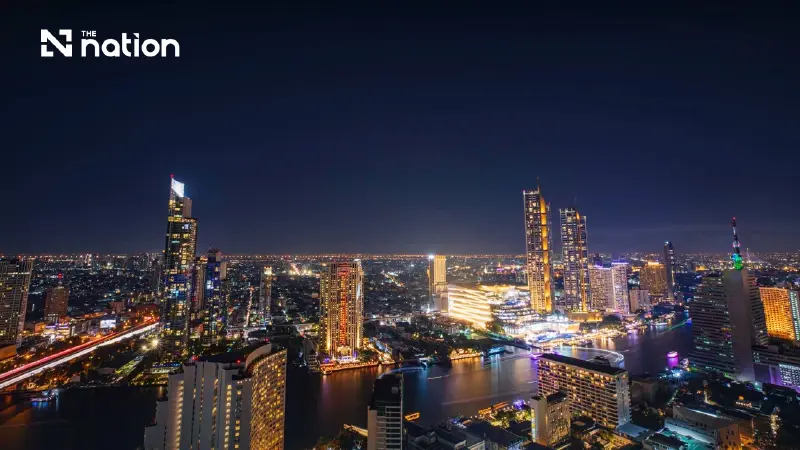


Bangkok has been named among the world’s ten most expensive cities for high-net-worth lifestyles, as Julius Baer’s 2026 report shows global luxury living costs rising 10.2% in US dollar terms.
Bangkok has emerged as one of the world’s ten most expensive cities for high-net-worth individuals, according to the Julius Baer Global Wealth & Lifestyle Report 2026, released on Tuesday (July 7).
The report tracks the cost of a luxury basket of 20 goods and services across 25 global cities to analyse where it costs the most to “live well”. The basket includes residential property, cars, business-class air tickets, private school fees, fine dining, watches, jewellery and other premium lifestyle categories.
Globally, the average cost of this luxury basket rose 10.2% year-on-year in US dollar terms, driven by currency movements and rising commodity prices, especially gold, which has more than doubled since 2024 and pushed up the cost of fine jewellery and watches.
Bangkok stands out in luxury categories
Bangkok’s place in the global top ten highlights the rising cost of premium living in the Thai capital, particularly in selected luxury goods and education-related categories.
A detailed breakdown showed Bangkok was the world’s most expensive city in three categories: men’s suits, women’s shoes and MBA studies. The city also ranked second globally for car prices, while spa services remained one of its more affordable luxury categories, ranking 20th.
The findings suggest Bangkok is no longer viewed only as a value-for-money lifestyle destination, but increasingly as a high-end consumption hub where selected premium goods and services can rival — or exceed — prices in traditional wealth centres.

Top 10 most expensive cities for luxury living
The report ranked the world’s ten most expensive cities for luxury lifestyles as follows:
- Singapore
- Zurich, Switzerland
- Monaco
- Hong Kong
- London, England
- Shanghai, China
- Paris, France
- Sydney, Australia
- Milan, Italy
- Bangkok, Thailand
Singapore retained the top spot for the fourth consecutive year, supported by ultra-high property and vehicle costs as well as the strength of the Singapore dollar.
Zurich climbed sharply to second place on the back of a stronger Swiss franc, while Monaco entered the top three for the first time, supported by currency strength and high real estate premiums.
Asia-Pacific dominates the luxury map
Asia-Pacific continued to dominate the global luxury market, taking half of the top ten spots in the 2026 Lifestyle Index.
The region’s strong showing reflects continued wealth creation, resilient premium consumption and the growing importance of Asian cities as centres for business, finance, tourism and luxury spending.
Bangkok’s inclusion alongside Singapore, Hong Kong, Shanghai and Sydney also underlines Southeast Asia’s expanding role in global wealth flows, helped by regional economic growth, technology investment and the integration of artificial intelligence across business sectors.
Gold and currencies push up luxury prices
Julius Baer said currency movements were a key factor in this year’s ranking, particularly the strength of the Swiss franc, the euro and several Asia-Pacific currencies against the US dollar.
Commodity prices also played a major role. Gold’s sharp rise since 2024 pushed jewellery prices up 16.4%, while watches became 15.5% more expensive. Overall luxury goods prices rose by an average of 12.3%.
The increase reflected higher input costs, including precious metals, leather and skilled labour, as well as pricing strategies by global luxury brands.
Wealthy consumers shift towards experiences
The report also points to a shift in how wealthy consumers define luxury. High-net-worth individuals are increasingly spending on experiences such as hotel suites, fine dining, leisure travel and business-class flights, especially in Asia-Pacific and the Middle East.
For Bangkok, this trend could strengthen the city’s position as a regional luxury lifestyle hub, supported by its hospitality sector, fine dining scene, wellness services, medical tourism and role as a gateway to Southeast Asia.
The Thai capital’s appeal now extends beyond tourism value, with the city increasingly competing in the premium lifestyle, education, retail and high-end services segments.
Cash gains ground as investors manage risk
The survey also found that wealthy individuals are adjusting their investment strategies in response to geopolitical uncertainty, currency volatility and broader macroeconomic risks.
Equities remain the top investment choice among high-net-worth individuals, but cash has overtaken real estate to become the second preferred asset allocation strategy.
The shift suggests that wealthy investors are placing greater emphasis on liquidity and flexibility as they navigate a more uncertain global economy.
Americas drop out of top ten
For the first time in three years, no city in the Americas appeared in the global top ten.
New York, which ranked eighth last year, fell to 11th this year, partly due to the weaker US dollar against other major currencies, even though domestic prices continued to rise.
Dubai also dropped to 14th from seventh place last year. The report said this did not necessarily mean Dubai had become cheaper, but rather that luxury costs in other cities had risen faster.
Healthcare costs vary sharply
The report also showed major changes in premium healthcare costs across global cities.
Singapore saw a sharp drop in its healthcare cost ranking, falling from third to 23rd globally, while São Paulo, Zurich and London became the three most expensive cities for high-end medical care.
The finding highlights how different cost categories can shift a city’s overall ranking, especially when currency movements, local regulation, service quality and private-sector pricing move in different directions.
Survey tracks global wealthy lifestyles
The report is based on a survey of 360 high-net-worth individuals with household investable assets of US$1 million or more.
The survey covered Europe, Asia-Pacific, the Middle East, North America and Latin America between February and March 2026, a period that both preceded and overlapped with the Middle East conflict that began on February 28.
For Bangkok, the findings underline a broader shift: the Thai capital is increasingly visible not only as a tourism and lifestyle destination, but also as part of the global map of wealth, premium consumption and luxury living.
Source: Julius Baer
