
Sumo resurgence fills arenas as rising stars and tradition pull in fans
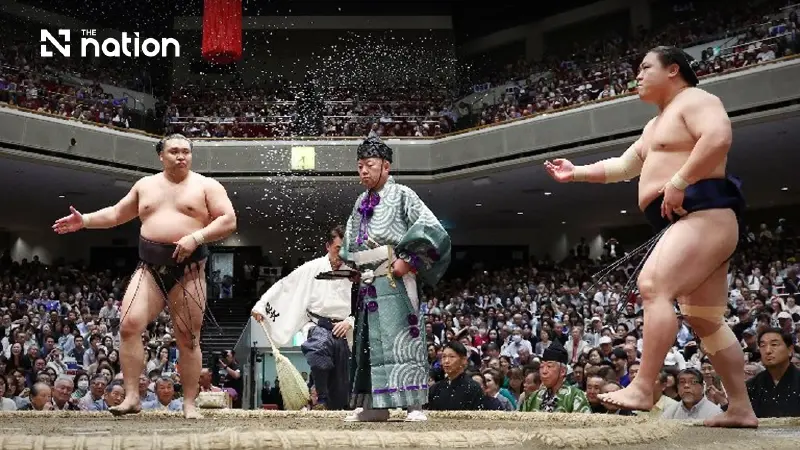


A 310-day sellout streak has put sumo back in the spotlight, as dynamic bouts, young elite wrestlers and guarded modernisation draw new fans.
- Sumo's popularity has surged, resulting in a streak of over 300 consecutive sold-out tournament days, the second-longest in the sport's history.
- A new generation of young, high-ranking wrestlers, including yokozuna grand champions Hoshoryu and Onosato, is creating compelling and exciting bouts that attract fans.
- The Japan Sumo Association is balancing the sport's traditional appeal and atmosphere with modern promotional efforts, such as social media, to engage younger and international audiences.
Japan’s ancient sport of sumo is back in strong public favour, with regular tournaments recording full houses for more than 300 straight days as fans return to the arena in force.
The May grand tournament at Tokyo’s Ryogoku Kokugikan was sold out for all 15 days, pushing the current run of capacity crowds to 310 days.
The streak began on the sixth day of the January 2023 tournament in Tokyo and now stands as the second-longest in sumo history.
The record remains 666 consecutive days, stretching from the 11th day of the November 1989 tournament in Fukuoka, south-western Japan, to the opening day of the May 1997 tournament in Tokyo.
Regular tournaments are staged every two months.
For stablemaster Nishiiwa, who oversees public relations for the Japan Sumo Association, the explanation begins with what happens inside the ring.
“The action in the ring is compelling.
Championship races are exciting, and more bouts now feature powerful offence and strong defence,” said Nishiiwa, the former wrestler Wakanosato, who rose to sekiwake, sumo’s third-highest rank.
“We offer various services for fans, but ultimately, if the bouts themselves are boring, spectators will not come.”
The strength of the upper ranks has also helped sustain interest.

Hoshoryu and Onosato, both in their mid-20s, sit at the summit as yokozuna grand champions, while 22-year-old Aonishiki has drawn attention with his rapid rise despite being set to drop from ozeki, the second-highest rank, to sekiwake at the July tournament in Nagoya, central Japan, which begins on Sunday.
Kirishima and Kotozakura, both ozeki, remain among the sport’s leading names.
“Many names are being mentioned as ozeki candidates,” Nishiiwa said.
“I think fans are very interested in the competition among them.”
Sumo’s open-weight nature has added another layer to that appeal.
Spectators often respond loudly when Ura, admired for his agility and technique, or the smaller Fujinokawa, bring down much larger opponents. For Nishiiwa, that unpredictability is central to the sport’s charm.
“The small can overcome the large,” he said.
“That’s one of the true appeals of sumo.”
The current boom marks a sharp contrast with the period when strong line-ups still competed in front of visible empty seats.
Stablemaster Kitajin, formerly known as Endo, made his professional debut at the March 2013 tournament in Osaka, western Japan, where only 10 of the 15 days were recorded as full houses.

He later reached komusubi, sumo’s fourth-highest rank, and became one of the faces of a revival, helped by a swift climb through the rankings, a loose hairstyle that had not yet caught up with his rise, refined looks and technical ability in the ring.
Kitajin said today’s popularity has not come from one figure alone.
It is “the result of the association’s efforts to work as one,” he said.
“It reflects the unity of everyone involved, including the administrative staff.”
The association’s use of social media also appears to have helped bring in overseas visitors and younger fans in Japan.
Even so, the Japan Sumo Association is moving carefully as it blends promotion with tradition.
“We are not fixated on view or follower counts,” Nishiiwa said of its online approach.
“While preserving dignity, which is more important than numbers, we make skilful use of social media.”
Inside Ryogoku Kokugikan, the association has also expanded fan-facing efforts, with queues at shops staffed by stablemasters now a familiar sight.
Nishiiwa said changes around the sport can be welcomed, provided the tournament atmosphere itself is protected.
He cited words often used by association chairman Hakkaku, the former yokozuna Hokutoumi: “We should be open to new things around the dohyo, but once you sit in a ‘masu’ spectator seat, it should feel as if you are in the Edo period.”
The Edo period, from 1603 to 1868, is widely regarded as the era when regular sumo tournaments featuring professional wrestlers began.
“I want to cherish those words,” Nishiiwa said, as the sport continues to evolve while drawing fans through its appeal both inside and outside the ring.
