
Typhoon Bavi heads towards Taiwan as China braces for landfall
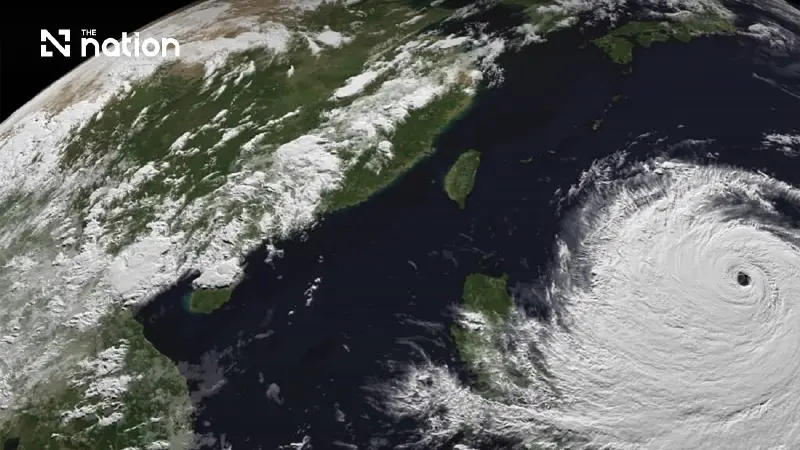


Typhoon Bavi is forecast to skirt northern Taiwan before making landfall in China’s Fujian province, prompting warnings over violent winds, flooding, landslides and storm surges.
Typhoon Bavi was churning southeast of Taiwan in the Pacific Ocean on Thursday, as authorities in Taiwan, China and Japan warned residents to prepare for a large and dangerous storm.
Bavi’s winds weakened slightly overnight to just under 200 kilometres per hour, but forecasters said it remained a powerful system. At around 1,000 kilometres wide at its broadest point, the storm is roughly the width of France.
China’s National Meteorological Centre forecast that Bavi would skirt northern Taiwan before making landfall in eastern China’s Fujian province on Saturday evening.
Taiwan’s Central Weather Administration said Bavi could become the largest storm by size to affect Taiwan since 1987, with forecaster Jason Chang saying storms of this scale had been relatively rare in recent years.
If Bavi maintains its forecast strength, it could be the most powerful typhoon to affect the region since Super Typhoon Kong-rey in 2024, according to commercial weather forecaster AccuWeather.

AccuWeather international forecasting expert Jason Nicholls said some weakening was expected from Thursday, but warned that Bavi would remain dangerous as it affects Taiwan and eastern China from Friday into Monday.
Japan’s meteorological agency also urged residents in Okinawa, the country’s southernmost prefecture, to remain on high alert on Friday and Saturday for violent winds, landslides, flooding and storm surges.
In Taiwan, President Lai Ching-te urged residents to prepare emergency supplies, including food and torches. He also shared public guidance on preparing an emergency grab bag with enough supplies to support basic needs for three days.

Xiangbo Feng, a tropical cyclone researcher at Imperial College London, said Bavi deserved close attention because it had spent a long period strengthening over the open Pacific, drawing energy from warm ocean waters and accumulating large amounts of moisture.
He warned that damage could be severe if the storm makes landfall or moves close to coastal areas, adding that even a small change in Bavi’s track could significantly alter its impact.
China, Taiwan and Japan have faced growing exposure to destructive weather events, while scientists link the increasing intensity of such risks to climate change. This year has raised particular concern because the expected emergence of El Niño could push temperatures higher and help fuel more frequent and intense typhoons.
Source: Reuters
