
El Niño could cost Thai agriculture THB62 billion as drought risks rise
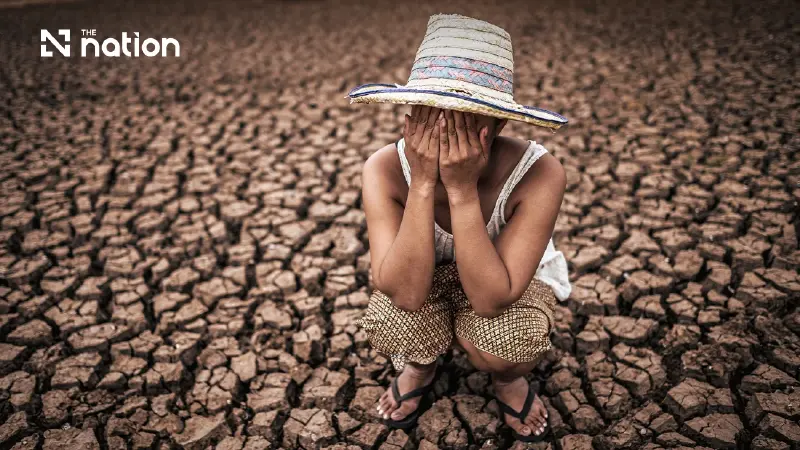


The new El Niño is expected to strengthen into the Northern Hemisphere winter, raising risks for heat, drought and crop losses in Thailand.
- The El Niño event is forecast to cause over THB62 billion in damage to Thai agriculture from late 2026 to mid-2027, primarily through extreme heat and drought.
- Thailand's water reserves are already under stress, with usable water in central-region dams falling below the 30% critical level, directly threatening rice cultivation which depends heavily on these resources.
- Rice is projected to be the hardest-hit crop, with an expected output decline of 5.4 million tonnes, accounting for over two-thirds of the total agricultural damage, followed by significant losses in sugarcane and cassava.
- The impact extends beyond farms, with an expected 8% drop in farm income in 2026, which will reduce household purchasing power and put financial pressure on food processing industries like rice mills.
The National Oceanic and Atmospheric Administration (NOAA) has officially declared that El Niño formed in June 2026 after sea surface temperatures in the tropical Pacific rose above the required threshold, putting scientists on alert for possible shifts in global temperature, rainfall and storm patterns from late 2026 into 2027.
El Niño is a natural climate phenomenon marked by unusually warm surface waters in the central and eastern Pacific Ocean.
Even small changes in that ocean system can disrupt winds and rainfall across several regions, releasing a large mass of heat into the atmosphere and unsettling weather patterns worldwide.
For Southeast Asia, including Thailand, the main concern is longer and more intense “drought and heatwaves”.
NOAA and the World Meteorological Organisation (WMO) say El Niño does not produce the same weather everywhere, but it raises the likelihood of extreme conditions in many regions.
Forecasters expect the latest event to strengthen through the Northern Hemisphere winter of 2026-27, although its peak intensity cannot yet be determined.
Data from Golden Gate Weather Services, the National Centres for Environmental Information and NOAA show that Northern Hemisphere winters from 1979-80 through the forecast for 2026-27 have shifted between El Niño, La Niña and neutral ENSO phases.
Since 1979, La Niña has occurred slightly more often than El Niño, but the most severe El Niño events have tended to cause broader global damage, showing that intensity can matter more than frequency.
The 1982-83 event brought severe drought to Australia and Indonesia, flooding to parts of the southern United States and a then-record powerful hurricane in Hawaii.
The 1997-98 El Niño was among the strongest ever recorded, triggering floods, drought and wildfires across several regions, while ocean heat during that period is estimated to have damaged about 16% of the world’s coral reefs.
The 2015-16 event was another powerful episode, coinciding with then-record global temperatures, strong hurricanes in the North Pacific, fires in Indonesia, drought in Ethiopia and parts of the Caribbean, and a then-record rise in atmospheric carbon dioxide, which also helped explain longer-term greenhouse gas trends.
For Thailand, several climate agencies warn that 2026 could bring the risk of a severe “Super El Niño”, bringing extreme heat, dry spells and widespread pressure on agriculture and industry.
Sea surface temperatures could rise by as much as 2 degrees Celsius above average, increasing the chance of sharp weather swings, from severe drought to heavy rain and flash floods in some areas.
Krungthai COMPASS estimates that El Niño’s return from the second half of 2026 through mid-2027 could cause more than THB62 billion in damage to Thai agriculture, equal to 0.31% of GDP.
The research unit sees agriculture as the most exposed sector because it accounts for 75% of national water use, while more than 80% of Thailand’s cultivated land lies outside irrigation areas and depends mainly on rainfall.
Many farmers are smallholders with limited capital and restricted ability to manage water shortages.
One signal cited by Krungthai COMPASS is the Southern Oscillation Index (SOI), which fell into negative territory in April and May 2026 at -11 and -14, respectively, averaging -13 and pointing to clear El Niño formation.
The frequency of El Niño has also increased, narrowing from around every five years to every three years after 2015, with the latest event emerging after only two years and leaving the farm sector less time to recover from drought.
Thailand’s water position is already showing stress.
As of 6 June 2026, usable water in central-region dams stood at about 28%, below the 30% critical level, raising risks for main-crop rice due to enter the market in late 2026 and off-season rice in the Central region due for harvest in the first half of 2027.
The Eastern Economic Corridor (EEC) also faces the risk of a serious water shortage, with possible competition for water between industry and farming.
In Krungthai COMPASS’s base case, “rice” is expected to suffer the heaviest losses, with output falling by 5.4 million tonnes and damage valued at THB43.046 billion, or more than two-thirds of total agricultural damage.
Sugarcane output is forecast to fall by 12 million tonnes, costing THB10.711 billion, while cassava production is expected to drop by 3.1 million tonnes, causing THB8.098 billion in losses.
A broader assessment warns that farm output could fall by an average of 10%, especially for rice, sugarcane and cassava.
Although prices of several farm goods are likely to rise as supply falls, Krungthai COMPASS believes higher prices will not be enough to offset the loss of production.
The farm income index in 2026 is expected to fall by about 8% from the previous year, mainly because rice output is projected to decline by 18%, while farm income in 2027 is expected to drop by a further 2% as both output and prices face pressure.
The impact will also spread to rice mills, food producers and agro-processing businesses.
Krungthai COMPASS expects paddy entering rice mills to fall by about 18%, pushing paddy prices up by around 10% from THB7,305 per tonne to about THB8,000 per tonne.
However, milled rice prices can rise by only around 7% because of export-market competition, squeezing margins. With energy costs still high, operating profit margin (OPM) at large, medium-sized and small rice mills is expected to fall by 0.7%, 0.6% and 0.3%, respectively.
El Niño is expected to feed through to the Thai economy mainly through lower farm income, which would weaken household purchasing power, and higher agricultural raw-material costs, which would put pressure on food and agro-processing industries and could push food inflation higher.
Farmers also face drought at a time when fertiliser and oil costs have risen because of unrest in the Middle East.
The effects are not limited to farming.
Extreme heat is likely to increase electricity demand, while higher fossil-fuel costs could be passed on to consumers through higher living costs.
Health risks are also expected to rise, especially heatstroke among outdoor workers, and dry conditions could worsen forest fires and PM2.5 pollution.
Preparedness will be important for households, businesses and farmers.
The measures highlighted in the source material include saving water, preparing reserve water storage, using water-recycling systems, adjusting electricity use under the new power-tariff structure and considering solar power systems to reduce longer-term costs.
People are also advised to avoid outdoor activity between 12pm and 4pm, drink clean water regularly, carry cooling equipment and watch for unusual symptoms in themselves and others to help prevent heatstroke.
Krungthai COMPASS urges businesses to strengthen raw-material security through “Contract Farming” or forward contracts and to use “Climate Tech” to improve production efficiency.
Farmers are advised to adopt water-saving methods such as Alternate Wetting and Drying (AWD), use drought-resistant crop varieties and closely follow weather forecasts.
The government, meanwhile, is urged to invest in water infrastructure outside irrigation zones, develop early-warning systems and build a “Climate Risk” database to improve the long-term resilience of Thai agriculture.
