
Thailand, Vietnam and ASEAN at risk from El Niño as heat and urban pressure intensify
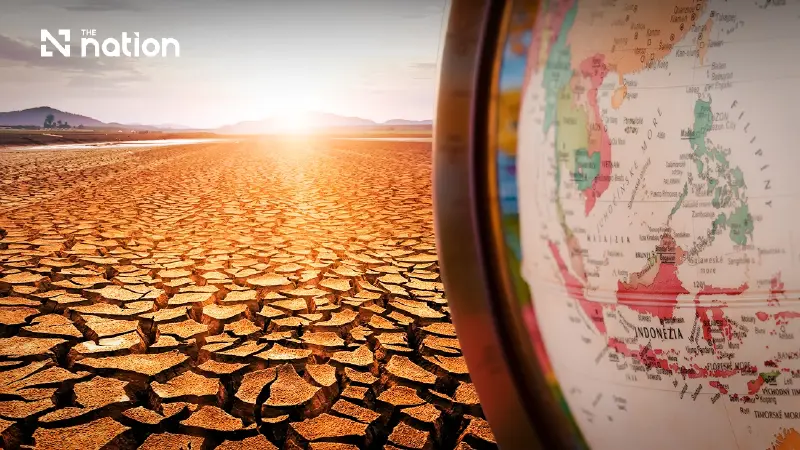


A 2026 Oxford University study warns that Southeast Asian cities, including Ho Chi Minh City, Bangkok and Samut Prakan, face some of the world’s highest heat risks amid rising El Niño concerns.
Several parts of the world face the risk of severe drought in 2026, as research warns that Thailand, Vietnam and ASEAN could be hit hard by El Niño, driven by hot and humid weather, rapid urban expansion and dense populations.
The world is clearly facing climate disruption, with increasingly severe and unpredictable weather. In 2026, many countries are closely monitoring the formation of El Niño, which has the potential to develop into a super El Niño.
Such a phenomenon could expose many parts of the world to heatwaves, drought and water shortages, affecting people’s daily lives, agriculture, food production and the wider economy.
A research report by the University of Oxford titled “A globally comparable framework for heat risk assessment in cities” (2026) assessed heat risks in cities worldwide. It found that Ho Chi Minh City in Vietnam ranked as the world’s highest-risk city, while Bangkok and Samut Prakan in Thailand ranked second and third, respectively.
Researchers said the risk did not come from high temperatures alone. It also resulted from hot and humid conditions that make it difficult for the human body to release heat, combined with the urban heat island effect, rapid urban growth, population density, and the large number of workers who have to work outdoors.
The risk is further heightened by the fact that these cities are major economic zones located in low-lying coastal areas, making them vulnerable to both heatwaves and flooding.
The study also warned that heatwaves worldwide are likely to become more frequent, more severe and longer-lasting, with impacts on health, the economy and infrastructure.
Thailand has begun preparing water-management measures after forecasts suggested that the impact of El Niño could cause low-water conditions to continue into 2027.
Scientists around the world are also closely watching the 2026 El Niño phenomenon, which could intensify into a super El Niño. Climate models have detected signs of unusually high sea-surface temperatures in the Pacific Ocean, while the effects of global warming could make extreme weather more severe than before.
Experts said that if a super El Niño does occur, Southeast Asia, including Thailand, Vietnam, Indonesia and Papua New Guinea, would face prolonged drought, reduced rainfall, pressure on water resources and agriculture, threats to food security, and a higher risk of major wildfires.
At the same time, parts of South America would face a greater chance of heavy rainfall and flooding. The Pacific Ocean could also see more frequent and more intense typhoons.
Unusually high sea temperatures could also increase the risk of coral bleaching and cause wider damage to marine ecosystems.
Scientists estimate that the force of a super El Niño could push global temperatures even higher, potentially making 2027 the hottest year on record.
However, experts stressed that forecasts remain uncertain. They urged close monitoring of the latest data, along with urgent planning for water management, drought preparedness, heatwaves and extreme weather that may affect many regions around the world.
Source: University of Oxford
