
From Folk Music to National Capital: How Kalasin’s Pong Lang Revitalises Secondary Cities
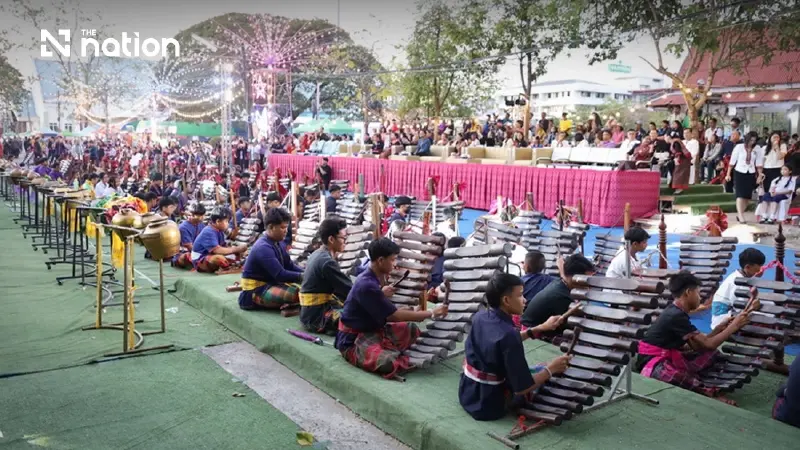


Pong Lang, a traditional instrument of Thailand’s Isan region, is being elevated as a vital form of cultural capital to drive the creative economy in secondary cities. Rooted in vibrant local wisdom, it is now being reimagined through cultural content to generate long-term economic value.
The instrument, composed of 13 wooden bars arranged in a xylophone-like form, produces a clear and vibrant sound. It is crafted from durable, resonant Mahad (Artocarpus lacucha) wood, reflecting a seamless blend of natural wisdom and musical ingenuity.
The instrument traces its origins to the "Kraw Lor", a traditional community signaling device and folk percussion tool.
Kalasin native and National Artist Pleung Chairasamee reinvented this traditional wisdom, transforming the rustic device into the standardised, fully melodic instrument known today.


When performed alongside traditional instruments such as the khaen (bamboo mouth organ) and phin (plucked lute), the Pong Lang accompanies graceful, energetic dances known as the "Pong Lang Dance".
This collaborative performance serves as a vibrant hallmark of the region, reflecting the Isan people’s creative way of life, strong community bonds, and harmonious relationship with natural resources.
This cultural asset is being strategically leveraged to transform secondary cities into sustainable creative hubs, driven by area-based research led by the Ministry of Higher Education, Science, Research and Innovation (MHESI).

Supported by national funding mechanisms, including the Office for Accelerating Research and Innovation for Competitiveness and Area Development (RCAD) and the Programme Management Unit for Area-Based Development (PMUA), initiatives such as the Media for Community Empowerment Foundation’s project are translating local heritage into a viable engine for regional economic growth.
Research reveals that Kalasin's Pong Lang is a powerful national capital driving tourism, jobs, and economic growth.
Through systematic management, this cultural asset directly reduces regional inequality and channels sustainable income into secondary cities, perfectly advancing national creative economy policies.
