
BP exit to add strain on Japan offshore wind as costs climb up
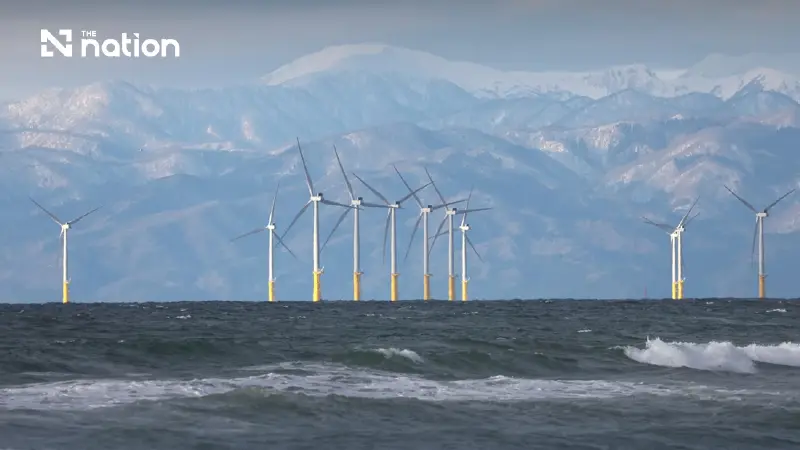


Headwinds are intensifying for Japan's offshore wind power sector, with British oil giant BP PLC seen exiting a major project off northeastern Japan.
Offshore wind power is regarded as a key element in the country's renewable energy strategy, but soaring construction costs driven by global inflation are eroding project viability.
BP has apparently decided to quit the project won in December 2024 by a consortium that includes trading house Marubeni Corp., Kansai Electric Power Co. and Tokyo Gas Co., in addition to BP.
Under the project, an offshore wind farm will be established off the Sea of Japan coast in the town of Yuza, Yamagata Prefecture.
The project will continue with the remaining members. The prospect of BP's departure, however, has unsettled participants in other offshore wind projects, prompting concerns that any of their partners may follow suit.
Offshore wind projects typically require substantial capital investment and advanced engineering expertise, leading trading houses and power companies to form consortiums. The government held auctions to solicit bids for such projects in designated offshore wind promotion zones.
The government aims to raise wind power's share in Japan's electricity generation to about 4-8% by fiscal 2040 from 1.1% in fiscal 2023 under its basic energy plan adopted in February last year.
The offshore wind sector has already suffered a setback. In August last year, a consortium led by Mitsubishi Corp. said it would withdraw from three offshore wind projects off Chiba Prefecture, east of Tokyo, and Akita Prefecture, northeastern Japan, citing surging costs.
The pullout shocked many in and outside the sector, as the projects were awarded in the first round of the government's offshore wind auctions.
In response, the industry ministry is expanding financial support for offshore wind power developers.
Specifically, members of existing offshore wind projects will be allowed to participate in government long-term decarbonised power supply auctions, which guarantee qualifying low-carbon power producers certain amounts of revenue for 20 years. The ministry also plans to raise the ceiling on guaranteed revenue.
Still, one developer said that stronger government support would not improve profitability sufficiently.

[Copyright The Jiji Press, Ltd.]
